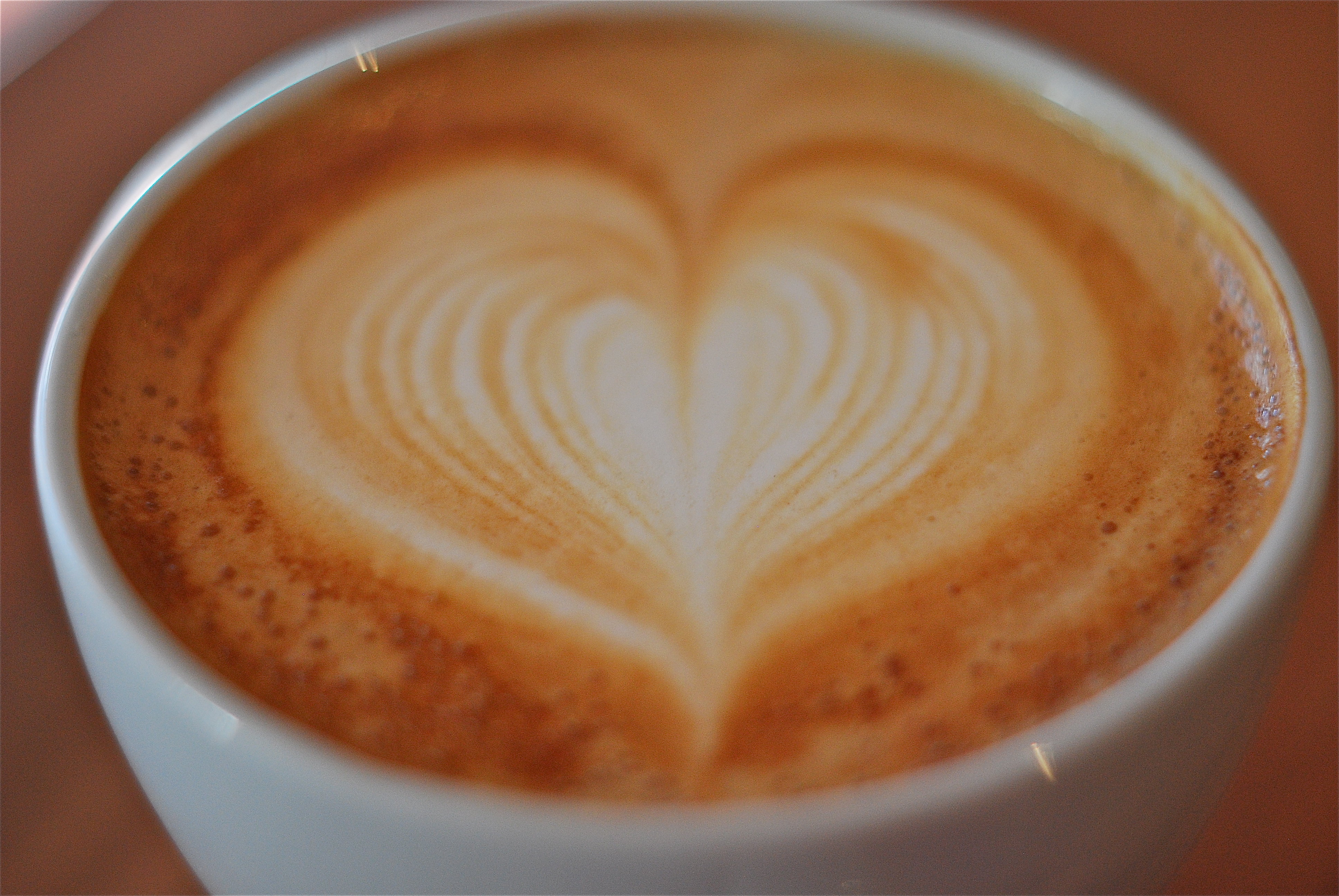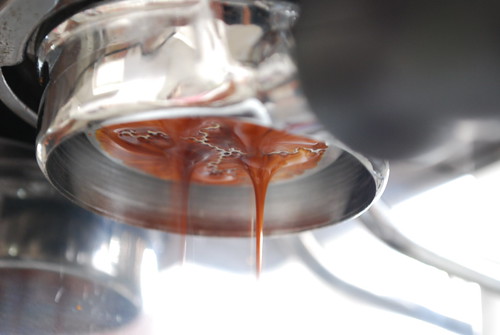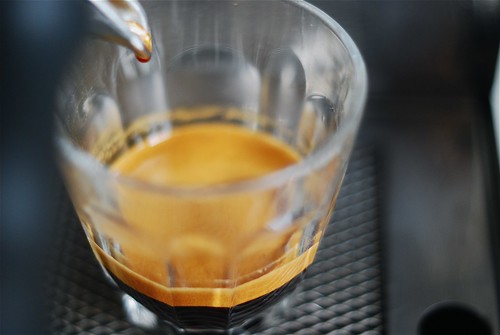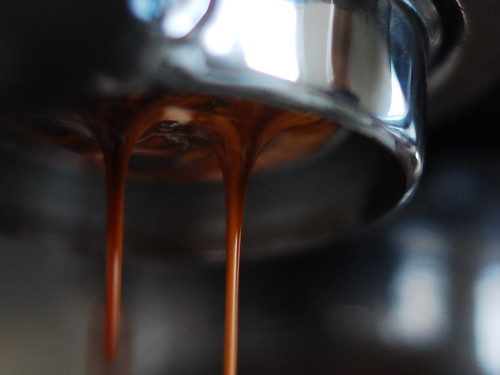
I was @ TomAndSerg, Dubai

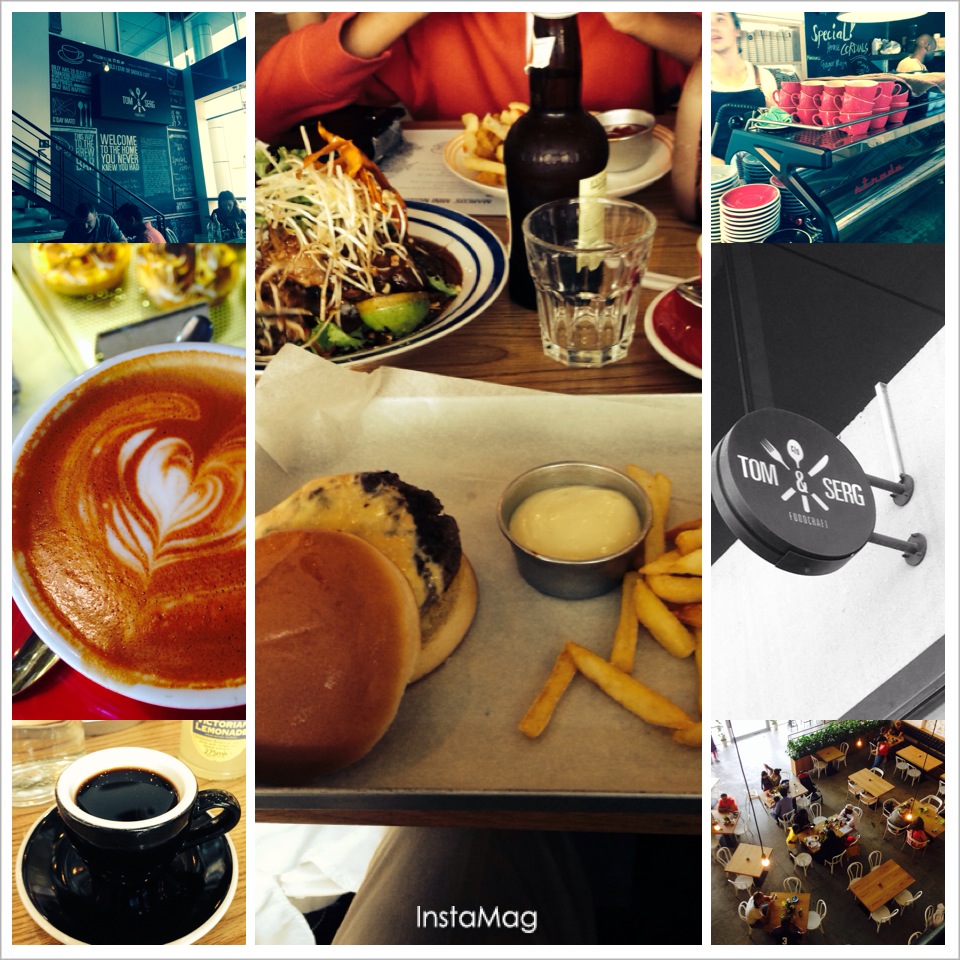
tomandserg collage
tomandserg collage

It seems the coffee scene is vastly improving in Dubai. It was only about a year ago that I was excited when I visited Dubai and visited RAW Coffee – see my blog here. Now, just a few months later, two guys called Sergio (from Spain) and Tom (from Australia) team up and open up Tom&Serg – a post-modern Aussie style cafe, dedicated to offering artisan prepared coffee using the state of the art La Marzocco La Strada, hearty well prepared food in a no frills atmosphere – exposed brick, blackboard walls, open plan kitchen with noise to create a homely feel.
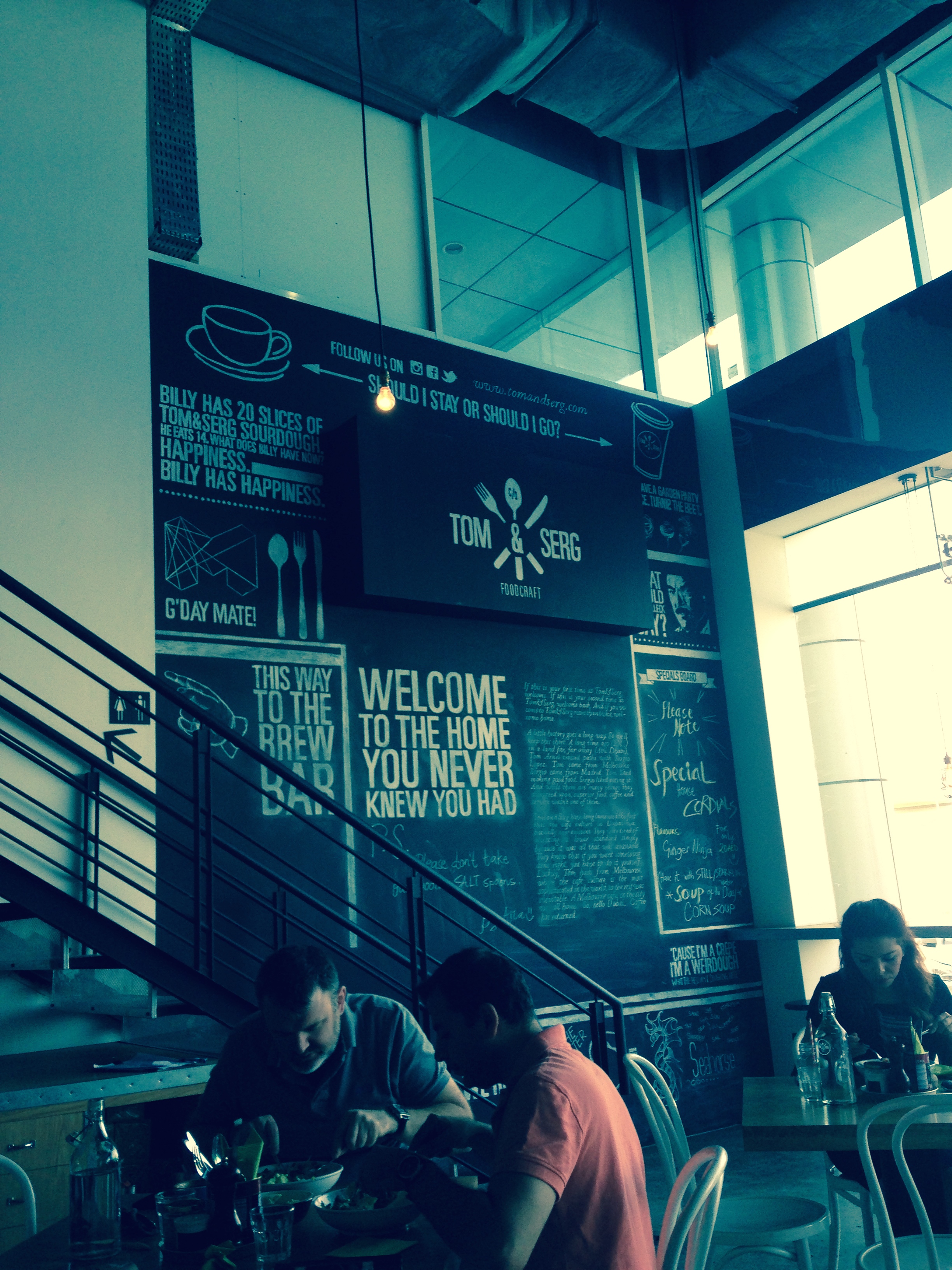
The Entrance
The Entrance

Most of us visiting from NY, Melbourne and London will instantly feel at home here. For me it is reminiscence of Workshop Coffee (Clerkenwell, London), cum St.Ali (Melbourne). In fact its a style I very much like, because it was not long ago that the it was very difficult to get artisan coffee and well prepared food under one roof. I remember my trips to London, where I had to eat in one place and then trek to find good coffee in another and vice versa, but that’s changing now. So, to Tom and Serg, Dubai and to my freshest post ever, as I just got back from Dubai yesterday (12 April 2014), that’s how excited I am.

Relax and Eat
Relax and Eat

I didn’t hesitate upon entering to let the waitress know that I’m here because of the coffee and persisted to let her know that when I owned Escape Caffe, my Magic was made with a triple shot of espresso in a 150ml glass. In any case, that’s what I ordered and then I asked who was in charge of coffee and she directed me to Jamie, who hails from Melbourne and has done a stint of jobs at Melbourne’s finest cafes such as Proud Mary, Auction Rooms, Sensory Lab (St Ali’s sister shop) and Seven Seeds, so in summary, a well-trained barista that knows what he’s talking and drinking about. My wife looked at me and was like “you know you want to, so go and talk to the chief barista”, so, I walked by for a chat to talk all things coffee, blend, taste profile, market preferences, etc. I was glad to know that they get their coffee from RAW, but the blend is made specifically for them under Jamie’s guidance. In summary, it hails from Central and South America with medium acidity, roasted just after second crack (where the oils begin to sip out) – ok, I’m getting a bit geeky here, so I’ll stop. In any case, ti goes well with milk, with chocolatey and caramel overtones with not in your face sweetness.

A Magic
A Magic


For me however, what blew my mind was the cold brew, offered to me by Jamie and his description as on point – it’s very unusual in that you need to take several sips to try and pin point the taste and so that’s what I did and I have to confess it wasn’t easy.

Cold Brew
Cold Brew


All I know is that the first couple of sips sent flavour profiles literally through my whole body. In fact it puzzled me so much that I ignored my lunchand then realising that I hate cold food, had to succumb and indulge in my burger and fries.

IMG_2575

I washed my palate with more water and went back to the coffee. After that I took a stroll around the shop, which is fairly big as there’s also an upstairs area, a black board describing the coffee.

So what coffee do you like

a library area and another La Marzocco Strada, supported by another barista from Australia – this time from Brisbane – wow! two under one roof – baristi from Australia and La Marzocco Strada that is. As we literally got there 30 minutes before they close on a Friday – 4:30pm I rushed through the place and tried to take some original pics and on our way out, I met another lady, Michaela, from Melbourne, who used to live in London but never had a chance to try out some of the top cafes there. I reassured her that if she ever visited London again that she would be wowed by the quality of cafes there, who could rival those in Melbourne too, encouraging her that London’s acceleration to the top of the World coffee drinking cities was partly due to the influx of baristi from Melbourne itself – she was happy with that confirmation.

All in all, a great place to visit and from what I read (the owners were in the Esquire Middle East Magazine for their dress sense), there’s more to come from Tom and Serg, perhaps more shops, definitely more publicity and similar concepts. Please try Vienna, Austria, where I live.

Lots of seating space

For more info, see http://www.tomandserg.com

Open from 8am to 4pm (4:30pm on Fridays and Saturdays)

A Branded Bottle
A Branded Bottle


Salt Caramel Espresso ?

This year – yes, disgracefully so – it’s my first blog of 2013 – I’m into feeling, which means that if I feel like doing something related to pushing my taste buds further, then I’m going to do it.

20130224-232341.jpg

So, here we are. Salted Caramel Espresso ??? Did I arrive at this because I found this wonderfully unusual coffee, roasted by a supremo and brewed it in an unusual way ? NO! Simply, I manipulated one of the major elements of the espresso brewing process. BUT, first up, a little about the raw ingredient – the coffee itself – Shakisso from the Sidamo Region of Ethiopia, from the 2011-2012 season, grown at 1800m above sea level, organically grown and sun-dried on raised beds, shipped in grain pro bags (???). Who was the roaster ? Espresso Lab, Cape Town and how did the roaster describe the taste ? floral, silky body, soft chocolate, honey, jasmine, stone fruit, sweet lemonade and tangerine – quite a mouthful and quite a wide range of tastes. Now! that might seem delectable to some readers, but the main reason I bought the coffee was because I trusted the roaster and not because of the taste profile, because based on past experience, if you don’t have a very developed palate and extra-ordinary attention to detail in preparing coffee, using the best – yep! the best tools, then there’s no way you are going to experience some of those wonderful taste profiles described by this or any other skilled roaster.

Where am I going with this ? Well! What do I feel like tasting when I buy coffee – something special all the time. I never buy coffee for the sake of buying coffee. I buy coffee from trusted roasters and I don’t mean Illy or Lavazza. I mean people who spend time roasting with passion. BUT, I do have some taste preference when it comes to coffee – I love caramel, cocoa, dark chocolate, hints of milk chocolate, toffee, butter toffee (typical of Square Mile Coffee) , silky smooth wrap around yout tongue, vanilla, maple syrup, honey, pecan, praline, roasted cashew (organic Ugandan I once had), grapefruit acidity and probably more that I haven’t developed yet and of course SALTED CARAMEL.

So what did I manipulate ? Just the water. I added a few drops (say quarter of a teaspoon) of Himalayan Pink Salt into the water tank before I brewed my espresso – that’s it and wow, what a delight for my taste buds.

If you like something and people always tell you, don’t do it, it’s not right, at least give a shot once and you may not regret it and if you do, at least you experience something different, right ?

Good luck.

I’m Drinking… Has Bean Coffees

Almost upon arrival back in Europe, I was already on the search for great speciality coffee and decided to scan the sites of my popular roasters. In the end, after reviewing countless coffees on the http://www.hasbean.co.uk site, I opted for 3.

Ethiopia Yirgacheffe Wote (Washed)

Well! I have a fond palate weakness for Yirgacheffe coffees and this was actually the first one on my list and the first one I tasted naturally. In general, Yirgacheffe coffees tend to be quite aromatic and floral in taste with an underlying acidity and this was no exception. Using the inverted Aeropress method, a light grapefuit acidity could easily be detected, winning over the more citrus lemony aspects of the coffee. However, on using the Hario V60, a burst of sour lemon dominated the sweetish grapefuit acidity element of the coffee, making me select this coffee for my after dinner drink using the Aeropress method.

Nicaragua Finca Limoncillo Pacamara Natural “Funky” 201


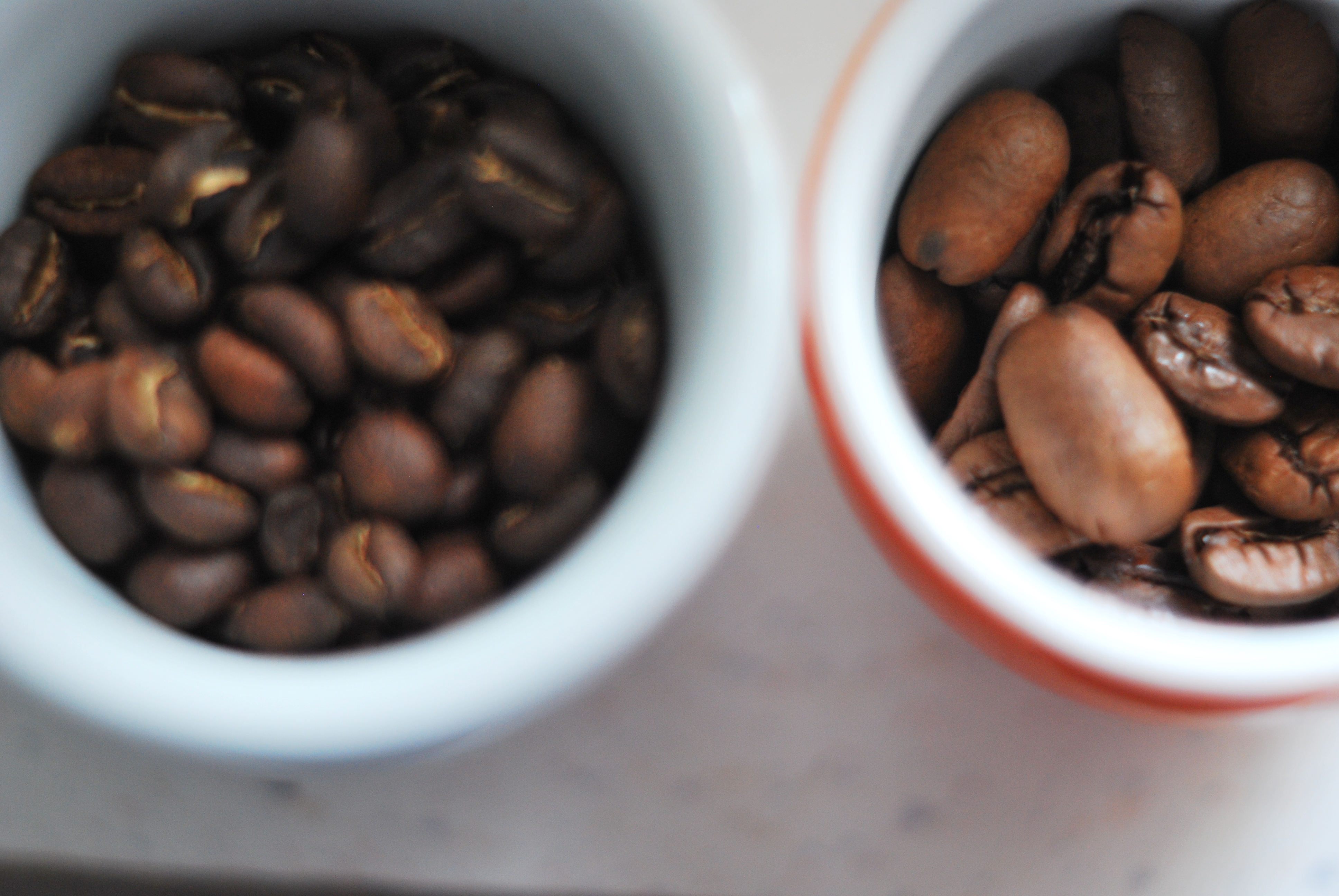
Wow! what a mouthful and boy was it one. Steve of Has Bean describes this coffee as “strawberry angel delight…. and mad as a hatter”. I’ll confess, I wasn’t picking up the strawberry delight, but I don’t even know what I was picking up, so I agree with Steve on the “Mad Hatter” description. The taste notes were jumping up and down on my tongue, making it one of the most exciting coffees I’ve had a for a while. I just couldn’t pin it down and it’s one of those coffees you just have to try. Never put milk in it, more exciting on the Hario V60 and one to make you forget about your problems at the end of the day – it has a creamy chunky mouthfeel with huge body (more so on the V60 than aeropress). I’ve got to mention that these arabica beans are humongous – just looking at them, made me laugh – twice in size as the Yirgacheffe – they are the bigger ones in the cup at the top of the post on the right.

And Finally…

Phil ter Filter Blend (using 50% El Salvador Finca Santa Petrona Red Bourbon, 30% Nicaragua Escondida and 20% El Salvador Montserrat Washed)

I selected this blend because I was intrigued by the concept of a blend for filter machines, plus I needed beans for the afternoon and could only use a Filter machine, so I thought, “why not ?”. My former colleagues were like “here’s the coffee man, so what’s brewing?”. I knew that using the V60 or the aeropress would be time consuming, so this fitted the build, so to speak. The Filter method traditionally rinses out the more delicate methods in the coffee, so we were limited to the darker side with hints of brazil nuts, dark berries and cocoa. Nevertheless, a good pick me up coffee in the afternoon ahead of long meetings.


My Fave Coffees So Far…

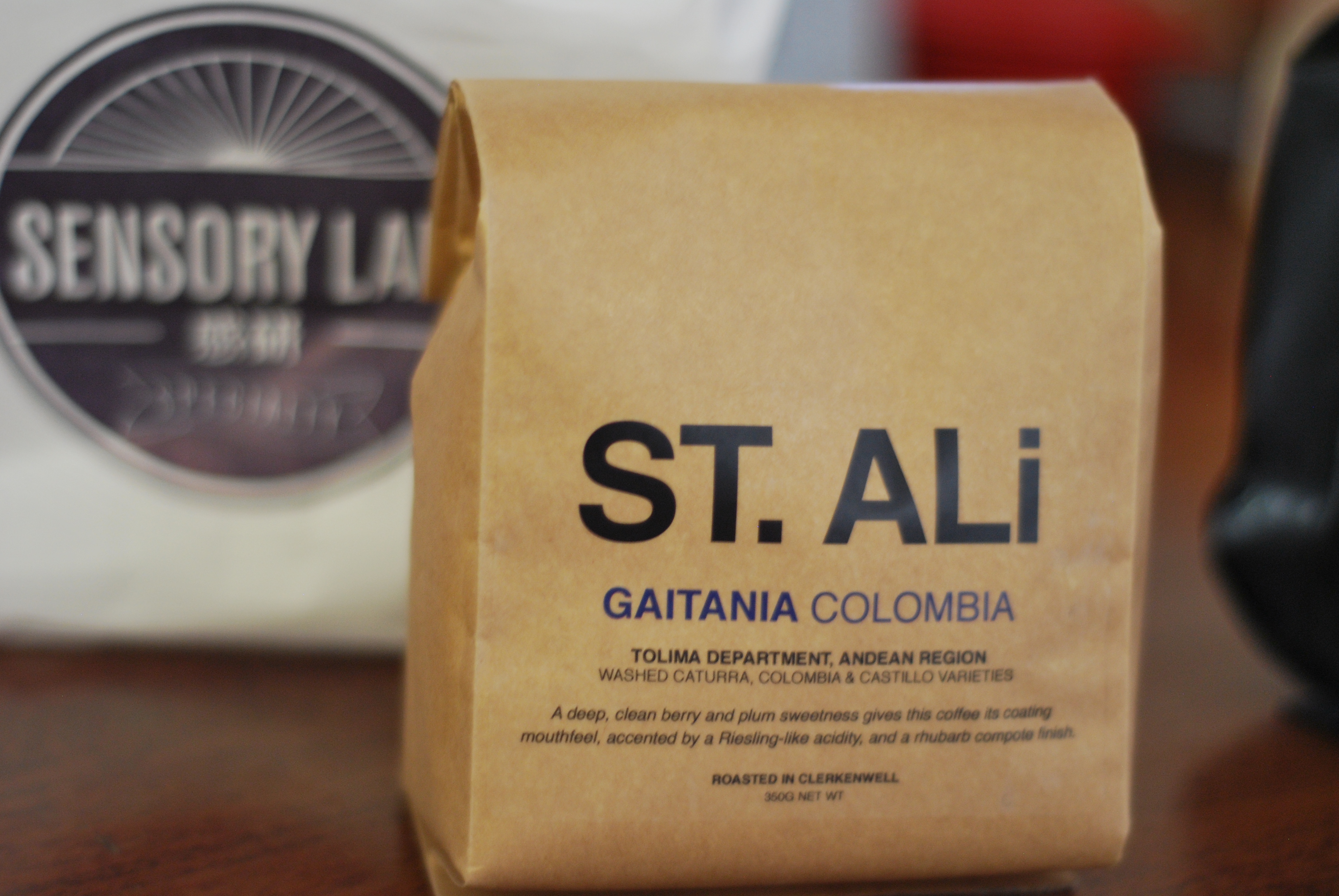
The year seems to be going through pretty fast and I thought about documenting what has delighted my taste buds so far this year in the World of Coffee. First up, was the Colombian Gaitania, roasted by then St Ali London (now Workshop Coffee), which I picked up at their sister store, Sensory Lab (now Workshop Coffee) on Wigmore Street. I fell for this coffee when I first tasted it on an aeropress in Clerkenwell and made sure that before I left London I picked up a bag to take back to Cape Town with me. I featured it as a coffee at my coffee tasting event at Escape Caffe and then enjoyed the remainder at home on an aeropress. It didn’t disappoint on every brew, displaying a clean caramel light acid taste. I used this coffee to induct my 12 year old daughter on the pleasure of drinking coffee on an aeropress and she too was pleasantly surprised by the clean sweetish taste she experienced. I have to confess,  I can’t see many coffees beating my experience of this bean this year, at least on the aeropress.


A close second has to be the Ethiopian Yirgacheffe Konga, sourced by Union Hand Roasted Coffee (another top London based roaster). I’m glad to report that they now have a satellite shop or should I say “Field Office” in true UN lingo, in Cape Town, down the road from my caffe, Escape Caffe on Bree Street, Cape Town. At the forefront of their Cape Town branch, located on Buiten Street, is Gerald, the main roaster, who had 4 months of training at Union Hand Roasted in London before being sent back to Cape Town. When I told Gerald I wanted something special for my Coffee Tasting Event/ cupping sessions for customers (held on the 1st Saturday of every month), he highly recommended this bean. At first, I was wondering why I loved this bean so much – light, sweet finish, hint of caramel, sour berry and pleasant + soothing effects. It should come as no surprise then that I have featured this bean on 2 occasions. On the second, I even had the pleasure of sampling the bean roasted in 2 different ways – sample roast 10 days before and large batch 5 days earlier – subtle difference but the 10 day old roasted got the edge for me as I felt it was more developed and had a cleaner/more refined finish. For the record, the Yirgacheffe Konga is washed. The taste profile for this bean – well! Again, I asked my 12 year old daughter to taste and give me her profile “caramel and hint of blueberry Daddy” – well you never, the taste profile on Union Hand Roasted website is blueberry caramel – Wow! My daughter’s going to be better than me.

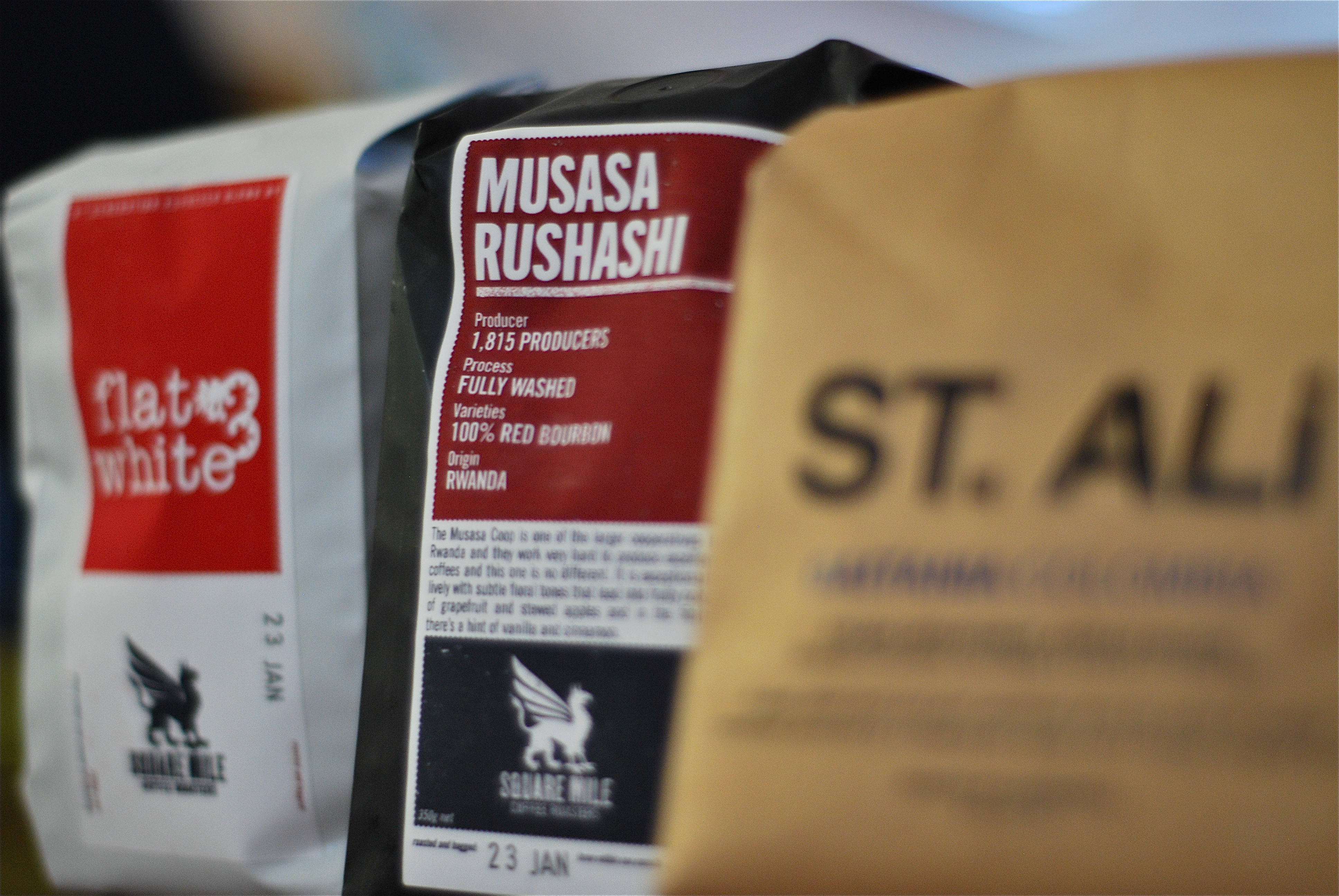
I can’t leave without at least mentioning a Square Mile Coffee bean and here we have Rwanda Musasa Rushashi. Described as having a hint of graprefruit acidity, I felt this was more pronounced only when brewing on the French Press. Other taste profiles, reminded me of black berries and hints of dark organic chocolate. In conclusion, an unusual bean and perhaps not everyones “cup of coffee” but that’s what makes it interesting and after all not all coffees are supposed to taste the same. I preferred this coffee after a heavy meal and for livening the senses.


I’m Drinking… Verve Coffees

Lucky me, I must say. I first heard about Verve Coffee Roasters in early 2010 when I was researching ideas for the logo for my cafe, skimping through countless logo and typeset books. when I came across the one for Verve, it stopped me in my tracks. IOt was obvious that this company had taken their logo and branding very seriously, employing the services of a top firm to do so. As soon as I got home, I searched for them on the internet, reviewed the concept behind the logo and was also impressed that their commitment to their branding was backed up by their serious commitment to speciality coffee. So, you can imagine how excited I was when following them on twitter and reading abot their new coffees, I hinted it would be good to taste their coffees one of these days – and in came the reply, “sure! send us you address and we’ll send you some”. I tried to contain my excitement, having beforehand  tried to buy some of their coffees on-line, but shied away at the astronomical postage costs from Los Angeles all the way to Cape Town –  so I replied “that would be great, but I live in Cape Town, South Africa”. Jon from Verve didn’t seem to mind and voila, roasted on 29 September 2011, my coffees arrived by mid-October – well in the zone, as I prefer drinking coffee not before 7-10 days after the roast date. And my, what a package it was:

3kg of their single estate espresso from Costa Rica, 250g bags each of Kenyan and Ethiopian coffees, a wonderful coffee mug and some brewing tips – talk about spoilt for choice and very lucky me. I was so excited that everyone in my family now admires Verve Coffee Roasters (kids and wife). So, what was the drinking experience like:

For the Single Estate Espresso, it was as they said it was on the packet “Sparkling”, which is what you would expect from a high-prized coffee from Costa Rica Helsar: C. Alpizar, from Los Naranjos Region roasted medium – high in acidity with honey like colours, making a volcano with your taste buds. I tested them out as single shots (one of my fave pics below)

And sure, it was sparkling – enough to wake both you and your taste buds up in the morning. I however, preferred this coffee when mixed with well frothed milk for a cappuccino or macchiatone (Italian version of a Cortado) – for this method, I got “soft” caramel, with hints of milk chocolate.

However, the real prize in the package were the Ethiopian (my favourite of the bunch) and the Kenyan coffees, which I thought  were “exceptional”. For the Kenyan, Ndimaini, being your typical bold and berry-ful coffee, I extracted it using the French Press and Hario V60 methods and this coffee made me fall in love again with the V60 method. It was like the Kenyan coffee was roasted only for a pour-over – very delightful to drink, complex flavours, full in your mouth with dark berries and a mild hint of dark chocolate. I should add that I adhered to Verve’s coffee tips (a bit simlar to mine, 20g of freshly ground coarse coffee with about 200ml of off-the-boil hot water) when brewing their non-espresso coffees. Not only was this another discovery, but it made me think, “these guys really know their coffee and how to get the best out of it” so they must have spent a lot of time on their brewing methods vis-a-vis the roast profile of each coffee.

OK! the Ethiopian, Biloya. Naturally, I used the aeropress method for this – why ? Usually, when I sense a coffee is really special, aroma, look and feel, I think it should be treated gently, which is how I relate to the aeropress – the most gentle way of getting the best out of your coffee. Again, I followed Verve Coffee guidelines and the taste profile was as they described (which I tweeted about), raspberry and wrap around your outer tongue, citrus.

However, following my tweet about my experience, I got some feedback from DearCoffeeILove You (aka DCILY) about Verve Coffee. After a brief interaction on twitter, he (sorry, I don’t know his real name) pointed me to his post about his aeropress method, which you can read in detail here. In summary, his method got him into the top 4 of the World Aeropress Championships in October 2011 (Yes! there is such a competition) and involves reducing the dosage to 16g with 92C 215 water, using a slightly finer grind than what I use, and with more steeping time (1 minute to 1.5 minutes). So, off I went and immediately tried his method, bringing out my scales, measuring jug, etc and wow! my efforts were not wasted  – the taste profile changed dramatically – It reminded me of my fig and orange honey cake – so we are talking about dried sweet fruits, with honey completed with a citrus linger.

Since then, I have been using this method for extracting coffee, the aeropress way. A bit of a digression, BUT I had to share this wonderful revelation.

Back to Verve – I just found out that they are now 4 years old and that they have just opened (23 November 2011) their third store in LA and from the pics, it looks amazing. So happy for the residents and future customers of their 1540 Pacific Avenue store. Read more about them on their website HERE.

Thanks a lot Verve Coffee Roasters and keep up the good work.


Serra do Bone @ home

Serra do bone @ home by Lameen
Serra do bone @ home a photo by Lameen on Flickr.

Serra do bone @ home… why ? It’s our number one coffee at Escape Caffe, but always wanting to test parametres, I decided to take some spare beans home to use on my Isomac espresso machine and lets say, not as expensive conical grinder at home. After all, it was at home that I honed my barista skills, studying the bean and writing about different coffees and roaster profiles. At Escape Caffe, we have a La Marzocco 3 group Linea with a built in PID set at 93.6C and we use the becoming popular Anfim Super Camiano grinders – machines way superior to what I have at home, BUT nevertheless I’m thrown back to what Mark Prince (Coffeegeek extraordinaire for those who don’t know) said about preparing espresso “if you follow the rules, you can make a really good espresso at home using a great home grinder and semi-pro espresso machine” (not exact quote but along those lines). In any case, if you follow the rules, you can make better espresso based drinks at home than the vast majority of cafes in the World. I’m not going to get dragged down into the detail of the rules, but in summary they are (i) fairly freshly roasted arabica coffee beans, i.e. within 10-20 days (ii) a decent burr grinder, costing at least US$250 (iii) a semi-pro espresso machine with E61 group head, with lots of brass and heavy metal – this will cost around US$600 (iv) ability to tamp at around 30 pounds of pressure and (v) a very good idea of how to be a home barista, so that you know for example what grind to use so that you get about 25ml of espresso in 25 seconds when you extract coffee, etc, etc.

OK ! so how was Serra do Bone at home ? Pretty nice but with different taste profiles. First up, a bit about the bean – it’s an organic arabica coffee bean, winner of the Cup of Excellence in Brazil, used by Intelligentsia as their organic espresso, displaying taste profiles such as candied apple, cocoa, raspberry, cherry with a medium body and soft acidity. Secondly, don’t be misled by all the taste notes as you are unlikely to taste everything in one cup, because different brewing techniques, as well as temperature and moisture affect the eventual taste of the coffee, but that’s another blog. So in summary, was I disappointed ? NO ! because I stuck to the hard and fast rules. So, at the caffe, we kind of pick up the cherry cocoa elements and when mixed with milk, you get a chocolate berry taste with a hint of caramel, but at home I got a sweeter cocoa caramel taste, which is still very yummy. One reason for the slight difference could be environment, a hihger brewing temperature as my Isomac doesn’t have a PID, as well as the obvious, my Isomac is no La Marzocco, BUT if we follow the “rules” the main taste parameters remain the same. I would love to run a home barista course one of these days, so that people don’t get scared by the prospect of investing in a decent espresso machine and good grinder.

So Serra do Bone at home last week got me to practice my latte art skills, as well as sample a very tasty coffee, and get a good pic of my cappuccino, YUM !

Before I go, apologises for the long delay in blogging – I promise to be more frequent in 2011 – also this is officially my 100th post, yipee !

My Best Coffee of 2010

I know it’s late BUT I’ve got to let you know about my best coffee of 2010 because it will just be unforgivable if I didn’t. So what was it ? It was, CAPAO CHAPADA DIAMANTINA or Capao for short. It hails from Brazil, was roasted by Square Mile Coffee Roasters in London. It’s primary taste notes were described as toffee, cocoa, hazelnut with a slight vanilla finish. There, they got me – whilst it’s almost normal to find taste profiles along the lines of toffee, caramel, hazelnut, almond, cocoa, chocolate, it’s very rare to find vanilla. Trust me, I’ve tried. Square Mile even went the extra mile to tempt me “it’s like snickers in a cup”. Snickers being the chocolate bar with a peanut nougat base, topped with peanuts and caramel and wrapped in milk chocolate. Now ! tell me that isn’t tempting.

However, I’m not that shallow to fall for looks alone or in this case, taste profiles. So what did it really taste like and why did I really like it that I gave it the high accolade of “COFFEE OF THE YEAR”.

So, what did it taste like as an espresso….

Oh my God !

And as a Cappuccino….

This isn’t real

and as Americano…… This can’t be happening to me

and finally, in a French Press…. OK ! you’ve got to be kidding right.

You know what they say “somethings are better left unsaid” OR “few words have the impact of thousands “. OK ! the last one is slightly made up, but you can quote me on that.

In summary, let’s just say this coffee was inspirational. Even my barista at Escape Caffe, poured his best latte art so far.

Capao Heart Close

As a cappuccino, it was the best experience – creamy and buttery (the latter a square mile signature), toffee like, cocoa all over my mouth, finishing off with vanilla.

As an espresso, nice body (and looks too) with toffee and hazelnut to the fore, just wrapping around your tongue and delghting your stomach.

As an Americano, there was almost full body crema and similar tastes experienced in the espresso were enhanced with toffee and caramel dominating.

The final taste test was in a French Press, but before that one proviso for those less gifted. Usually, coffee that is made with such vigour using the espresso machine, just doesn’t cut it when extracted using more subtle methods like the French Press, but not in this case. The taste was still amazing “vanilla and cocoa with a hint of berry in the finish and lingering way past 30 minutes”.

So, in summary again, this coffee was not only great, or should I say fantastic in taste, but very versatile across many ways of drinking it.

So sad to see it go, but I pray it comes back in 2011. Well done Square Mile for getting it and roasting it just perfectly for me.

A Gift from…..

I must say, this will be my freshest blog to date, as this pic was taken this morning and as you know in the mornings it’s always an espresso based milk drink – today’s was a flattie or flat white (for those who don’t know, it’s an Australian version of a cappuccino made in a 150ml cup as opposed to the usual 225ml version).

So ! why is this a gift ? Because this special coffee was roasted by the Danish speciality coffee roasters, Coffee Collective. This is currently their espresso blend, made up using 60% Brazilian Daterra, 20% Guatemalan Finca Vista and 20% Kenyan Kiawamururu arabica beans. It’s described as a sweet and caramelly (is there such a word?) espresso. Coffee Collective are really serious about coffee, made up of people who are world champion tasters and a former WBC Champ. They work very closely with farms and are passionate about getting seasonal coffees too, offering coffees freshly roasted to buy through the internet. BUT I didn’t order it, it was a gift from Renato, coffee roaster at EspressoLab, Cape Town, generous soul he is. When I went in last week for a cortado, he offered to give me some coffee to take home free of charge. Leaning over I saw that the bag was brightly covered with the coffee collective logo to see more, visit their website (link at the bottom of this post). So what was the coffee like ? Actually, when I first tried it last week, I thought “it’s a bit fresh and I didn’t really get a good pour), so I rested it for another week and decided that today was the DAY and what a wonderful surprise. OK ! there was a bit of a struggle at first…

And I thought “urrghhh !” I’ve wasted this precious coffee, because I got about enough coffee for 4 espressos or for me, two doppios. As it trickled in, it began to get a bit light, which usually means weakish crema is on the way.

However, as this was a gift, it’s like God changed all the parameters because as soon as I blended it with well frothed milk, Wow ! I detected that dark chocolate, medium acidity, well balanced and sweet smooth finish. I was so pleasantly surprised that I got inspirational and tried this shot out, which is my favourite pic of the mo.

My portion is finished but if you’re in Europe, I strongly advise you to try and order as much of this as possible. See http://www.coffeecollective.dk/index.htm for more and well done Coffee Collective for a really memorable espresso blend.

I’m drinking espressolab coffees

They are only 1 year old but their popularity is growing, Espresso Lab that is, situated in Woodstock, Cape Town. If you’ve been reading my blog, you’ll know that I discovered way back in October 2009 – well, they were 5 months old. OK ! So it’s one of my prime stops for coffee in Cape Town and lucky for me, my familiarity with Renato, the roaster, has helped increase my coffee knowledge. Usually sourced from high quality coffee farms when in season, Renato prefers to roast in a manner that brings out the fruity and spicy elements in a coffee, almost like coffee for the sophisticated, so if brewed correctly, you should get soft chocolate, apricots, lime, honey and caramel notes. In this manner and I may be generalizing, the coffee is roasted lighter than most. To compliment this style of roasting, you also need to set your brew temperature (if you’ve got one) to between 91-93 C. Lucky for us, Renato places a variety of information on each coffee bag, ranging from roast date, blend composition, tasting notes and brew parametres.

Just a note; as I don’t have a brew temperature control, I usually run the machine for a few seconds to cool it down a bit, before I extract my espresso shot.

OK ! So what have I been having. Lots and the main ones I can remember are Panama Mama Cata, Organic Espresso (Brazil and Ethiopia), Espresso 004 Version (panama  mama cata, costa rica puente tarrazu and ethiopia hama) and just finished Espresso blend 008 version (brazil serra do bone, costa rican puente ecologico tarrazu and ethiopian guji). I should mention that Renato likes African coffees too. So first up,the Panamanian coffees, santa teresa and mama cata, which I will never forget, tend to have very distinctive tastes, such as lime, grapefruit and chocolate, wow ! I recall tasting them at espresso lab when they were having an in-house tasting session and the mama cata was really different.

Look at that golden trickle, like honey.

Second up and very in-tune with espressolab coffees are the high notes of fruit, complimented with soft cocoa tones and a hint of honey and sometimes caramel, encapsulated in the ESP004 blend, which featured a 40% composition of mama cata. Nice – was my first impression. However, as I’ve lost some of my pics due to my hard drive crashing a few weeks ago, I can’t share a pic with you, unless the pics are retrieved. Wish me luck.

However, my favourite to date (just finished last week) has to be their latest blend, the ESP008 (I’m guessing that every time Renato develops an espresso blend, it gets a new 00 number, so this is version 8). On this occasion I just went for a 500g bag, and seeing that about 10 days before I got it, it was ready for the extracting. As an espresso, it was one of the sweetest I’ve ever had and so after dinner, there was always a pleasant delight to complete my meal awaiting for me, with a double espresso but of course;

I looked forward to the mornings, as when blended with milk, the chocolate and caramel tones pulled through the milk for quite a pleasant brew. As the first people that served me a cortado, I usually made a cortado to compliment this delicious espresso blend from espressolab, which I think is their best to date, well done espressolab.

I hope Renato doesn’t tamper with this blend for a while as I know he prefers to source seasonal coffees and I’ve got an exciting package of more coffee to taste coming soon to share with you. If you can, grab a bag quick, when you are near Woodstock or visiting the Old Biscuit Mill on Saturday morning, Ciao !

I’m Drinking a Grand Reserve Coffee

Yes ! A Grand Reserve coffee – a speciality from top coffee grower, Aida Battle, supposed to be a special blend of coffees from her farm in El Salvador. Fruity and intense, yet complex and medium balanced on the acidity. Have I lost you ? If you’re an expert, then you probably want more, but I’ll just keep it simple for now. This particular batch was roasted by top roasters, Square Mile Coffee Roasters (SMCR) no less and if you have been an avid reader of my blog, you’ll know that I used to be a regular customer of SMCR -that is until I moved to Cape Town. So, how did I get my hands on this special coffee ? Only God could have made this possible but here’s the story behind it. I walk into one of my favourite cafes in Cape Town, Espresso Lab in Woodstock, get chatting to owner/roaster, Renato and spot the famous label bag on the shelf and asked how he managed to get a bag down here in Cape Town – “ordered through the internet of course”. But having read about the coffee on SMCR website a few weeks bag, I knew that it was really special with a real special price too, at about £22 (or $33 or 242 Rands) per 350g bag. Probably spotting the delight in my eye, Renato offered me a precious 40g free of charge, enough to make one French Press and one double espresso portions – thank you God.

You can’t imagine the excitement when I got home – I read about this coffee, grown by one of the top coffee growers in the World, roasted by one of the best coffee roasters in the World, unable to order it all the way from London because of the costs and here it was in my kitchen, ready to be prepared the way I love coffee, French Press and double espresso. OK ! Let’s get to work but be warned, as this is so special, I was inspired to focus on trying to capture the coffee as best as I could on photo, so that I could share the experience with you. I’ve already described the taste profile at the top of this blog, so don’t expect too much emphasis on taste profile, just enjoy the pics and dream.

First up, Le French Press. OK ! with this type of preparation, the fruity elements tend to dominate – very balanced as an afternoon cup after a light lunch, going down smoothly.

I was tempted to just drink the coffee as a double espresso to really experience it as a concentrate but there was a part of me saying “what would it be like with milk?” So, I went for a Cortado – a what ? It’s currently my favourite milk based drink, a Spanish version of a cappuccino, but with less milk, so you use about the same portions of milk as espresso, using a 150ml cup – so strictly speaking, a double shot espresso at about 50-55ml with 50ml frothed milk, which would have a foam of about 20%.

Doesn’t it look yummy and inspirational ? with this type of extraction and preparation, I found the Grand Reserve not too acidic with a soft touch of milk chocolate coming through the milk. I wish I had done this blog sooner when the coffee was readily available and then I could have said buy it now from Square Mile Coffee Roasters but I just googled it and I think Sweet Maria’s in the USA roast it too, so if you are reading this in the US, try and get it before it runs out. Until then, dream and if it’s out again, I’ll try and let you know somehow.