Me & My Aeropress

Sometimes, I’m quick to pick up on things and sometimes, I’m not, like when the CD player came out in the 1980’s. Back then and well into the 1990s, I was really into music and even contemplated becoming a DJ (hard to believe for those who know me, but true – i even had a stage name) but I was an ardent vinyl collector and loved the vinyl sound, so, I refused to succumb and buy a CD player, but eventually I gave in. So, I confess being the victim of my own snobbishness, when I first read about the Aerobie AeroPress on coffeegeek.com years back. But on this occasion, I have 2 excuses – the labeling on the original aeropress package advertising it as an espresso maker and the not very favourable review of the aeropress on coffeegeek.com. Of course I was confused, after reading all that stuff about what espresso is and isn’t and then, out comes this plastic looking contraption trying to change the rules. Fast forward, and hey presto, the aeropress is big news the world of coffee over. Hmm ! should I give it another chance ? But, of course, if all the people I respect in coffee are going on and on about it, so I did.

First up, I’m happy that they don’t advertise the aeropress as an espresso maker, but they do have the other claim “the best coffee maker you’ll ever own” (not on the UK packaging, which has pics of James Hoffman and Gwilym Davies). That leads to my second point, “REALLY !!!” the best coffee maker you’ll ever own ?” – well ! that’s if you don’t own a La Marzocco, a Synesso, a Slayer – you get my point. BUT I do have to confess, using the aeropress in my way was a taste opener.

I was really excited when I got my first aeropress, but I have to confess, when I prepared coffee following the instructions in the leaflet, I thought “is that it?”. So, over the last few months, I’ve developed my own way of preparing it, which I find quite delicious, especially for my last cup of coffee of the day. So, how do I do it…

FIRST – Boil the kettle. After which, place the micro filter into the chamber & twist into place and place about 100ml of cold water and let it drip through into a container – I find a 600ml milk frothing jug the best.
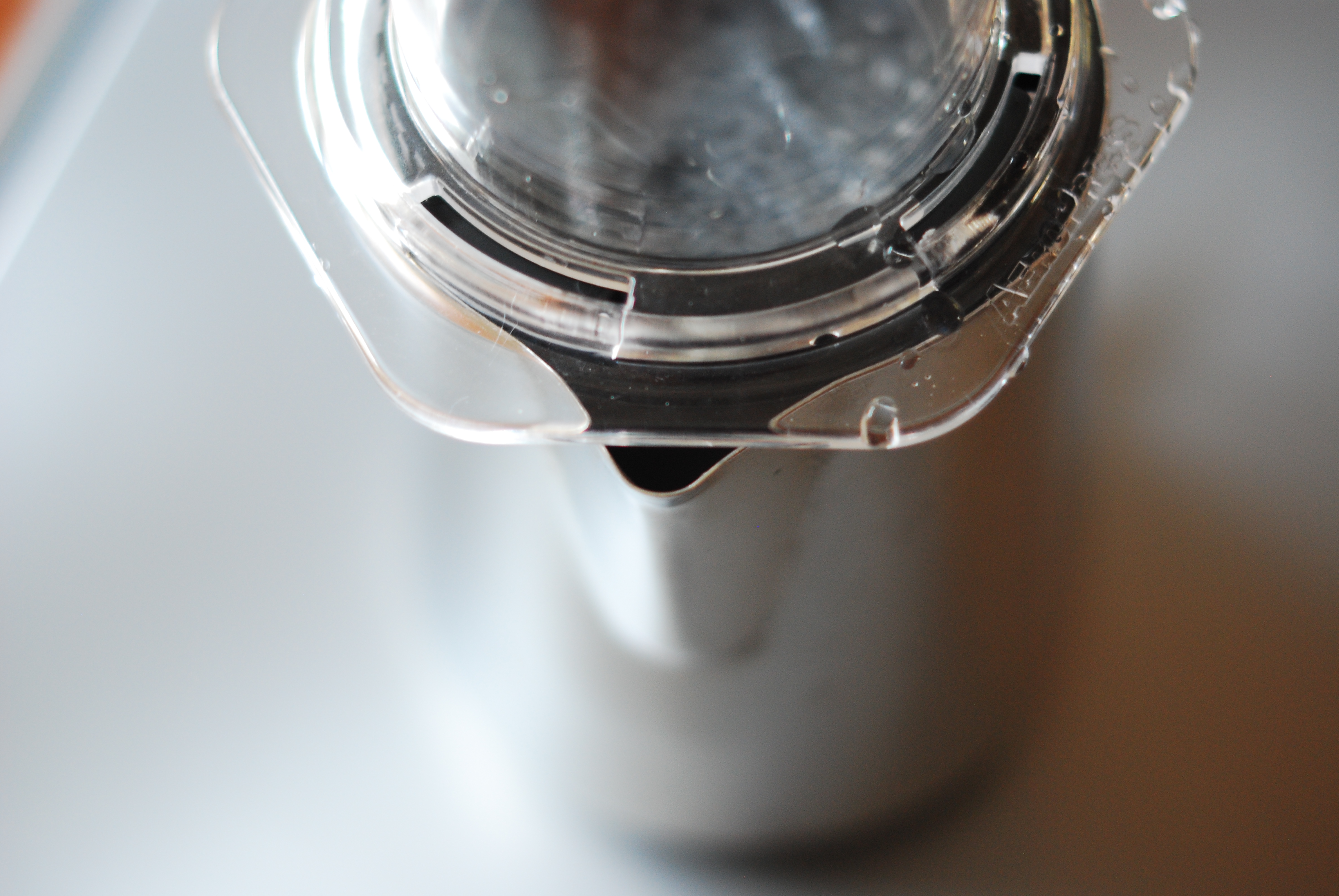
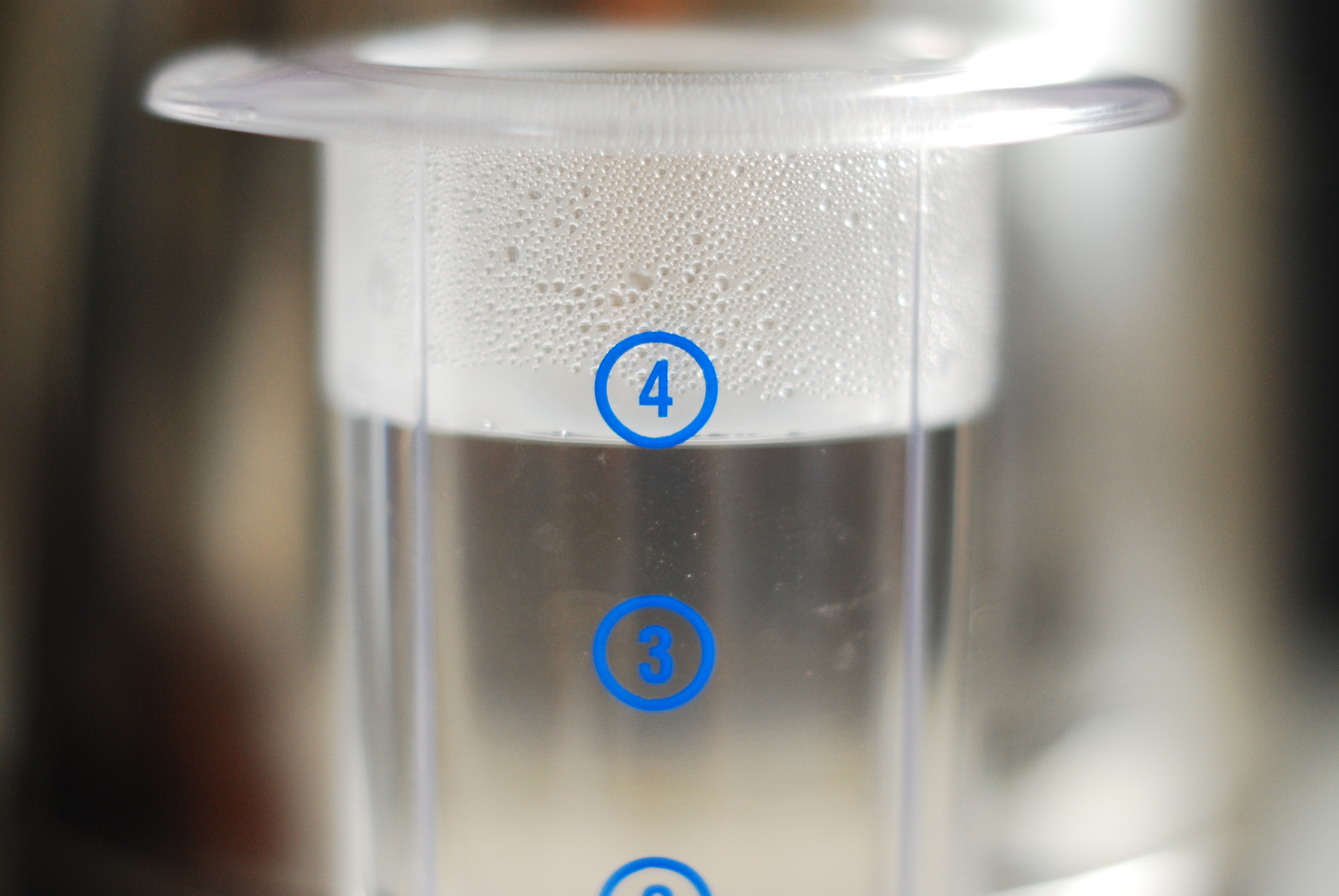
SECOND – As soon as the water has boiled, pour up to “4” on the plunger. Let it rest for about 2-3 minutes. You don’t want to use boiling water, but just off the boil. You can check the temperature if you want, but between 85C to 90C is ideal.
THIRD – Measure 20g of coffee and pour into your grinder.

FOURTH – Discard the water that went through your micro filter in STEP 1 above.

FIFTH – Grind your coffee and place into the chamber. I grind slightly finer than for a French Press and not the recommended “espresso grind” on the instructions.

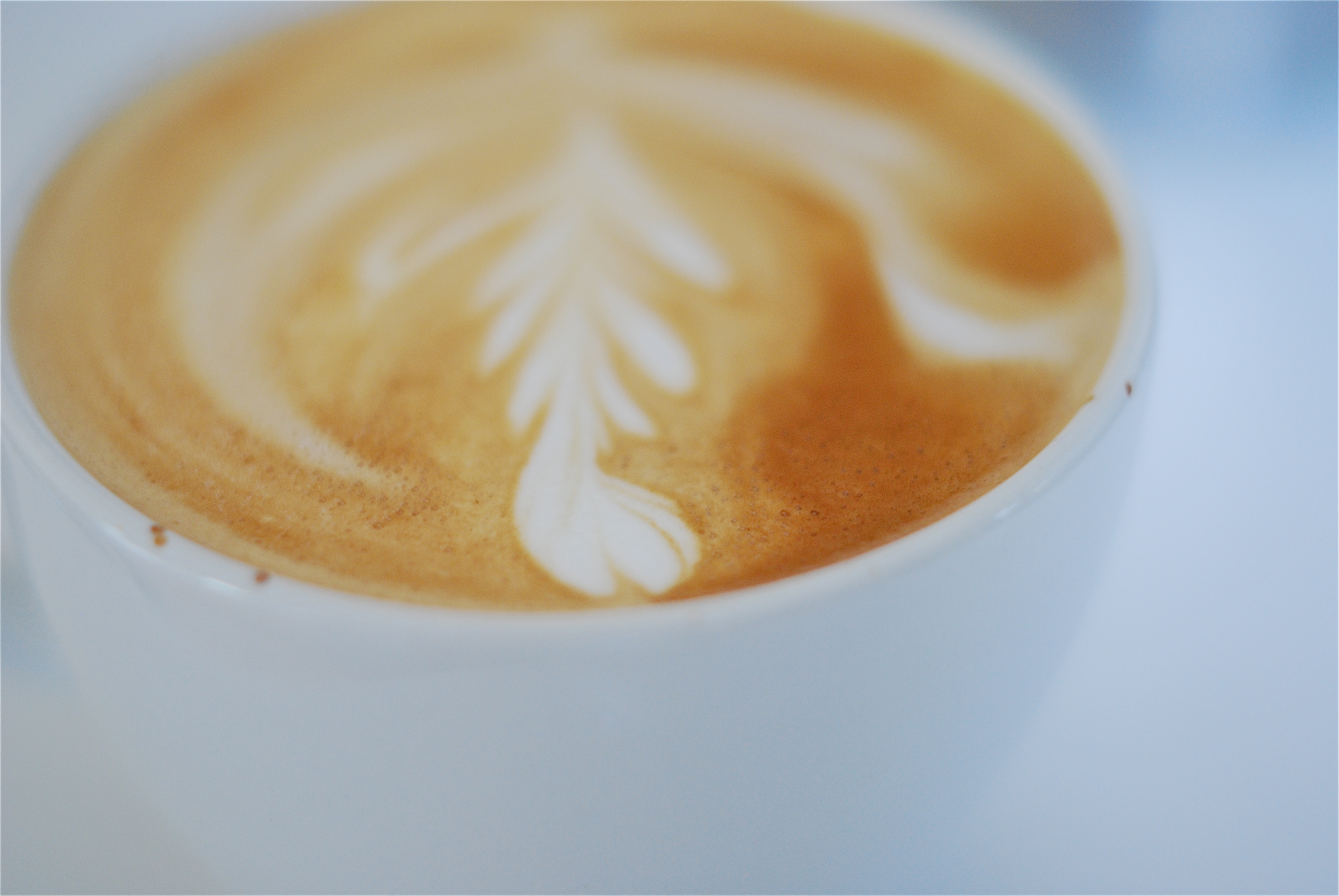
SIXTH – Pour your hottish water into the chamber in a circular motion so that the hot water touches all the freshly ground coffee. You will see a bloom coming to the top (see pic above). COUNT TO 10 SECONDS and press the plunger through the chamber with coffee and hot water gently BUT firmly.

SEVENTH – Enjoy, either with half a spoon of demerara/brown sugar or alone.

WHAT’S DIFFERENT ? I didn’t stir the coffee with the paddle and I didn’t take more than 20 seconds to brew.

WHAT’S THE GENERAL TASTE PROFILE ? a light aroma and taste, clear with medium to low acidity detected on your tongue, natural sweetness, usually with soft citrus and light caramel taste – I’ve just finished one as I write this.

OK! I hear some coffee connoisseurs screaming “how can the brew method alter the acidity ?” Well ! It does, is the simple answer. To test this, I confess that I usually brew using Espresso Lab (Cape Town’s top roaster) beans, where they source top arabica beans (Serra do Bone is Intelligentsia Black Cat Organic) and they roast more to bring out the fruitiness in coffee, as opposed to dark. Fine, but when I went to Prufrock, Gwilym gave me Square Mile Coffee Roaster’s Tanzanian Blackburn Estate coffee and the Bolivian Colonia San Juan 8 Estrellas. On the latter, it was still a light taste, but with the Blackburn Estate (great for a morning cuppa as it was heavier) although it was bolder, it still had that refreshing lightish taste.

I’ve tried the invert process (basically, do it upside down, and place the filter at the end to press through, see below), favoured by Mark Prince of Coffeegeek, but I wasn’t impressed with the taste profile, I got, so I’m still stuck to my way.

BRAG OF THE POST: I was pleasantly surprised to be asked by Gwilym how I prepared my aeropress coffee and after summarizing the above method, I was pleased to learn that we share the same method, yipee.

One more confession from the aeropress is that I find it still brings out a reasonable taste from old beans (i.e. roasted longer than 4 weeks ago). I know this, because although there’s tons of coffee at my caffe (escape caffe), I find myself scouting around my home for coffee and I’ve got to have that aeropress at night, and finding something roasted over month ago, still works in the aeropress for me.

Enjoy !

1 more thing about Serra do Bone @ Home

Serra do Bone Naked by Lameen
Serra do Bone Naked a photo by Lameen on Flickr.

I could easily have updated my last post but decided not to. In any case, JUST ONE MORE THING ABOUT Serra do Bone @ Home, which really applies to making coffee at home. I have to confess, all those years that I was making coffee at home I never measured the weight of my coffee before putting it through the grinder and extracting espresso. There are many reasons for this, which in a nutshell can be described as, that I just assumed that as long as I ground enough to fill the double basket and as long as I got about 25ml espresso in 22-25 seconds and there were nice tasting notes at the end, Voila ! it was right. Well ! WRONG – well ! that’s a bit harsh – not exactly true is closer to the final judgement. WHY ? Here we go…

1. Too much coffee doesn’t mean a better taste: We often assume that the more coffee you get into the porta filter the stronger the coffee and hence the taste. This isn’t true. Sure you may get more coffee and perhaps more caffeine, BUT not a better taste, because we now know that the coffee can taste better with lower weights, especially milk-based espresso, i.e. cappuccinos.

2. How much coffee should we use ? There’s a sort of standard agreement that espresso is made using 7 grammes of coffee, and so a double shot, should be 14 grammes, right ? Well ! not exactly. There are many parameters that affect the taste and now, some say between 18-22 grammes. So, initially I thought that at escape caffe, we would go for 20-22 grammes of coffee, so that all that milk would not drown out the taste of the coffee. However, after about a few weeks and consulting with my roaster, we realized that by reducing the weight to just under 20 grammes, we could get a better taste profile.

3. What’s the right grind ? Higher weights of coffee can mask/hide the right grind for the coffee you are using, HOW ? If you use a lot of coffee, you have to grind coarser to make sure it goes through the portafilter, because remember, that the finer the grind, the harder it would be to get through the portafilter when extracting espresso. Still with me ? BUT, if we use less coffee, we don’t have to grind so coarse. I noticed that when we were grinding the coffee, we had lots of clumps of coffee, which meant we were grinding lots and the heat of the grinder (which are programmed) was making the coffee clump together. So when we reduced the weight of the coffee to about 19 grammes, we didn’t see so much “clumping”.

All the above arguements have been discussed at great length on twitter by experts such as James Hoffman (aka Jim Seven blog), Mark Prince (aka Coffeegeek) and Intelligentsia from which I have learnt a lot about weight profiles. So, you’ll see that people weigh the beans before grinding, weigh the actual extraction liquid, across different temperatures and times and then get a ratio. In summary, you can get different taste profiles depending on the weight, time and temperature – Complicated ? Well ! yes it is, but who said that “real” espresso was easy.

One final thing is pre-infusion – a big word, but it really means that you run water through the group head before extracting your espresso – without portafilter of course. What does this do ? Well for my home espresso machine, which doesn’t have a PID (temperature control mechanism), it will lower the temperature and should make it ready for extraction – that’s the theory at least, but it’s been working for me at home, so complaints there.

OK ! so finally, when I made serra do bone at home, what did I do ? Apart from following the rules, I kinda measured the beans before extraction (I use my eyes because of experience at the caffe), pre-infuse for 5 seconds to lower the temperature to below 94C and extract in about 23 seconds and there’s definitely a difference in taste.

The first thing is more body in the coffee, but strangely enough a good taste profile, even though the beans were roasted over 22 days ago (we don’t serve coffee using beans roasted over 21 days ago, so I bring old beans home).

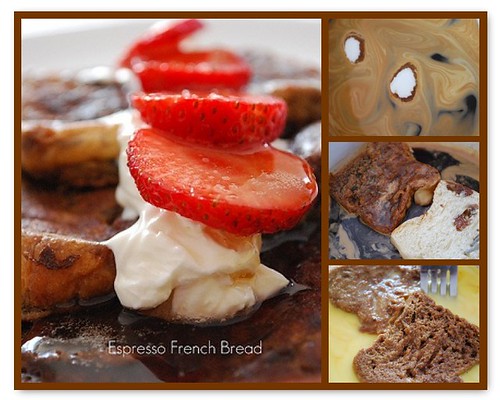
Espresso French Toast

This is for those who want to have their espresso and eat it – it might sound strange, and I must confess it does, but I’ve thinking for a while, “there must be something I can eat, apart form coffee cake, that I can use espresso as a key ingredient”. So here it is, merging my passion for coffee and cooking together for what I call a “tasty” experiment, I wish to introduce Espresso French Toast. Before taking you on this journey of sensual pleasure, what exactly is French Toast, for those of you not into cooking and baking. In short, French Toast is actually the posh word for bread dipped in mixed egg and fried until well done. It is usually topped with something sweet like strawberry jam, maple syrup or honey. I’m also guessing it was devised in a French kitchen many years ago.

So, to work then. The good thing is that this is a really simple recipe if you know how to use a frying pan, extract good espresso and fry eggs of course. So you need;

Fresh arabica coffee

Good espresso machine

Frying pan

One egg

Two bowls

Fork to mix the eggs

3 slices of small brioche (measuring 7cm by 6cm)

Two spoons of caster sugar

Sliced strawberries, mascarpone and honey/maple syrup (optional)

An appetite, but of course.

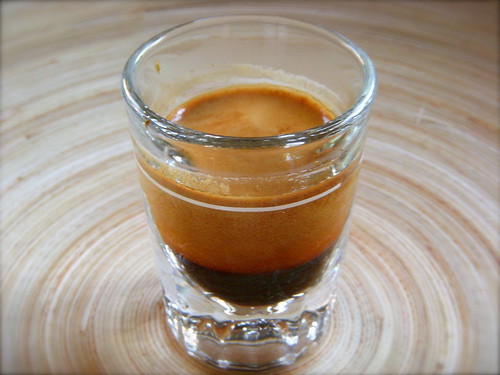
Luckily, I’ve managed to capture the whole experiment visually to make it easy for you to follow. First up, break one large, preferably organic egg into a bowl, mix and set aside. Extract one double espresso into a shallow bowl and put two spoons of caster sugar inside and mix to dissolve. It is crucial that you extract good espresso – as you can see from the pic below, the crema is ever present, and after all this is a blog about coffee and there is no compromising when it comes to coffee. I used my Andronicas Signature Blend arabica coffee, which has nut and chocolate like qualities with a vanilla twist – this is important as you’ll see later.

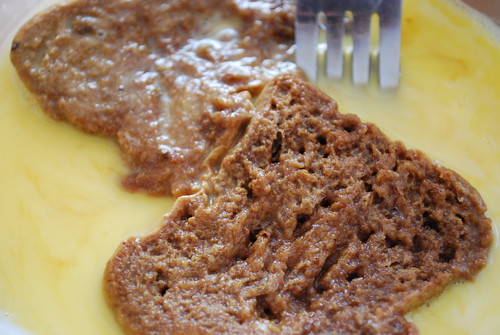
Get your slices of brioche and place very quickly into the espresso mixture as you don’t want the slices drenched in coffee.

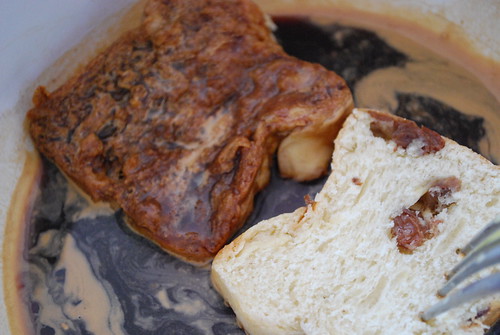
Quickly take it out and place straight away into the egg mixture, making sure it is nicely coated in egg.

Place into a hot frying pan with a knob of butter and fry each side for about 2 minutes each.

Take out and place on a plate, top with something sweet like honey or jam, or if you are flashy like me and love sweet fattening things, top with a dollop of mascarpone, slices of strawberries and maple syrup.

So what does it taste like then ? Well ! you’ll be pleased to know that the coffee elements have not been drenched out because of egg and butter. It actually had a vanilla and chocolate taste, almost like a dessert. Note that if you are going to drench your bread into coffee, the coffee should be good, displaying as much of the good qualities of a well extracted espresso as possible, so that the lovely taste is captured in the bread. Needless to say, I was pleasantly surprised, if not, let’s face it, I won’t be blogging about it.

Don’t tell too many people about this recipe as I would love to serve it in my trendy cafe, if I ever get the opportunity to open one up before I die.

Enjoy !
World Barista Champion 2009

Just thought that you might want to know that the World Barista Championship (WBC) for 2009 was won by Gwilym Davies from the UK. That means for all those people who thought the UK was behind in making good coffee, they are wrong, because for the past 3 years all the World Barista champions have come from the British Isles, so head over to London for the best espresso. OK ! seriously London is where it’s at for the following reasons when it comes to the WBC – check this connection: The WBC champion for 2007 was Jim Hoffmann from the UK and the 2008 WBC champion was Stephen Morrissey from Ireland and they both set up the coffee roastery, Square Mile Coffee Roasters with Anette Moldvaer – 2009 WBC sensory judge. Now ! the 2009 WBC champion actually runs espresso carts in London and guess where he buys his coffees from, Yep ! Square Mile Coffee Roasters – wow ! what a connection.

I learnt about this connection from Square Miles blog, so check it out for more in-depth coffee stuff, http://www.squaremileblog.com One thing that’s new for the WBC is that the machine sponsors have changed – the espresso machines are no longer sponsored by La Marzocco but by Nuova Simonelli and the coffee grinders are no longer by Compak, but now by Mahl Konig. For more about the WBC, check out their website on http://www.worldbaristachampionship.com/index.html.

Spilling the Beans

Spilling the beans – that’s right – I want to “spill” the beans on some coffee bean secrets, known to the experts but not to us minions (i.e those who do not know) but of course until now.

First, don’t be deceived by size – size matters but not in the way you think – La Rosa Costa Rica beans are advertised as low in acidity and are tiny in relation to your normal coffee bean, BUT I was puzzled, when I grounded these beans using the same timer setting on my coffee grinder when more coffee came out.

Usually with normal beans, I have to grind two and half times, but with this bean, two times was more than enough. Still puzzled, I tried crushing the beans between my finger tips and found it a bit tough – it was dense all the way through, which means that there was no air – the beans were “full of beans”, tee hee..

Second, still on size, smaller beans like the La Rosa above actually have lower acidity and surprise, surprise, these beans were tagged as “low acidity”. Now in coffee, acidity is actually what you are looking for and these are typical of much prized Central American and Kenyan coffee beans. So, in summary, smaller beans usually have a lower acidity than bigger ones, but of course, there are exceptions.

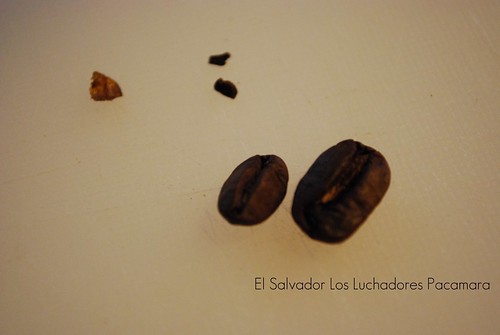
Third, coffee beans even from the same farm don’t necessarily have to be the same size – WHAT !!! Yes ! I just found this out when I bought Los Luchadores Pacamara beans from El Salvador, roasted by Square Mile Coffee Roasters of London.

I was studying the beans like one does before they grind them and thought, “that’s odd, why are some beans bigger than others ? Have they mixed another set of beans with what I ordered – that’s it I’m calling them to sort this out…”. So I quizzed the roaster, Anette from Square Mile Coffee, and she explained to me that this is normal and one way to test this, is to actually painstakingly separate the larger beans from the smaller ones and take a tasting test – they will taste the same. As she is a WBC Judge, who am I to argue, but to learn.

Fourth, and perhaps not that exciting for some of you caffeine junkies, is that when making coffee that needs a longer contact with water, like filter coffee (4 minutes and more) or French Press (4 minutes), you should ideally get a stronger coffee so that you get the real taste, rather then a watered down one. I also have to point out for those of you who have not visited the main website – shame on you – that the longer the bean has contact with water the higher the caffeine content. What does this mean ? Making coffee using a cafetiere/French press or a filter system means more caffeine than for instance making espresso. I just wanted to mention this again, because whenever people see you drinking espresso, they always say “isn’t that really strong ?” But of course I am always glad to explain that it isn’t and they look at me like “really ! are you really into coffee ?” Only if they knew.

Beans, beans, beans – there’s so much more to know about you.

I’m Drinking Square Mile Coffees

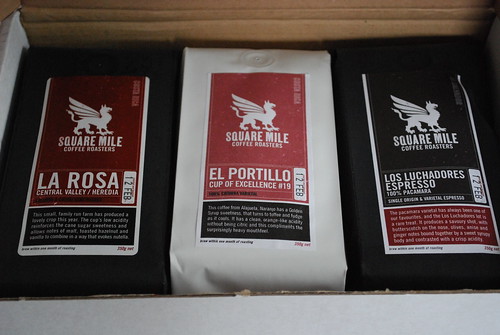
Yes ! It’s finally here, after several months of waiting, Square Mile Coffee Roasters have now started roasting specials coffees for sale. OK ! a brief history as to why I’m excited by this particular coffee roasters – the 2007 and 2008 World Barista Champions, James Hoffmann and Stephen Morrissey respectively together with another lady – I think her name is Anette – teamed up and because of their love of coffee, I guess, decided to take this to the next level and opened up a coffee roaster in London. They do mail order all over the World, which suits me fine, because with the current currency crisis, it is now about the same price for me to order coffee from London, including postage and packaging as it is for me to buy my current 1.2 kg monthly consumption of coffee in Vienna. On coffee sizes, Square Mile sell a minimum of 350g sizes and on my first order, I was able to order my monthly supply in 3 bags, which took a very impressive 3 days to arrive.

They also roast twice a week, Mondays and Thursdays, so try and place an order about one week before you want to drink it, so that when it arrives, it has “de-gassed” for a recommended one week before you start extracting it. For more about Square Mile Coffee Roasters, please visit their website on http://shop.squaremilecoffee.com/ or just click on my blogroll to the left.

Now to the coffee. I’m not going to go into too much detail but I will just give you a taster of my experience and in a move away from tradition, use some wonderful shots of the stuff to reflect my tasting experience. My first experience was actually at Flat White in December 2008 during my last visit to London, as Square Mile now supply the coffee for Flat White. I bought a 350g bag for me to take back to Vienna, which I think contained some Central American coffee (secret blend, which Square Mile were not disclosing when I asked naturally). Why Central America ? Well ! from my experience I find Central American coffees really blend with well poured milk based espresso drinks.

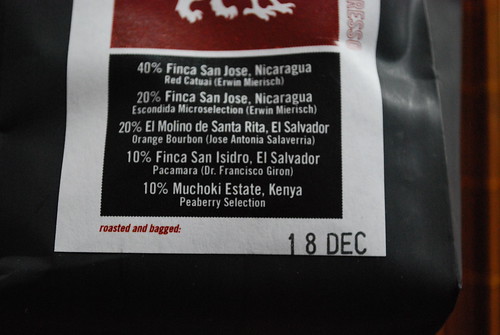
Still with blends, Square Mile naturally have their Winter Espresso blend, but not wanting to hide anything and I must confess, this is the first time I have seen a roaster disclose the composition of their blends, they show you right on the packet what’s in their blend.


Winter Espresso Blend

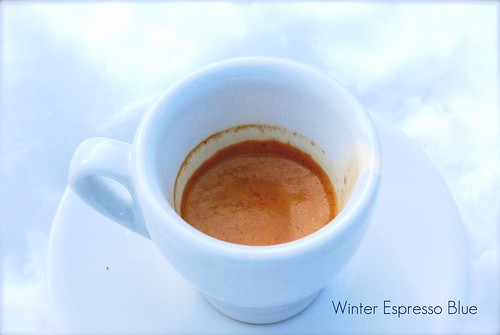
Naturally, it’s nice, clean, sweet, dark and rich espresso, with complex tones for me, and during the last big snowfall, I was inspired to rush out and take this pic, naturally called Winter Espresso “Blue” – the blue is for the wonderful blue sky that reflected on the snow white of the cup and the snow.

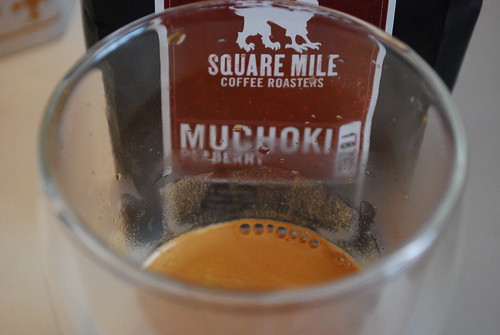
Now, a coffee that features rather little in the Winter Espresso blend is the Muchoki Peaberry from Kenya, which had a tart cherry taste for me when brewed as an espresso. So, I’m going to go out on a limb here and recommend this coffee for filter or Cafetiere style coffee as the strength can be minimised by having a longer contact with water. In any case, to show off the lovely dark colours of this coffee, I took this pic in my new Bodum cup.

Now, off to the other part of the World, Central America, which by going through the coffees on sale at Square Mile, is their favourite pat of the World to get coffee. I’ll start with a mouthful, which I love saying to myself, El Molino de Santa Rita El Salvador. A “nutty” taste for a cappuccino. Still in Central America, we move to Costa Rica, for some the best coffee resides here with high acidity, a clean taste and with complex flavours. I tried two from Square Mile, the first, La Rosa, which unusually has low acidity and one I favoured for cafetiere style coffee after lunch at work.

However, in following with a family tradition, one which my daughter seems to have picked up when eating her favourite food, I’ve saved the best for last and it is…. El Portillo Cup of Excellence – wow !

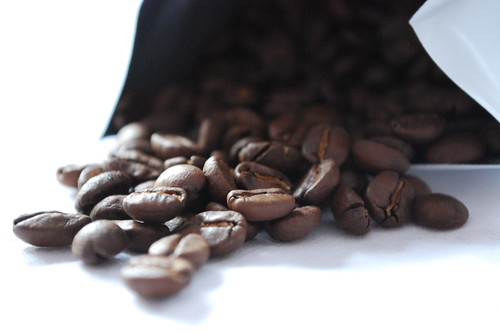
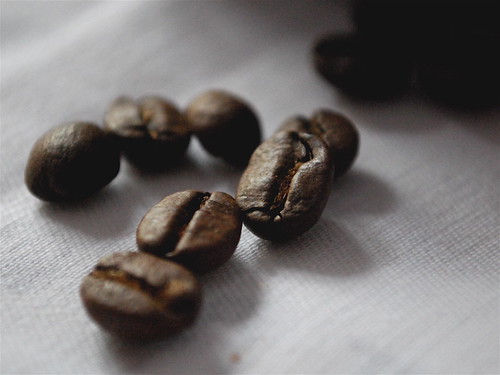
I haven’t been this excited about a type of coffee for for a while. So, in order to get a really good feel for this coffee, I cleaned out my grinder, studied the beans, which look lovely close up.


El Portillo Beans
El Portillo Beans

Got out my La Marzocco Bottomless filter not to miss a moment


El Portillo Naked
El Portillo Naked

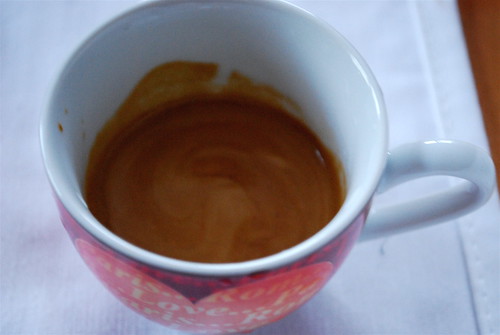
OK! I’m beginning to sound a little bit OTT here, but life is short and sometimes you’ve just got to be bothered and committed to going all out. I extracted it into my espresso love cup, newly bought for me by my darling wife, just to capture the love of this very special bean.

El Portillo Espresso Love

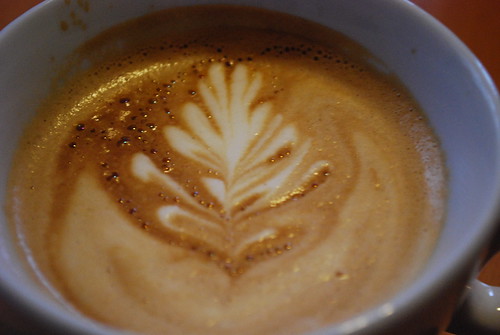
I liked it so much that as someone that tries to share lovely experiences, took it to work and shared it with colleagues. What was amazing, was that one of my colleagues, who doesn’t really drink speciality coffee, but tastes wine, described the coffee almost to a “T” as described by Square Mile on the package, toffee, caramel, heavy mouth feel and complex. It’s really versatile as a coffee and I mixed it with another Square Mile coffee, Los Luchadores Espresso Pacamara– El Salvador, which made a nice cappuccino and inspired me to pour this little flower.

El Portillo Cappuccino

For me, no doubt it is really special brewed in a cafetiere, which is what I’m doing with it now, after every lunch time. I noticed that it smells like toffee and tastes like caramel and the aroma just permeates my room so much so that any of my colleagues coming into the room notices the lovely aroma. I’ve just checked on Square Mile’s website, but this lovely bean is no more…. all good things must come to an end boo hoo, but I trust that the guys will find a suitable replacement. Buying coffee from Square Mile is highly recommended by moi.

Have a Date With….

Cappuccino Date

This picture is for those who want to celebrate their love….. of C_FF_E

OK ! get ready for tomorrow – flowers, all things red, perfume, etc – but of course, don’t forget the coffee.  Enjoy the picture.

From Coffee With Love no less, xxx.

My Bodum Pavina Glasses

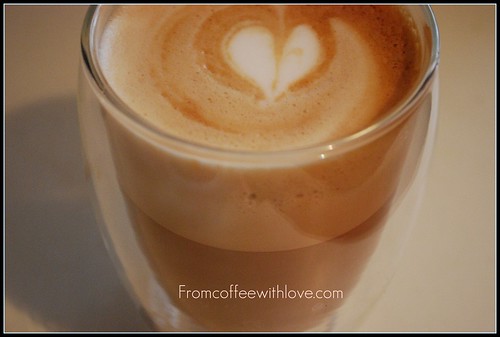
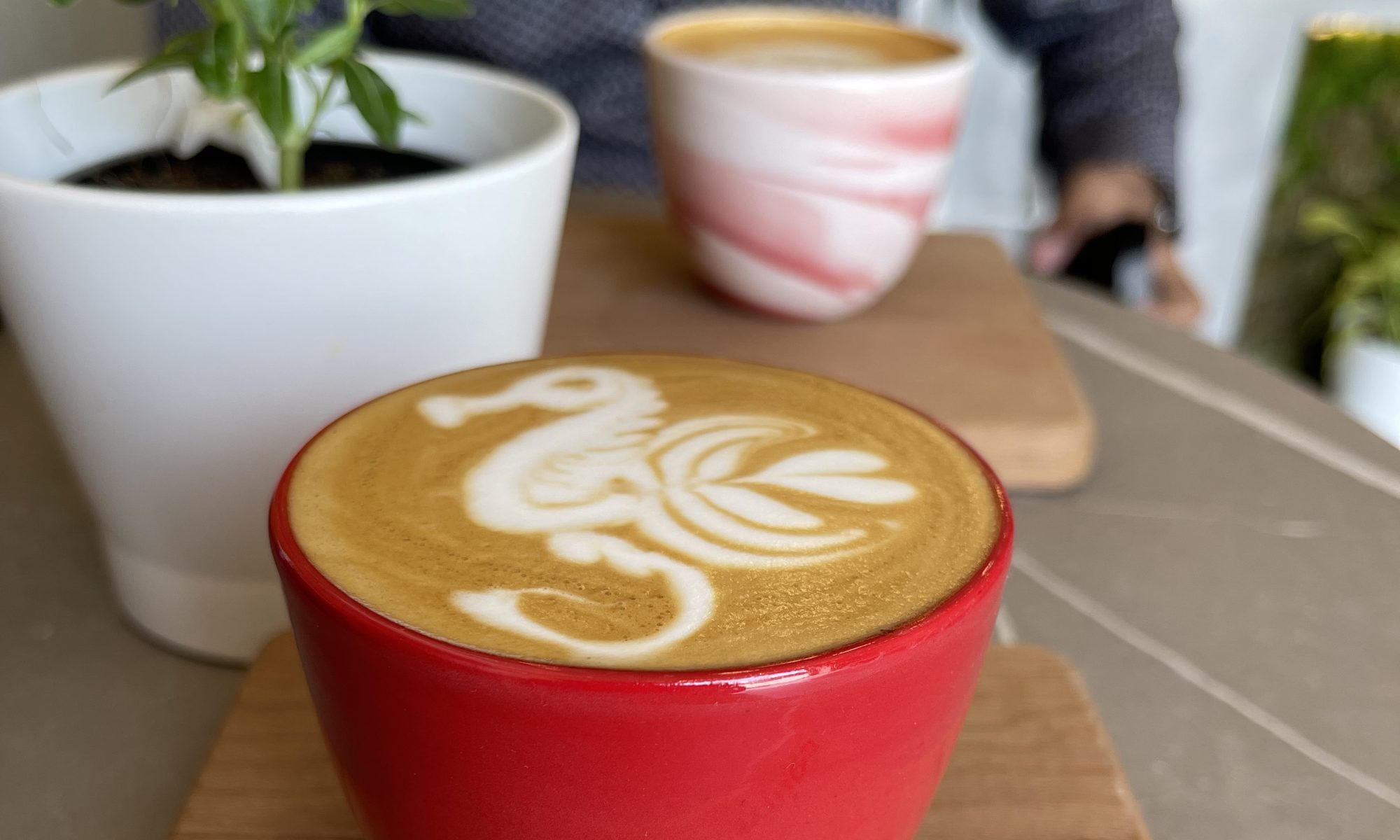
From my pictures on my blog and on my flickr account, you should know by now that I like different types of glasses and cups to take my coffee pictures in. After all, with just a little dark brown liquid, sometimes with a dash of milk to take a picture off, you have to make the best of its surroundings and by this I usually focus on the container, the cup. So on my trip to Bodum’s first shop in Vienna, located on 2 Marc-Aurel Strasse, 1010 Vienna, in freezing -6 C temperature, I was shown Bodum’s Pavina glasses. I thought for about a few seconds how these double wall glasses would look like with espresso or cappuccino in them and being someone who usually knows what they want and tempted by very good customer services, I bought a set of 2 glasses – the 12oz version, just right for your classic cappuccino. The next day, I couldn’t contain myself and used the glasses straight away for my morning dose of cappuccino and of course poured a heart;

I just liked the way you can see how the frothed milk blends in with the espresso and you can see the foamy part just sitting on top. The added bonuses of this glass is that because it is double walled and mouth blown, you cannot feel the heat from the coffee when you hold the glass in your hand and it keeps the coffee hot for longer, plus of course it looks great, doesn’t it, especially when you pour latte art, with different shades of milk and espresso milk combinations ?

If you want to impress your friends and love cooking and baking, then you can make a hot dessert in these glasses provided that the oven temperature doesn’t go over 180C and alternatively you can make cold desserts in them. From the coffee side, the glass is just the right size for a double shot espresso Cappuccino or Caffe Latte. So, if you’ve got about €20 to spare during these tough economic times, then buy a set of two.

The Naked Portafilter

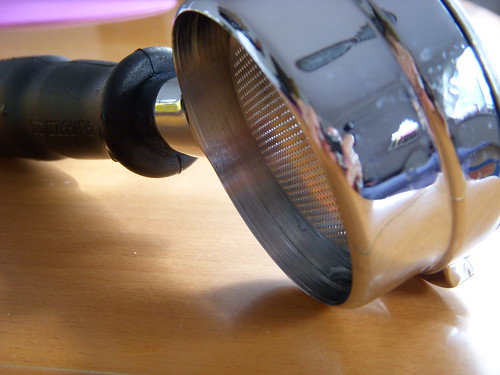
I just can’t go out like this and I’m ashamed to say that it is almost the last day of 2008 – my first full calendar year of blogging – and I have not posted a blog on my number one discovery of the year, the Naked or Bottomless Portafilter holder, You what ? You may say, but take a look below and don’t be shy to ask, if you are a novice of course, what is this ?


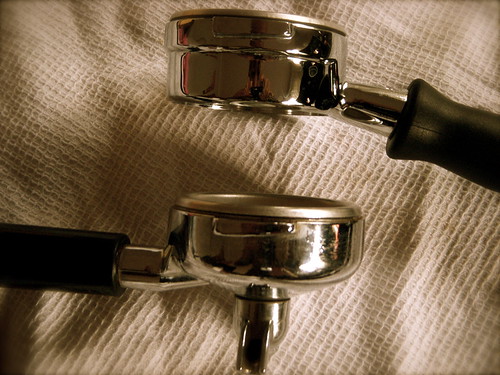
OK ! I’m going to make this quick and as exciting as possible because although this looks straight forward, it can be quite complicated explaining what this tool of tools is. Luckily for you, I’ve ploughed through a few articles, blogs and discussions to try and summarize what this little invention is all about. Traditionally, you have the normal portafilter holder, with two spouts (for making 2 espressos at once) or one spout (for making one espresso at a time). Anyway one day, someone wanted to know, what goes on if there are no spouts and you can see right through, hence the terminology, “naked” or if you go with the more simplistic terminology, bottomless. In this way, you can see how the coffee begins to come out through the little spore holes in the filter and approximately how many seconds the coffee beings to emerge at what bar/pressure level to make the exact quantity – Are you still with me ? I hope so, because I cannot make it more simple than that. In any case, the next step was to cut off the spouts, so that you have two types of portafilters like below.

The traditional one is below and the bottomless one is above. You will be glad to know that to make your portafilter “naked” or bottomless, you don’t have to get your chainsaw out or find a local mechanic who will really think you are crazy but who will nevertheless take your money – you can order one form the best, La Marzocco, of course. OK ! it might not be that cheap, mine cost about 60 Euros ($75 now), but it will be cheaper in the States and you can get one for about $60, made by another company like Rancillo.

From an academic view point, if we want to scare you off even more and bring in words that remind you of school, like the word “academic”, the bottomless filter is a good training tool. For example, if you can see what is happening from a “naked/exposed” view point, you can correct your mistake and improve your espresso shots. I can’t get away with this, but I’m going to have to go into “Lesson” mode for this tool, so that you really appreciate what I’m trying to share with you, so here goes. 

Assumptions:You are an espresso freak and you know the essentials about making an espresso using a really good grinder and good heavy brass espresso machine (upwards of $500). So you know that you buy relatively fresh beans, grind and then tamp them with 30 pounds of pressure, so that the 30 ml of crema top espresso coffee comes out in about 23-27 seconds. OK ! so you are a coffee geek or coffee snub, that’s settled.

Lesson 1: If you don’t tamp properly or use too little coffee, assuming you are using the correct grind, then some of the coffee will be under less pressure and your espresso cup will fill up more quickly, violating the 23-27 second pour rule for approximately 30ml of coffee. In short, if using the naked portafilter, you will see a blondish type cone pouring into your cup, which will be flowing with bad tasting coffee. Furthermore, the coffee will be spitting from the outside all over the cup and your coffee machine, making a right mess. It’s like the coffee is saying, if you can’t handle me right, then I’m going to spit on you. In any case, the spitting occurs, because the coffee has not been tamped well or is too little in a particluar area of the portafilter and hence the pressure pushes it out with a lot of force. I don’t have a picture of this for you, but trust me, it has happended to me, when I used less than the recommended 14-15 grammes of freshly ground coffee for a double espresso – I was in a rush to get the kids to school. Also, in this spitting scenario, if you attempt to take a picture, you might get coffee all over your lenses.

Lesson 2: If you tamp properly but the grind is too fine, your coffee will take ages to come out and will taste sour/burnt. In this case, using the naked portafilter, you will see that when you get to 18 seconds, drops of honey like espresso begin to pour out – it may look good, but it isn’t going to taste good, trust me and of course you are not going to get 30ml of espresso coffee into your cup between 23-27 seconds, but much less. Again this has happened to me when I got a new bag of coffee and wanted to test for the right grind. Seeing this scenario, I quickly loosened the settings on the grinder to avoid wasting anymore precious coffee.

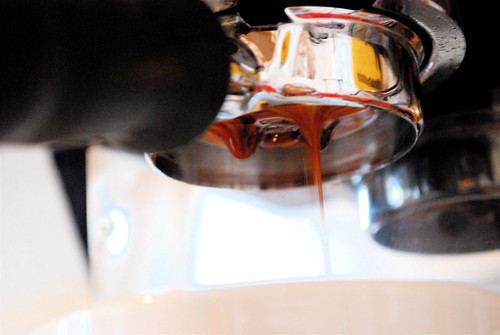
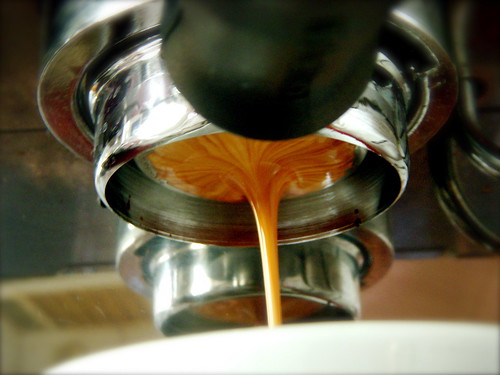
Lesson 3: If you do everything right, this is what you should see (below)

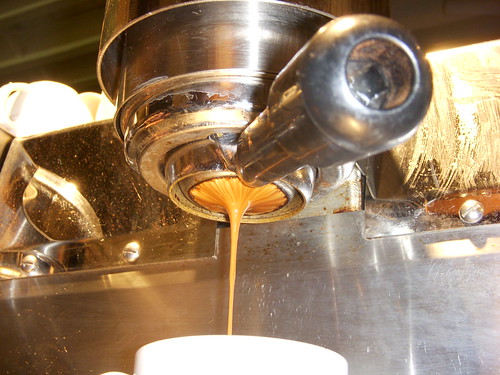
Now, doesn’t that look lovely ? You can see a few colours here. The darker ones have a higher concentrate of well extracted coffee and you will notice that the coffee seems to be flowing right, without any gushing.

If you are feeling brave, hold a single shot espresso cup carefully over the naked portafilter, making sure you watch the extraction closely so that you don’t burn your hand with free flowing 93C degree coffee and you can also make a ristretto, with should display excellent crema as evident by the dark brown bits, which dominated this cup of ristretto (i.e half a cup of espresso).

Conclusion/Analysis: Using the naked portafilter helps you to (i) estimate very quickly if you have the right grind (ii) improve your tamping technique, especially in making it more even (iii) know very quickly if you used to much coffee or too fine a grind (thick honey drops) and (iv) look good, if you invite your friends to show them a perfect extraction, but practice beforehand.

What Else ?According to some experts, because the extracted coffee comes into less contact with metal, because it basically flows from the portafilter into your cup, you should get a more “purer” taste of coffee. If you notice, there will be very tiny bubbles in your cup.

In any case, I usually use mine when I get a new bag of coffee from a different roaster or a different type of coffee. When I got my naked portafilter, I used it for several weeks, because I just liked the way it flowed into the cup. Serious coffee shops like Origins Coffee Roastingin Cape Town have naked portafilters, like the one below, extracted on their Synesso Cyncra machine.

Also, my favourite coffee shop in London, Flat White have them, as evident by my request for a triple espresso, using a naked filter (see my post of 25 March 2008), but you will have to make a request for it.

My advice, go on experiment and enjoy, HAPPY NEW YEAR !

Light a Candle for…..


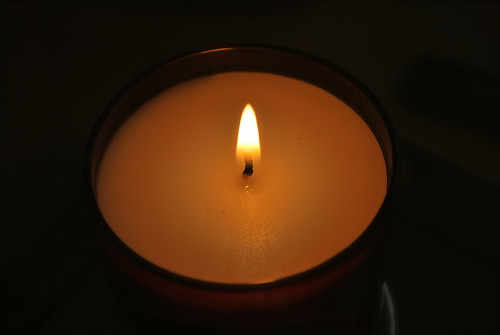
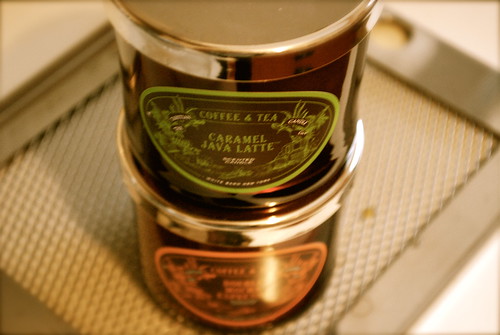
Light a candle for America… No ! Seriously, light a candle for COFFEE. These coffee candles are from America – whatever next you may ask ? but my sister sent me these from America, bought from a store called White Barn (New York), apparently famous for making lovely candles. As soon as she saw these, she thought “my bro would love these”, she bought me a whole bunch and sent them over to Austria. They’ve got lots of flavours like Caramel Java Latte, Double Mocha Espresso, Java and even Chai Latte & they smell really nice too.

So, if you are inviting people over for lunch or dinner and don’t want to waste your lovely coffee by grinding it to extract the aroma just to get the right ambience, then buy a bunch of these, light them up and hey presto, everyone get ready for coffee, after dinner of course. I haven’t seen these type of candles in Europe, but if I find anything similar, I’ll write about them too – why do we always miss out on this side of the Atlantic.

In any case, if you know of anyone popping over to America to take advantage of the relatively low dollar exchange rate, then ask them to look for these and impress your family and friends with this special find. It may also work in cafes, where you may want to light them up to erase some of the foody smell to preserve a real sweet cafe ambience – just a thought and if you use it, tell them to check out my blog and website too – spread the love of coffee.