Yemeni Mocha Espresso

Sometimes you think you know about coffee and then you try something and it just surprises you and you think “Let’s through that theory out”. If you are a keen follower of my blog, you’ll have read my ranting and raving about Yemeni Mocha in my post of 3rd June 2009.
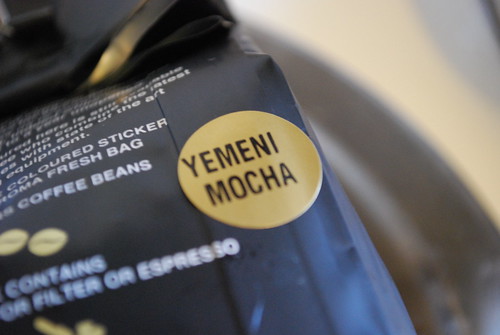
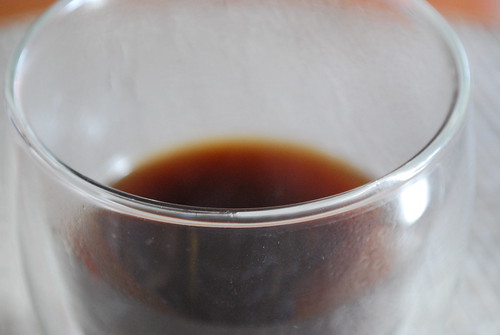
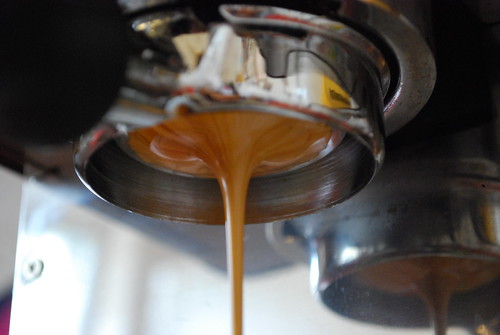
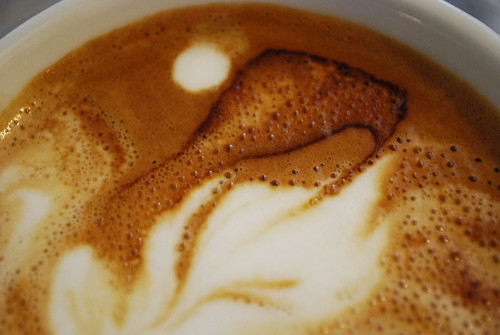
Now usually when a coffee has what I call a really special taste that wraps around your mouth and has solid tones like Yemeni Mocha, Costa Rica El Portillo and many East African arabicas, extracting this coffee as an espresso I find makes you miss out on some of the really fine tones and tastes of the coffee. However, when extracted using a French Press, you really get to experience different tastes in your mouth and it really goes down well (your stomach). Now, just last week, I had run out of “espresso” coffee – Yes ! that’s right, there are some coffees that are better extracted as espresso than in using anything else (French Press, Filter, Moka, etc). I was now in a dilemma. Should I just drink French Press coffee all weekend using my Yemeni Mocha, or should I try it as an espresso. With nothing to loose, I used my precious Yemeni Mocha for espresso and….. Wow ! What an experience. Just look at that colour and yes it does tastes like it looks, dark, mysterious, smooth and delicious.
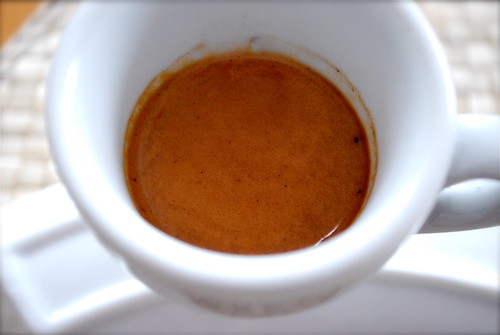
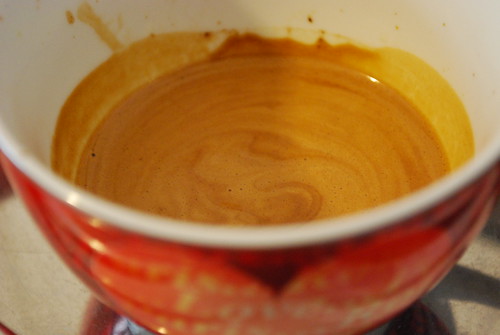
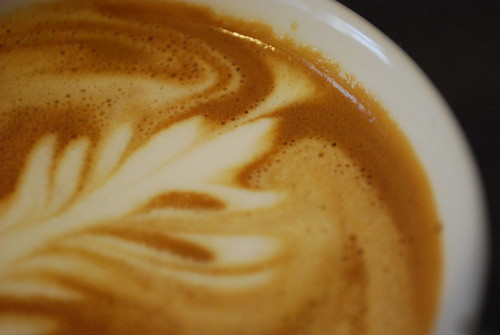
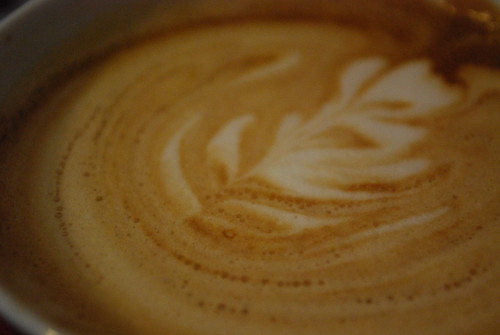
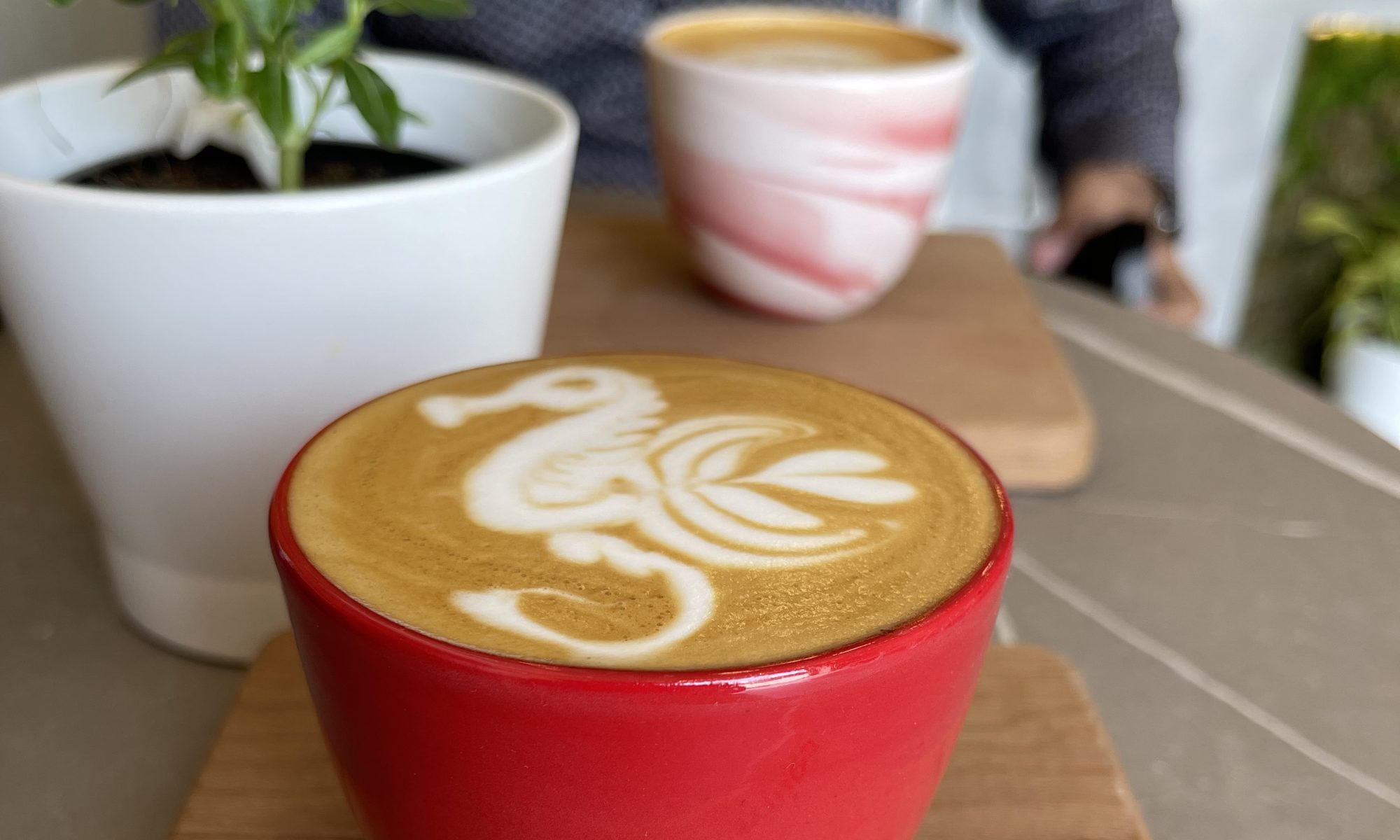
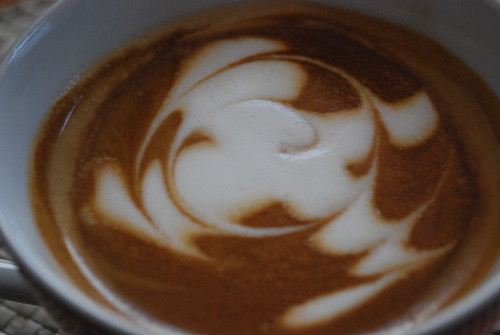
The common characteristic of this bean is definitely chocolate – and it isn’t lost when drinking it as an espresso. It’s like dark chocolate and the colour is amazing. Perfect for latte art as you can see below, as it displays different tones of brown as the coffee blends in with the milk.

As a milk based espresso it tasted like…. come on, you can guess right ? Yep ! Milk chocolate. You don’t really need to add sugar to this drink and you can rest be assured that you won’t regret it. However, before you rush out and serve this in your cafe, there might be one reason you won’t find many places offering Yemeni Mocha as espresso based drinks – it’s relatively more expensive than other single estate or blends. Sure, roasters like Andronicas (where I ordered this coffee from) who have a cafe in Harrods – one of the most prestigious and expensive stores in London, can get clientele to pay about the equivalent of $5-$7 an espresso, but some people especially during these trying economic times might scream daylight robbery at you. So, my advice, spoil yourself and use your precious Yemeni Mocha for both types of coffee, espresso and filter, not forgetting that the same amount of coffee used to extract a double espresso will make two good cups of coffee if using a French Press.
Impress Your Friends… Latte Art Twirl

I’m going to share a really “impress your friends” coffee recipe with you that should make your friends go “Wow ! you’re really good at this (insert your name here)”. OK ! first up, I’ve got to break it down to you… for purists, there’s a difference between LATTE ART and what some call LATTE ETCHING. Latte Art really means pouring your well frothed milk into your well extracted espresso and pouring it in a way that displays a design like a heart, flower or rosetta – you’ve seen many of these designs already on this blog – if you haven’t, scroll down, or check my “Art of Coffee” category or Flickr account. OK ! So what is etching then ? In summary, it means playing with the frothed milk by making designs with a tooth pick or tool. So to work then.

Assumptions, assumptions – I’m assuming that you know how to extract a good double espresso into a cappuccino cup and that you know how to froth milk properly – note on that, if you froth milk properly, it should be fairly quiet, so if you hear that loud frothing noise in a cafe, then prepare yourself for badly frothed milk with lots of air. So first up, after extracting espresso and well frothed milk, pour the milk into the espresso beneath the crema cloud, making sure that there is no sign of milk, saving the real frothy stuff. Now, spoon out the froth on top of the espresso cross ways.

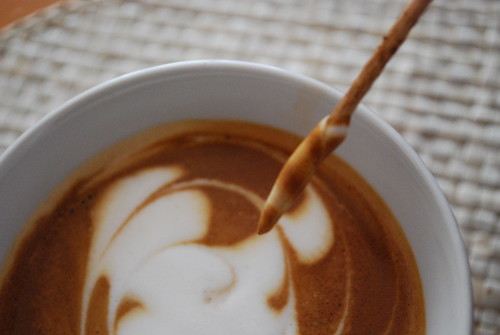
Take a picture…. Now, get a tooth pick or wooden cake tester and place it right into the centre of the white cross

Now, I’m assuming you know how to draw, so quickly draw a circle outwards until you get to the edge of the cup and voila. You can even see on the stick the two tone colours, white and cappuccino brown.

Good luck and I hope to get a video of this up soon on my Vimeo account, God willing. Check this space.

I’m Drinking A Special Coffee…. Yemeni Mocha

Before I delve into the details of my current coffee experience, I thought that I’d give a very brief background on the coffee called Mocha. In short, the name Mocha comes from the old Yemeni port called al-Muka and was given to one of the first types of arabica coffees because it had…. mocca qualities. OK this isn’t a typo – by “mocca” I mean, chocolate like qualities. Tasting and drinking this type of coffee, provided that of course, it is made properly, should remind you of chocolate and it is no surprise that in most cafes, a mocca is typically a chocolate infused milk-based espresso drink made with additional cocoa powder or in more fancy places with chocolate syrup like Monin or Torani. Anyway back to history – mocca coffee originated from the Sidamo region in Ethiopia but it has come to represent the type of coffee grown in Yemen – the first place to grow coffee outside coffee’s home in Ethiopia. Most experts still reckon that the best mocca type coffee still comes from Yemen but similar tasting coffee can naturally be found in Ethiopia. Sadly for lovers of Yemeni coffee, coffee is being grown at a lesser scale in Yemen, meaning that what comes from Yemen is not only getting smaller in quantity but of course higher in price. The main reason for this concerns money of course and politics and so I will not proceed as this is not a blog for politics but from a coffee point of view it is very sad.

Anyway back to that scarcity thing. So, as you can imagine, when I was scanning Andronica’s World of Coffee website to buy some coffee to try, I was delightedly excited to see Yemeni Mocha on the list. I thought, if Andronicas have been supplying top quality coffee for the World famous Harrods of London then they ought to have this very special coffee. So, being a bit cautious and mindful of my pocket, I ordered 500g, to be roasted between medium (in order to bring out both a rich taste) and dark (bringing out the mocha or should I say chocolate tones). I also knew that for this special coffee, the brew of choice would have to be filter as I find this method tends to favour really rich coffees, witness El Portillo and Costa Rica Don Mayo (see previous posts this year). A further step, to make sure that I absolutely got the measurements spot on I wanted to follow the experts; so first up, I recall an e-mail I received from Anette of Square Mile Coffee (London) in which she advised me to use about 12 grammes of freshly ground coffee per 250ml/grammes of just of the boil hot water  and secondly, wait for it, weigh the water as opposed to measuring it. You may not know this, unless you are a top chef, but weighing your liquids is more accurate, so I did that at home on my electronic scales. However, I was even more lucky, because I didn’t have to through the agony of memorizing where and when to stop pouring water nor weighing freshly ground coffee, during the absence of scales at the office because my Solis Maestro Coffee grinder grinds exactly 12 grammes of coffee if you put it on setting “2” and my treasured Bodum Columbia French Press, takes exactly 250ml of hot water if you fill it almost to the top with the massive crema/foam sitting on top. Luck me eh ?  

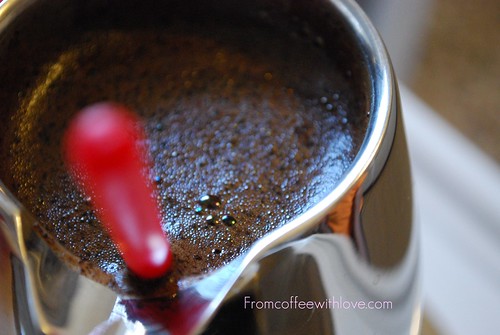
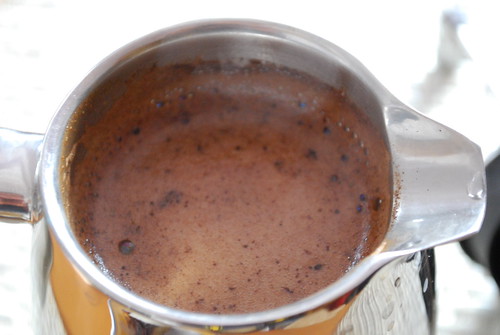
Oh ! look at that filter coffee crema – dark, mysterious and bubbly, waiting to be drunk by moi.

Well ! I’m more than glad to report that it was more than worth it. Wow ! what a taste. Even before the bag was opened you are already promised what would be a great taste because the aroma is just wonderful – what every coffee should smell like – chocolate and nutty with a smell that goes up through your nostrils and begins to wet your appetite. The taste is like bitter sweet chocolate rolling over your tongue with “real” coffee and the taste lasts in your mouth for at least an hour undisturbed. My colleagues at work got so used it, that they would come rushing to my room as soon as it began to brew. One colleague called it the best coffee she had tasted and even after she had shared it with half a cup of hot milk – the taste was so powerful, piercing through the milk. Another colleague was so impressed that she got me to order 500g for her, which she plans to hide in her house away from her kids as she doesn’t think they’ll appreciate it, mistaking it for shelf stuff. When I gave her the bill, I said “it’s a bit expensive”, but she said “it’s worth it”. 

OK ! how do I end this ? Well ! I can tell you that I’ve ordered another 500g from Andronicas – check out their web shop on my blog roll and if you visit London, go to Harrods, 4th floor and buy some bags. My main contact at Andronicas is so kind to me that he has given me a discount on both occasions when I bought this online to be delivered in Vienna, making this coffee experience one of my best buying experiences of the year. As you know, I love variety and I’m always in the hunt for new coffees, rarely drinking the same coffee for more than 2/3 weeks in a row, but for this I’ve made an exception and will be drinking Yemeni Mocha for what will be almost 2 months in a row, at least in the afternoon after lunch, but due to the scarcity and the good guys at Andronicas, it’s worth it…. a very special coffee indeed.

I’m Drinking Origin Coffee Roasting coffees….

Well ! I couldn’t walk into my favourite cafe on the African continent, Origins Coffee Roasting in Cape Town and not buy some freshly roasted coffee. I was already enticed when I visited the new cafe upstairs and walked into order my coffee, where I noticed that at the back of the shop, was like a coffee roasting plant. Bags and bags of green coffees waiting to be roasted, placed in bags and either served to lucky customers as espresso, cappuccino, etc or sold to customers like me, who want to take the experience home.

So, feeling a bit adventurous, I decided to try two different coffees. I remember that last time I tried a Rwandan coffee, was actually from Origins Coffee Roasting and I had a pleasant experience, so when I was offered a Rwandan Mugombwa, I more or less seized the opportunity. For the next one, I was looking for something to satisfy my afternoon thirst for French Press coffee only and I was offered an El Salvador El Borbollon. However, I did have to quiz the barista that was advising me on coffees about when the coffees were roasted, because of late, I’ve just had too many “too fresh coffee” experiences whereby I buy this fresh bag of coffee that I have been promised has been de-gassing for a few days, only to get home and realise that the coffee still needs some resting time – have I lost you ? Well ! check out my post of 8 August 2008 for more details. 

In any case, I was promised that the coffee had been resting for 2-3 days and so should be ready for the grind, BUT I was nevertheless suspicious. As soon as I got home, I have to confess, that the coffee was in deed a bit too fresh, meaning that when extracted, even neatly packed into my bottomless filter, bubbles appear, resulting in splashes as evident by what I call this “dirty espresso” shot.

The taste was of course not as good as it could have been, but when the coffee had calmed down a bit, about 3 days later, it came out beautifully, as witnessed by this shot

Just look at those lovely dark coffee streaks blending in with the crema, hmmmm ! OK! so what did it taste like – I detected a vanilla, nutty and earthy taste and when blended with milk, a milk chocolate taste could be detected.


Ironically, although I bought the El Salvador El Borbollon for French Press, I found it much nicer as a milk based espresso, with hints of vanilla and milk chocolate – smooth and creamy too. I didn’t have that many challenges with getting the right grind as I opened this bag about a week to 10 days after it would have been roasted.

If you live in South Africa, try and get your coffees from Origins.

I’m Drinking…… Stumptown Coffees


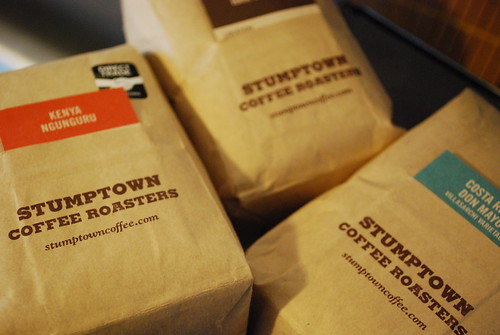
This is like part two of my previous post, because taking advantage of my parents trip to the USA I also ordered some coffees from another famous coffee roaster, Stumptown Coffee Roasters, originally of Portland, Oregon. Stumptown have 4 coffee shops in Portland itself and another 2 in Seattle. As a bit of a coffee nerd, I had naturally heard of Stumptown through scanning many coffee websites. However, I had never ever tasted any coffee roasted by them, until about several months ago (see my post of 23 July 2008 if you are serious) when I was given the privilege of tasting some Kenyan peaberry arabica coffee beans from them – Wow ! it was really special. So based on that experience I had to try their coffees again. I also like the way their coffees are packaged, nice brown bags with these really cute card inserts describing on one side where the coffee comes from and on the other side the types of tastes your tongue should encounter, if brewed properly but of course. 

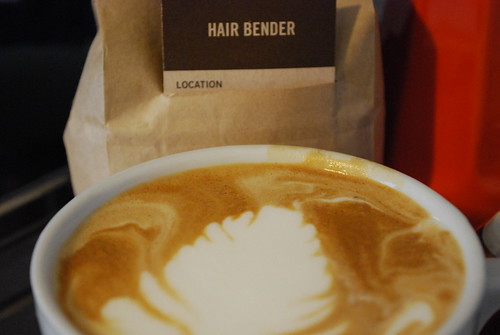
First up is one of their most popular coffees, the Hair Bender – interesting name. For some unknown reason it was difficult for me to get a consistent grind, so it was a bit of a …. wait for it… hair bender…. trying to get the right grind, meaning that as a bit of a perfectionist, I wasted more than I would have liked trying to get my 25 second espresso. In any case, when it did it come out, and I gave it a good stir, it displayed this S sign….. kinda wierd, but I guess the coffee knows who roasted it, S for Stumptown… hmmm !


Say S for Stumptown
Say S for Stumptown

I must admit, I preferred the Hair Bender with milk based espresso drinks as I detected that milk chocolate caramel taste in my mouth.

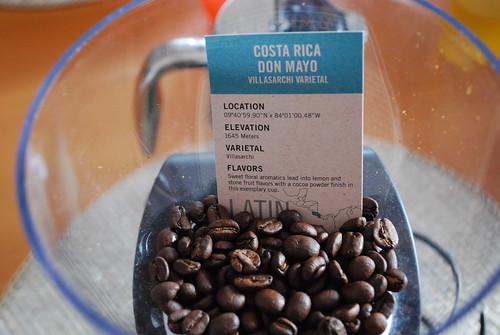
However, for me, the Costa Rica Don Mayo, was really special. Oh ! look at those beans waiting for the grind… the excitement beckons.

I describe Don Mayo as a bright and sweetish brew – one of those really special coffees. You don’t really need sugar with this coffee, it really is that sweet and poignant that it just hits you with a sweet sharp taste as it glosses your tongue.

I shared the coffee with one of my colleagues, who is beginning to really appreciate coffee and she instantly mused “Wow ! this is one of the best coffees I’ve ever tasted”. I loved it as a French Press coffee and you can tell its freshness by the display of what I call “French Press Crema” sitting on top, nice and foamy.

For the last bag, I have to thank the roaster, Shari, who when I was ordering, thought it very amusing that I was taking advantage of my parents being in the States that I was ordering coffee. We had a good chuckle and then she mentioned that they had a really clean tasting Kenyan arabica coffee. I couldn’t really afford to buy anymore, but when I got the package I saw that Shari had kindly included a free 250g bag of Kenyan Ngunguru. The description on the bag was interesting “strawberry, rhubarb, watermelon and cacao”. Now I wasn’t sure about the first three, but when I brewed it for French Press, I was able to detect watermelon on the outside edges of my tongue… hmmm ! interesting. I failed however to get the others. In short, the coffee is what I call an afternoon coffee, earthy and bold and good after a heavy lunch. I also got with a bit of some experimenting and blended the Costa Rica Don Mayo and the Ngunguru and I found it quite pleasant – the contrast between the bold and earthy Ngunguru and the sweet, clean and high acidic Don Mayo. I shared it this time with a Costa Rican colleague, who was very thankful, especially after the lovely aroma had glossed his nose, inviting his secretary to comment “why don’t you share coffee with me?” I quietly walked out.

Anyway, I definitely recommend buying coffee from Stumptown and if you are lucky enough to live in the USA, you can order online, freshly roasted to order.

I’m Drinking….the Best Espresso

Yes ! I’m drinking the best espresso that I have tasted if you think about what you want in a cup of espresso – aromatic before you grind, dark reddish brown as you extract, almost syrup like as it pours, glossing your tongue as your lips touch, soothing your stomach as it descends with a silky sweet and smooth finish and finally as a digestive to clear your stomach of any impurities. Have I lost you ? I haven’t even finished yet. At first, I tasted caramel, then dark chocolate and finally milk chocolate. Wow ! this was an espresso. It was like the coffee was having a conversation with my tongue. When slightly under-extracted the taste was vanilla like and when slightly over-extracted the taste was intensely dark chocolate – you know I wasn’t going to waste this coffee, no matter what the extraction.  Also, as soon as you finished the cup, within a minute you could feel the coffee working through your digestive system, which is good after a heavy meal in the evening.

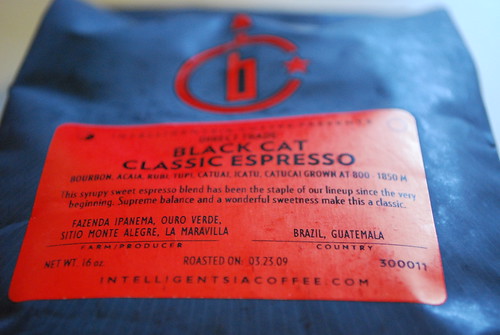
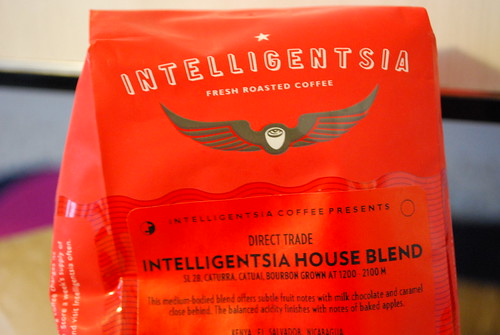
OK ! who made this, or should I say, who roasted this ? INTELLIGENTSIA !!!! – Did I misspell ? No ! I didn’t, but with coffee tasting this good, they can call themselves what they want, pertaining to intelligence. OK ! so who are Intelligentsia ? Quite simply, they are one of the most famous coffee roasters in the World, located originally in Chicago since the mid-1990s, but with shops in Los Angeles and New York now. I heard about them through sifting through lots of coffee blogs and so when my parents went to America, I ordered a couple of bags from Intelligentsia, their famous Black Cat Classic Espresso blend and of course their House Blend, which was recommended for milk based drinks. Their service was so efficient that the bags were delivered within 3 days after being roasted and I didn’t pay the super-duper postage price either. You can imagine the excitement when my parents returned from the States – like a boy excited to see a bag of sweets and tons of presents. I was even more excited when I saw that the good guys and gals at Intelligentsia had doubled my portion of the Black Cat Classic Espresso for free, thanks Intelligentsia.

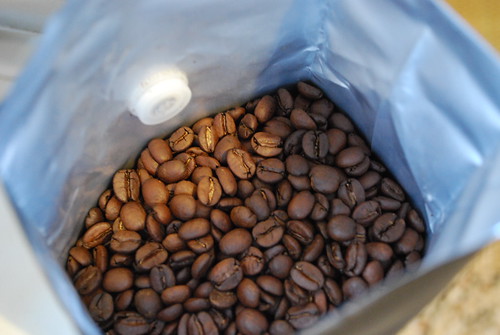
As you open up the bag, the aroma just hits you…. Yes ! we are in the land of coffee and my nose is loving it…

I was so enthralled by this espresso that I told as many people that I know who are into espresso about it and invited a couple round to taste it – trying my best to share the pleasure. In any case, they too were impressed with the espresso. This coffee was no doubt excellent as an espresso, but for milk based drinks (my usual for the morning before 12 of course) it was nice too, teasing out more of the toffee/caramel tastes too.

So if anyone is heading off to the States, please do yourself a favour and order coffee from Intelligentsia and they are not paying me to say that. 

Now ! how about the House Blend ? Love the logo with the espresso cup with wings and the exciting red packaging

Nice too, with chocolate overtones and a real winner with milk, bringing out a toffee whirl on your tongue. As an espresso, it wasn’t as glorious as the Black Cat but with two tastes of milk chocolate and toffee, inspiring me to pour this.

I also experimented, making a triple espresso cappuccino – over-extracting one portion (slightly dark) on top of slightly under-extracted double portion and pouring milk over it, et voila, see below.

OK ! I better stop, but please visit Intelligentsia on www.intelligentsiacoffee.com (it’s also on my blogroll). They sell tea too, and lots of equipment and have lots of other interesting stuff on their website – they have a half day coffee school too. One of the main reasons they have such great coffee is that they promote the “Direct Trade” concept, where they deal directly with coffee farmers and form a good relationship with them, ensuring that they get the best coffee, whilst not exploiting them. So hands up to them and I’m so glad that God gave me this special moment to sample such great coffee….. Intelligent – sia.

I’m Drinking….

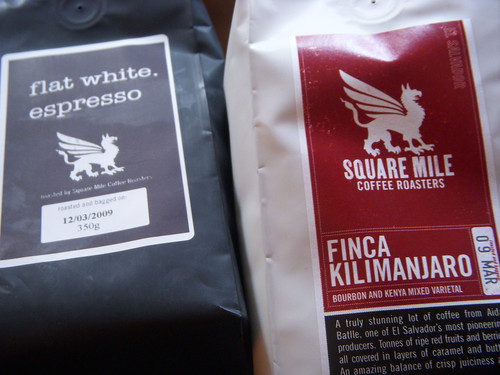
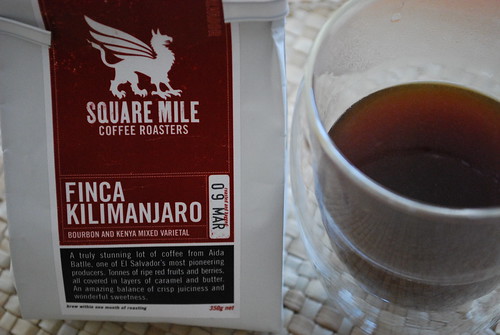
Flat White and Finca Kilimanjaro coffees, roasted by Square Mile Coffee Roasters of London. This is like part 2 of my previous post as on my visit to Flat White, Soho in London, I picked up these two bags to take home with me. I had already tried the Flat White version when I was in London in December 2008, but I was really drawn to the Finca Kilimanjaro, as I had read about this on Square Mile’s website and was really intrigued about how a Kenyan peaberry tree, planted in El Salvador, would taste- it’s called a Bourbon and Kenyan Varietal and Square Mile seem to pack their really special coffees in these nice white bags. I thought “that’s really original, taking a coffee plant from one country and planting it in another to get a really good mix of soils, air, etc… for a coffee”. Apparently, the lady who thought this up, Aida Batle, is famous for this and is one of the World’s renowned coffee growers, so who am I to question her logic.

So, what does it taste like ? Fruity, spicy, earthy, sweetish and with a “real” coffee aroma is what comes to mind, or should I say to my tongue. I didn’t try this as an espresso, as I just didn’t think these type of characteristics together with the Kenyan mix would work as an espresso, so it was the French Press or Cafetiere for me, where I definitely had no regrets – a truly beautiful cup indeed. I also give it my “very versatile” coffee award in that although it was roasted on 9 March 2009, three weeks afterwards it was still tasting nice and not bland. This coffee is offered for a limited period only, so log onto Square Mile’s website (their website is on my blog roll) and buy a 350g bag quick.

For the Flat White coffee blend, I still think this works better with properly frothed milk with its chocolate undertones and of course every morning was like a throw back to Flat White in London. With all this inspiration from my triple ristretto day in London, I tried out some of my latte art skills, extracting a double ristretto for my morning cup – still wanting with the latte art, but I thought looked nice in my “love” cappuccino cup, so I sign off with this pic to wish you “from coffee with love”,

Ciao !

An African and an Ukrainian

One day an African and an Ukrainian walked into a cafe and asked the local barista for one African coffee and one Ukrainian coffee. The barista said “What ?…”. Got ya ! OK ! this isn’t a story about an African and a Ukrainian drinking coffee at a cafe, but just my catchy title for two coffee recipes for you try.

First up, for the African coffee, I am assuming that you know how to make good French Press coffee, that should be fairly strong, made ideally with African arabica coffee beans like from Kenyan Peaberry, Tanzanian Mocca or Ethiopian Sidamo. Second, I am assuming that you know what evaporated milk is – for those of you who don’t know, then you haven’t been to Africa then. Basically, because traditionally it is hard to store what we in Europe or America call fresh milk in refrigerated conditions, evaporated milk or “tinned milk” is what you will find easily in Africa. It is a concoction devised from boiling about 1 litre of milk until it reduces by half until a thick yellow, syrupy and creamy texture exists. This milk is a bit similar to double cream but is richer and much sweeter. However, it is lovely with coffee or tea and in most of Africa the joke is “are you having coffee or tea with your milk” because people tend to pour quite a bit of it into their coffee. Ironically, this milk, which comes in a small tin (160ml), is made primarily in two Western countries, the Netherlands, who make Peak evaporated milk and the USA, who make Carnation evaporated milk, so it won’t be hard for you to find it in your regular supermarket, as sometimes it can be used to make toffee. So, with the absence of milk frothing devices and thick fresh double cream and you still want milky coffee in the morning, this is it if you are in Africa and I must say up front, it is more popular in West Africa.

It produces a rich taste, but try it when you want to spoil yourself as it is quite rich. 


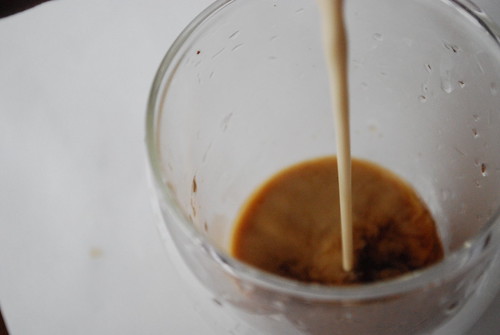
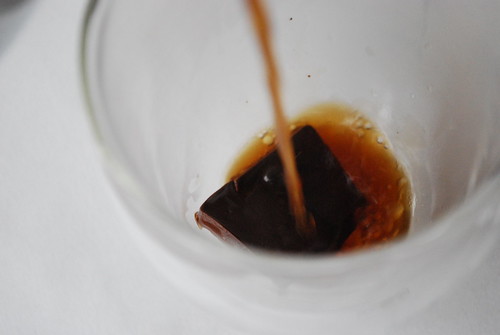
For the Ukrainian coffee, I cannot take credit for this concoction as one of my colleagues, who is from Ukraine told me about this recipe, which apparently is drunk very regularly in Ukraine. A word of warning, it is quite strong and perhaps after I tasted it for the first time, I can understand why they might drink this type of coffee in a cold environment. It’s actually very simple and probably falls into an idea rather than a recipe. Again, just make good French Press coffee, but before pouring the coffee in, place one bit of slighty broken minty chocolate at the bottom of the cup like “After Eight”. You may need to break it gently, so that the white minty bit inside the dark chocolate sheet just oozes out.

After that just pour the coffee inside and enjoy. It is quite strong and a small cup might suffice.

Enjoy !

Spilling the Beans

Spilling the beans – that’s right – I want to “spill” the beans on some coffee bean secrets, known to the experts but not to us minions (i.e those who do not know) but of course until now.

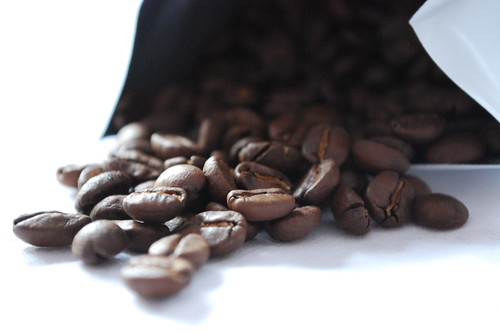
First, don’t be deceived by size – size matters but not in the way you think – La Rosa Costa Rica beans are advertised as low in acidity and are tiny in relation to your normal coffee bean, BUT I was puzzled, when I grounded these beans using the same timer setting on my coffee grinder when more coffee came out.

Usually with normal beans, I have to grind two and half times, but with this bean, two times was more than enough. Still puzzled, I tried crushing the beans between my finger tips and found it a bit tough – it was dense all the way through, which means that there was no air – the beans were “full of beans”, tee hee..

Second, still on size, smaller beans like the La Rosa above actually have lower acidity and surprise, surprise, these beans were tagged as “low acidity”. Now in coffee, acidity is actually what you are looking for and these are typical of much prized Central American and Kenyan coffee beans. So, in summary, smaller beans usually have a lower acidity than bigger ones, but of course, there are exceptions.

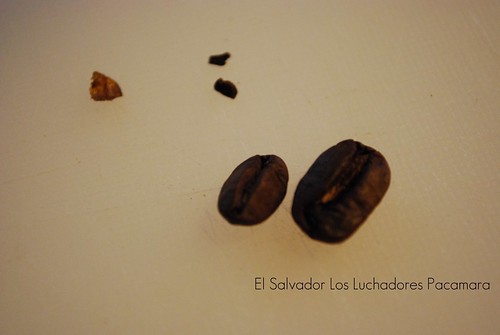
Third, coffee beans even from the same farm don’t necessarily have to be the same size – WHAT !!! Yes ! I just found this out when I bought Los Luchadores Pacamara beans from El Salvador, roasted by Square Mile Coffee Roasters of London.

I was studying the beans like one does before they grind them and thought, “that’s odd, why are some beans bigger than others ? Have they mixed another set of beans with what I ordered – that’s it I’m calling them to sort this out…”. So I quizzed the roaster, Anette from Square Mile Coffee, and she explained to me that this is normal and one way to test this, is to actually painstakingly separate the larger beans from the smaller ones and take a tasting test – they will taste the same. As she is a WBC Judge, who am I to argue, but to learn.

Fourth, and perhaps not that exciting for some of you caffeine junkies, is that when making coffee that needs a longer contact with water, like filter coffee (4 minutes and more) or French Press (4 minutes), you should ideally get a stronger coffee so that you get the real taste, rather then a watered down one. I also have to point out for those of you who have not visited the main website – shame on you – that the longer the bean has contact with water the higher the caffeine content. What does this mean ? Making coffee using a cafetiere/French press or a filter system means more caffeine than for instance making espresso. I just wanted to mention this again, because whenever people see you drinking espresso, they always say “isn’t that really strong ?” But of course I am always glad to explain that it isn’t and they look at me like “really ! are you really into coffee ?” Only if they knew.

Beans, beans, beans – there’s so much more to know about you.