I’m Drinking….

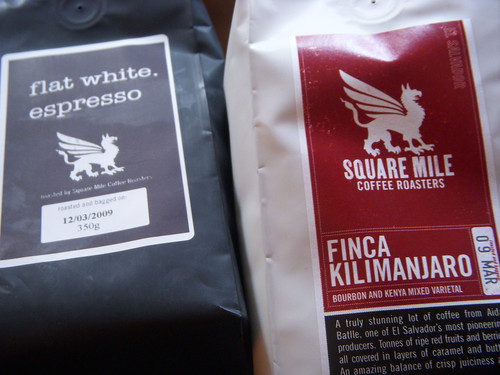
Flat White and Finca Kilimanjaro coffees, roasted by Square Mile Coffee Roasters of London. This is like part 2 of my previous post as on my visit to Flat White, Soho in London, I picked up these two bags to take home with me. I had already tried the Flat White version when I was in London in December 2008, but I was really drawn to the Finca Kilimanjaro, as I had read about this on Square Mile’s website and was really intrigued about how a Kenyan peaberry tree, planted in El Salvador, would taste- it’s called a Bourbon and Kenyan Varietal and Square Mile seem to pack their really special coffees in these nice white bags. I thought “that’s really original, taking a coffee plant from one country and planting it in another to get a really good mix of soils, air, etc… for a coffee”. Apparently, the lady who thought this up, Aida Batle, is famous for this and is one of the World’s renowned coffee growers, so who am I to question her logic.
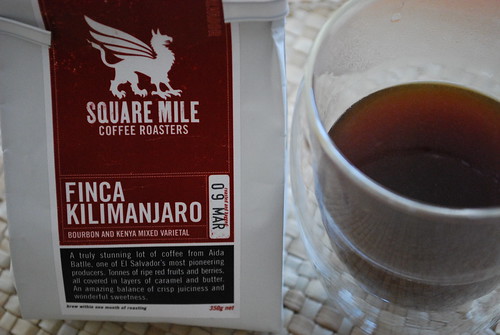
So, what does it taste like ? Fruity, spicy, earthy, sweetish and with a “real” coffee aroma is what comes to mind, or should I say to my tongue. I didn’t try this as an espresso, as I just didn’t think these type of characteristics together with the Kenyan mix would work as an espresso, so it was the French Press or Cafetiere for me, where I definitely had no regrets – a truly beautiful cup indeed. I also give it my “very versatile” coffee award in that although it was roasted on 9 March 2009, three weeks afterwards it was still tasting nice and not bland. This coffee is offered for a limited period only, so log onto Square Mile’s website (their website is on my blog roll) and buy a 350g bag quick.

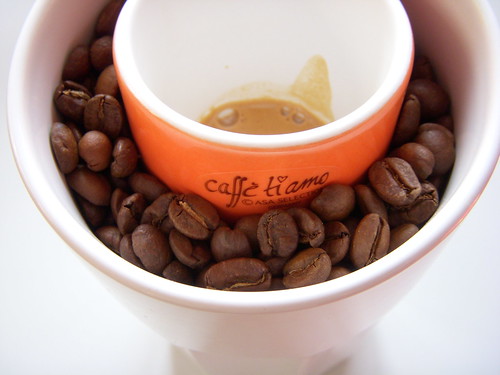
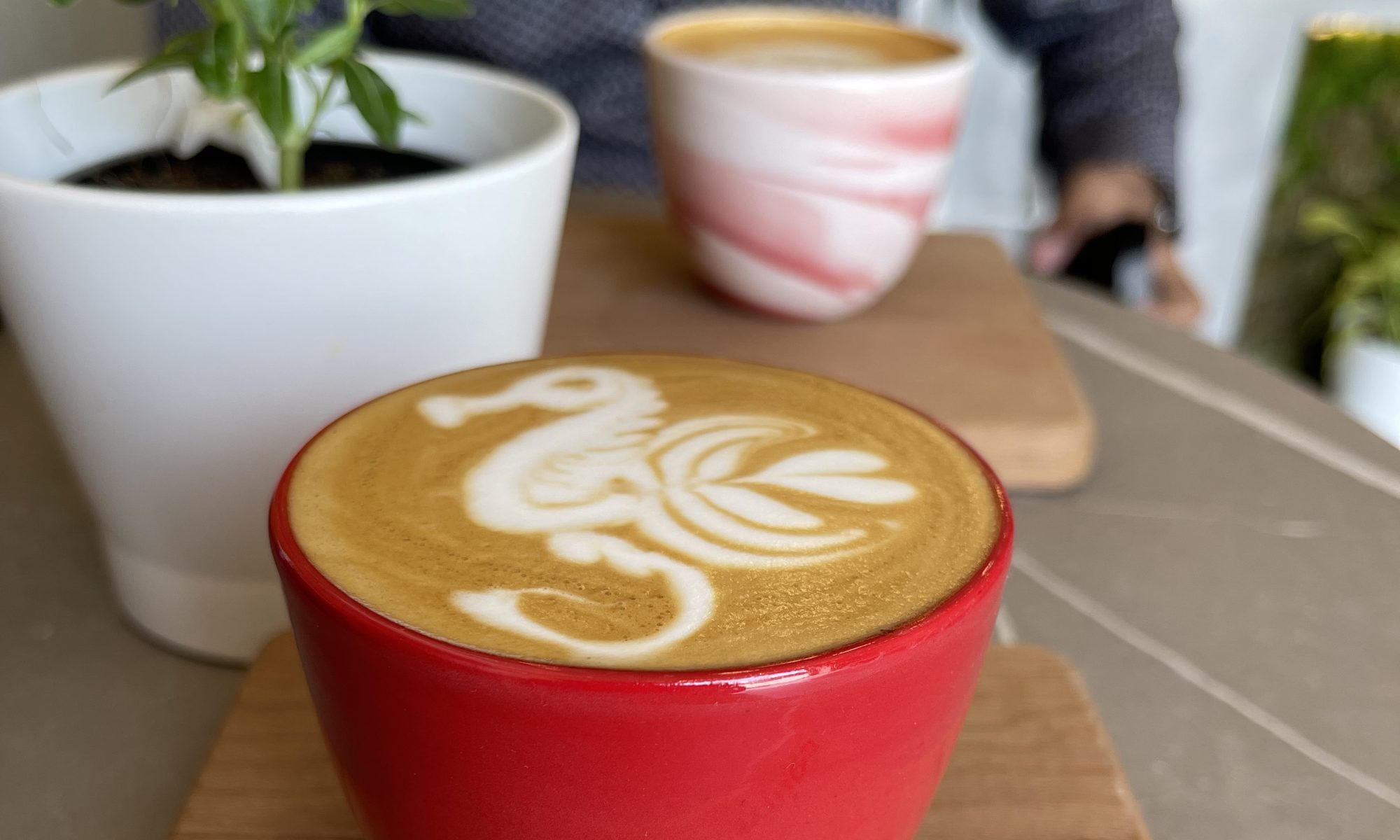
For the Flat White coffee blend, I still think this works better with properly frothed milk with its chocolate undertones and of course every morning was like a throw back to Flat White in London. With all this inspiration from my triple ristretto day in London, I tried out some of my latte art skills, extracting a double ristretto for my morning cup – still wanting with the latte art, but I thought looked nice in my “love” cappuccino cup, so I sign off with this pic to wish you “from coffee with love”,

Ciao !
An African and an Ukrainian

One day an African and an Ukrainian walked into a cafe and asked the local barista for one African coffee and one Ukrainian coffee. The barista said “What ?…”. Got ya ! OK ! this isn’t a story about an African and a Ukrainian drinking coffee at a cafe, but just my catchy title for two coffee recipes for you try.

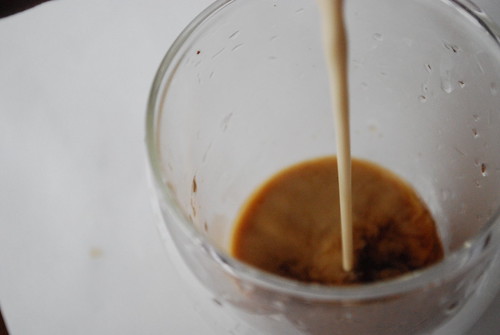
First up, for the African coffee, I am assuming that you know how to make good French Press coffee, that should be fairly strong, made ideally with African arabica coffee beans like from Kenyan Peaberry, Tanzanian Mocca or Ethiopian Sidamo. Second, I am assuming that you know what evaporated milk is – for those of you who don’t know, then you haven’t been to Africa then. Basically, because traditionally it is hard to store what we in Europe or America call fresh milk in refrigerated conditions, evaporated milk or “tinned milk” is what you will find easily in Africa. It is a concoction devised from boiling about 1 litre of milk until it reduces by half until a thick yellow, syrupy and creamy texture exists. This milk is a bit similar to double cream but is richer and much sweeter. However, it is lovely with coffee or tea and in most of Africa the joke is “are you having coffee or tea with your milk” because people tend to pour quite a bit of it into their coffee. Ironically, this milk, which comes in a small tin (160ml), is made primarily in two Western countries, the Netherlands, who make Peak evaporated milk and the USA, who make Carnation evaporated milk, so it won’t be hard for you to find it in your regular supermarket, as sometimes it can be used to make toffee. So, with the absence of milk frothing devices and thick fresh double cream and you still want milky coffee in the morning, this is it if you are in Africa and I must say up front, it is more popular in West Africa.

It produces a rich taste, but try it when you want to spoil yourself as it is quite rich. 


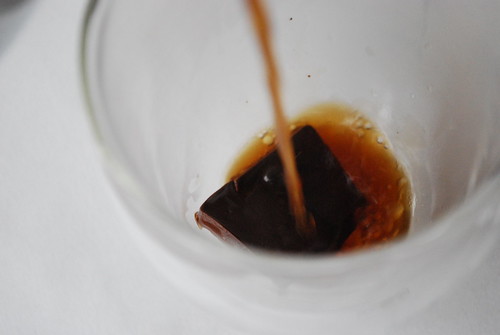
For the Ukrainian coffee, I cannot take credit for this concoction as one of my colleagues, who is from Ukraine told me about this recipe, which apparently is drunk very regularly in Ukraine. A word of warning, it is quite strong and perhaps after I tasted it for the first time, I can understand why they might drink this type of coffee in a cold environment. It’s actually very simple and probably falls into an idea rather than a recipe. Again, just make good French Press coffee, but before pouring the coffee in, place one bit of slighty broken minty chocolate at the bottom of the cup like “After Eight”. You may need to break it gently, so that the white minty bit inside the dark chocolate sheet just oozes out.

After that just pour the coffee inside and enjoy. It is quite strong and a small cup might suffice.

Enjoy !

Spilling the Beans

Spilling the beans – that’s right – I want to “spill” the beans on some coffee bean secrets, known to the experts but not to us minions (i.e those who do not know) but of course until now.

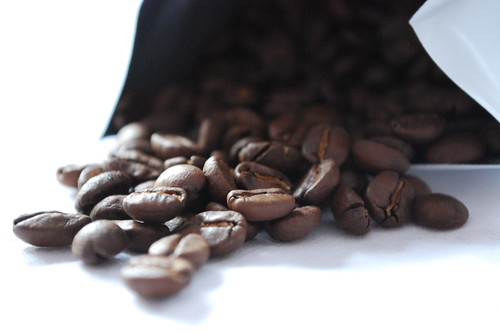
First, don’t be deceived by size – size matters but not in the way you think – La Rosa Costa Rica beans are advertised as low in acidity and are tiny in relation to your normal coffee bean, BUT I was puzzled, when I grounded these beans using the same timer setting on my coffee grinder when more coffee came out.

Usually with normal beans, I have to grind two and half times, but with this bean, two times was more than enough. Still puzzled, I tried crushing the beans between my finger tips and found it a bit tough – it was dense all the way through, which means that there was no air – the beans were “full of beans”, tee hee..

Second, still on size, smaller beans like the La Rosa above actually have lower acidity and surprise, surprise, these beans were tagged as “low acidity”. Now in coffee, acidity is actually what you are looking for and these are typical of much prized Central American and Kenyan coffee beans. So, in summary, smaller beans usually have a lower acidity than bigger ones, but of course, there are exceptions.

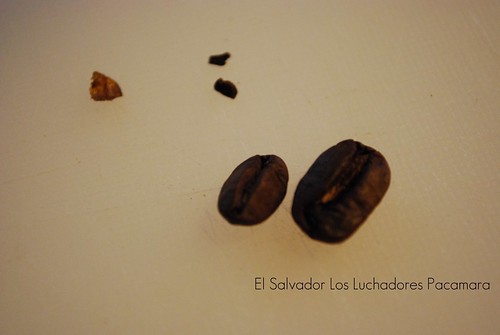
Third, coffee beans even from the same farm don’t necessarily have to be the same size – WHAT !!! Yes ! I just found this out when I bought Los Luchadores Pacamara beans from El Salvador, roasted by Square Mile Coffee Roasters of London.

I was studying the beans like one does before they grind them and thought, “that’s odd, why are some beans bigger than others ? Have they mixed another set of beans with what I ordered – that’s it I’m calling them to sort this out…”. So I quizzed the roaster, Anette from Square Mile Coffee, and she explained to me that this is normal and one way to test this, is to actually painstakingly separate the larger beans from the smaller ones and take a tasting test – they will taste the same. As she is a WBC Judge, who am I to argue, but to learn.

Fourth, and perhaps not that exciting for some of you caffeine junkies, is that when making coffee that needs a longer contact with water, like filter coffee (4 minutes and more) or French Press (4 minutes), you should ideally get a stronger coffee so that you get the real taste, rather then a watered down one. I also have to point out for those of you who have not visited the main website – shame on you – that the longer the bean has contact with water the higher the caffeine content. What does this mean ? Making coffee using a cafetiere/French press or a filter system means more caffeine than for instance making espresso. I just wanted to mention this again, because whenever people see you drinking espresso, they always say “isn’t that really strong ?” But of course I am always glad to explain that it isn’t and they look at me like “really ! are you really into coffee ?” Only if they knew.

Beans, beans, beans – there’s so much more to know about you.