Getting a Good Cup of Coffee in Dubai: RAW Coffee Company

20130913-225254.jpg

When you think of Dubai, you may think of Toobuy and many moons ago, when I thought about opening up a speciality coffee shop somewhere in the World, I thought about Dubai. Well, why not – they had big shopping malls, flashy cars, the best paid expatriates with tons of perks, a growing coffee lifestyle market, the highest amount of 5 starts hotels with the highest occupancy rates in the World at that time and even now the tallest building in the World, BUT they didn’t have good coffee.

20130913-225032.jpg

Sure, all the major coffee chains from the UK and the US are there but still, not good coffee. So, I thought, let’s break the bean and start something special. In any case, as you know, I chose Cape Town to pursue my dream (I sold Escape Caffe in February this year) but I’m glad to report that someone else beat me to it a few years back, RAW Coffee – at this moment, the only speciality coffee operator in Dubai, focusing on sourcing fair trade and organic coffees and roasted locally in Dubai – located at Warehouse 10, Al Manara, al Quoz – in an industrial complex of the very busy Shaykh Zayed Road.

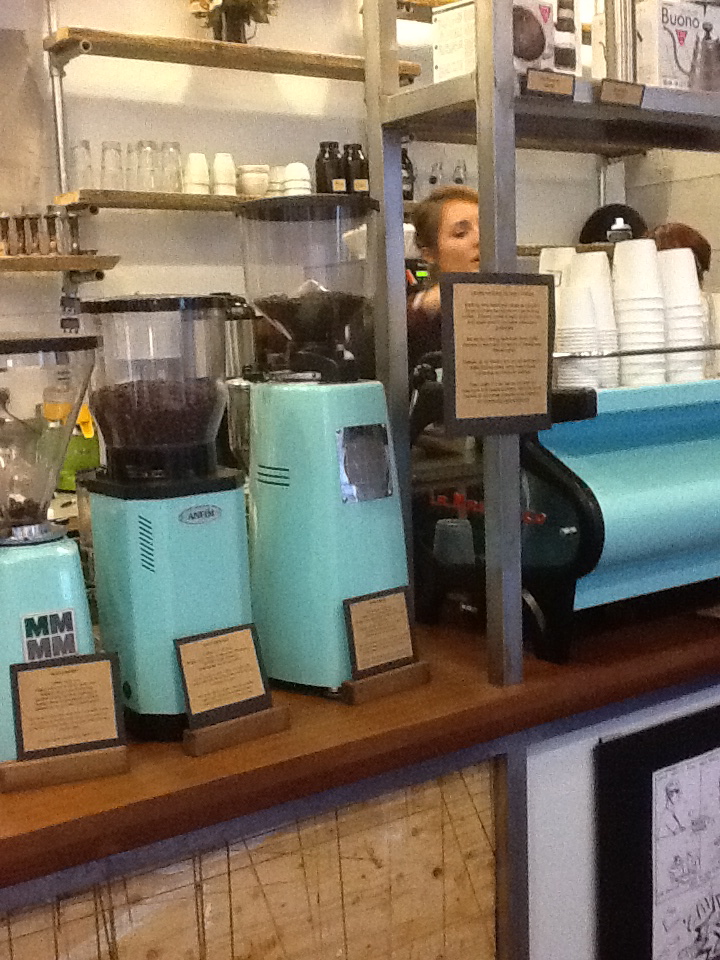
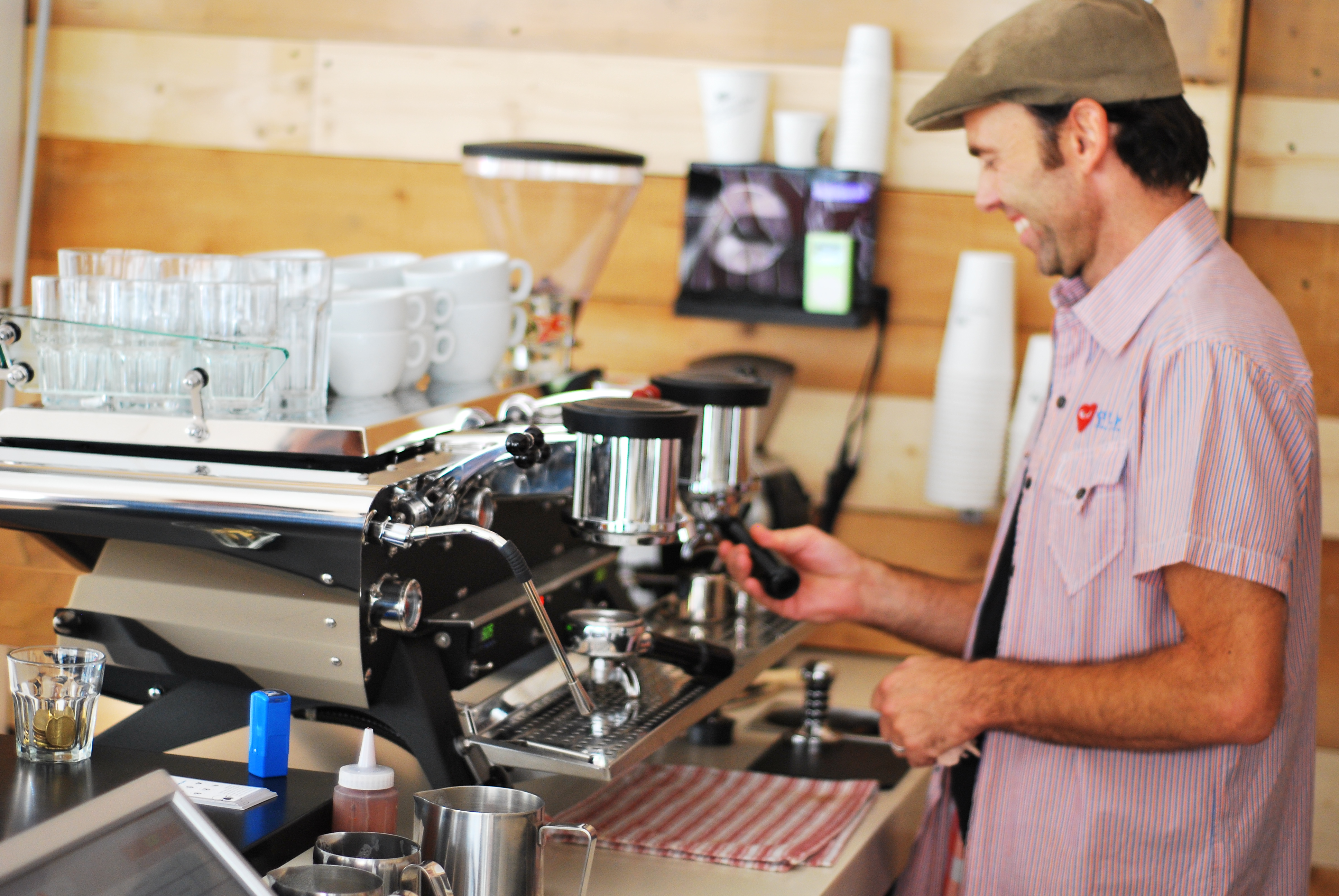
I like what they’ve done with the place to make it feel more authentic – first of all it’s in a converted warehouse – as you enter on the left, there’s the La Marzocco Strada machine to make espresso based coffee and other gadgets as well as a brew bar with an Uber boiler to help make pour-over coffee.

20130913-225155.jpg


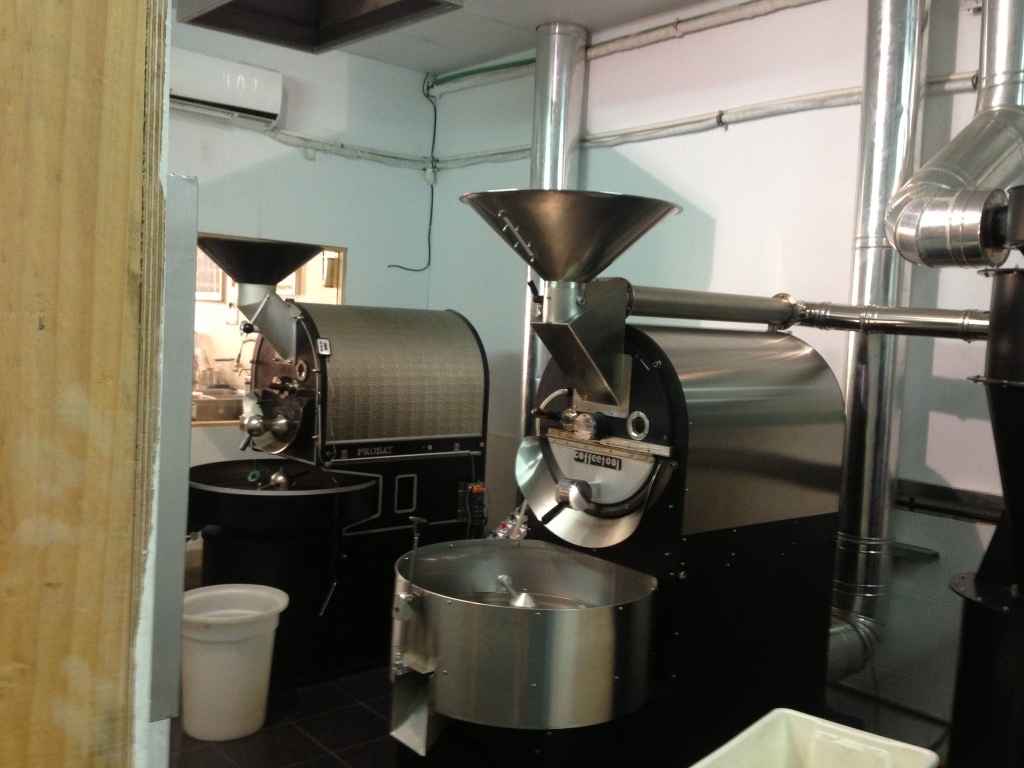
On the right they have a “green” living wall and some chairs. Walking through to the back, on the left hand side of the warehouse/shop, there’s a glass enclave featuring not one, but three coffee roasters – so they import and roast all their coffees (When the proprietor, Kim started, she only had one Probat, now she’s expanded to another two, a giant 18kg Coffee Tool roaster and a smaller Dietrich sample roaster).

20130913-225325.jpg

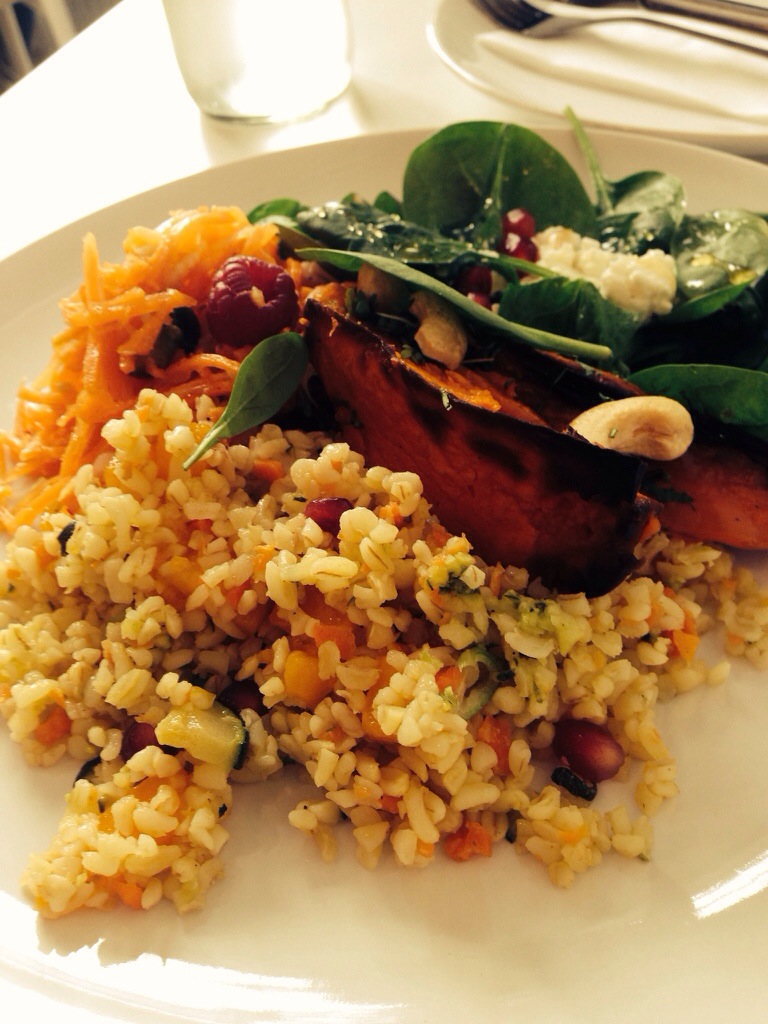
I think the main reason for this is that they also supply some restaurants – a list of their customers is on their website. Dotted around on the ground floor to add more authenticity are heaps of green coffee sacks. Right at the back of the shop, there are some stairs to a small sitting and workshop area at the top, overlooking the rest of the shop. You can sit and drink coffee from a very authentic solid wood table or relax on some bean bags. In any case, if there’s more than 4 of you, I would recommended sitting upstairs and chilling out.

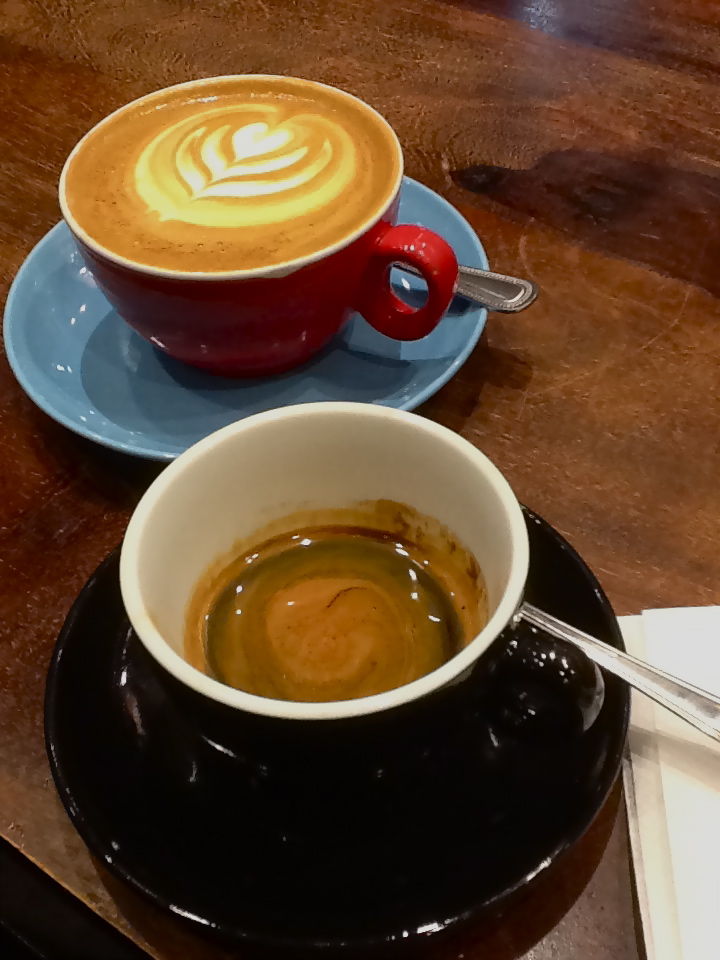
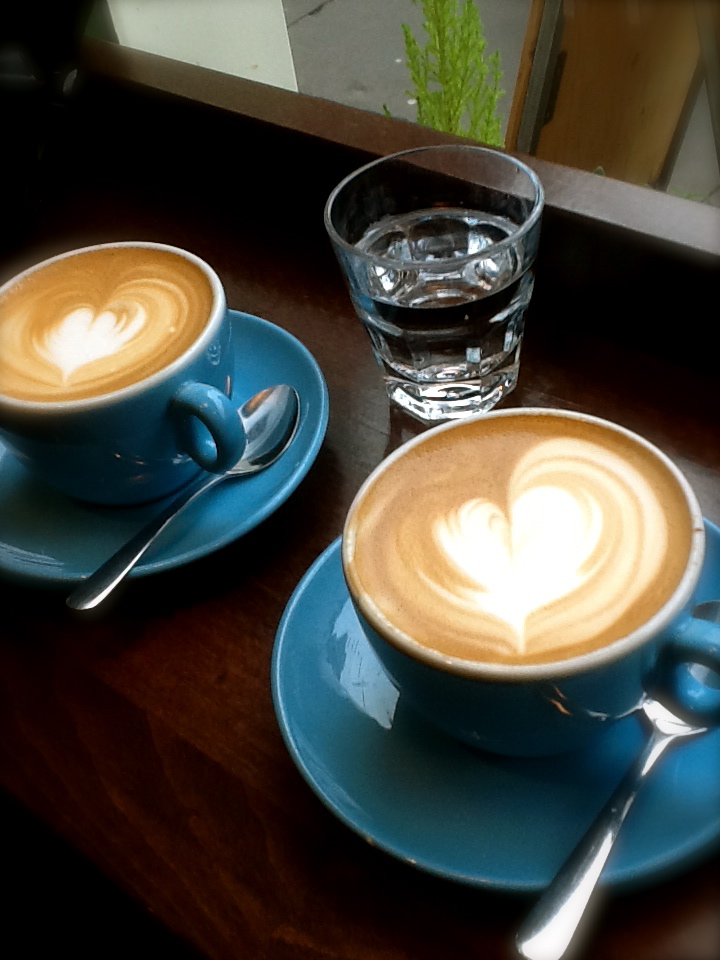
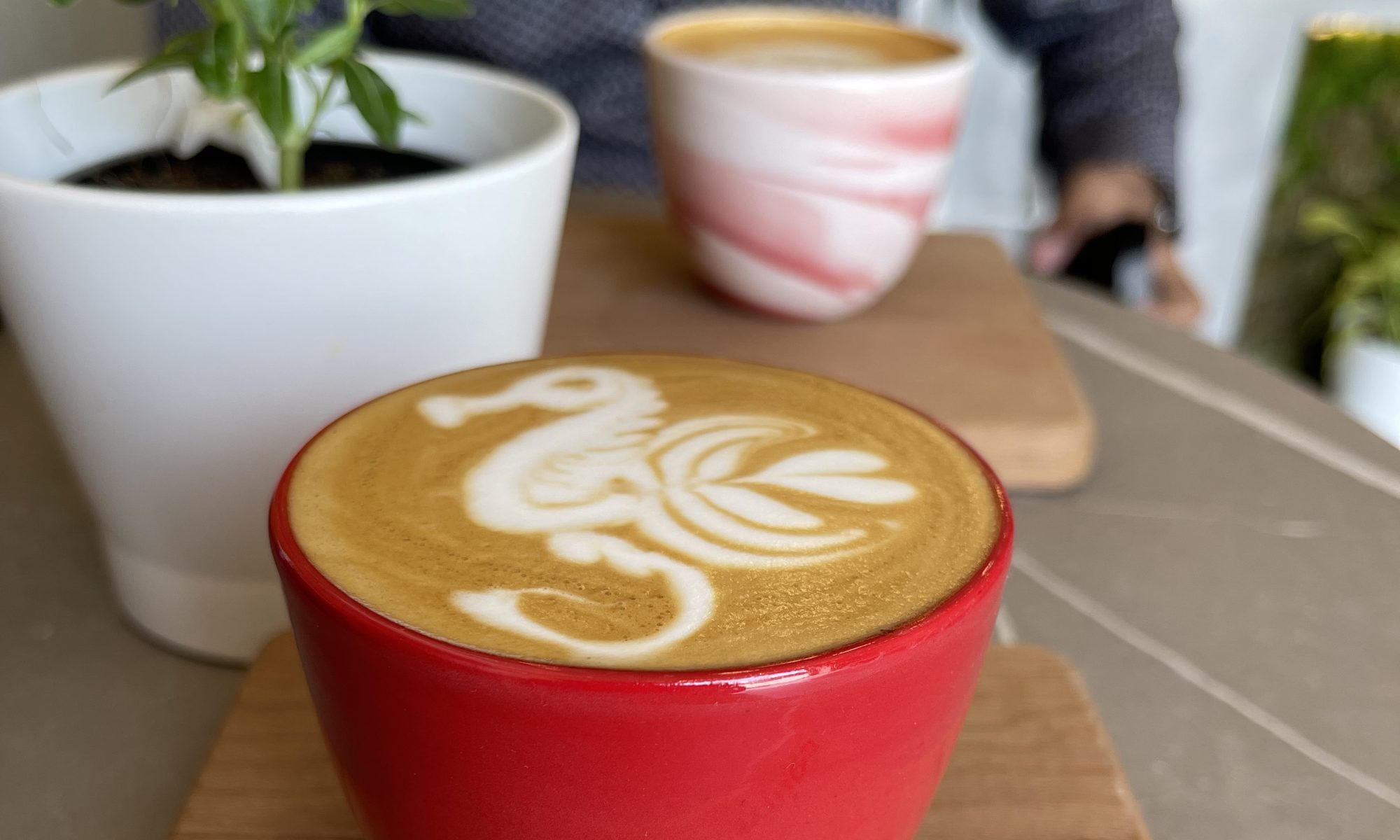
Now, to the coffee. Upon entry, I ordered a flat white as I usually do to test out their milk frothing and latte art skills. I noticed that another customer was very impressed with the latte art as he kept looking at it and I silently thought “Erm! I know this is new to you, but eventually you’re going to have to drink it”.

20130913-225222.jpg

Lots more people, mainly expatriates, shuffled in briefly to buy bags of coffee. For my second test – I usually order a pour over to test the roasters skill with the bean and have to confess, I thought the coffee a little too darkly roasted for me – it was good with milk but as a pour over, pure black, slightly bitter with no delicate notes picked up. I quizzed the barista present as to how he prepared my coffee and in conclusion the water was too hot (over 92C) and the dimensions (20g with 200ml water) way too high. He apologises profusely and my cousin, accompanying me for his first speciality latte (he is used to chain style coffee) bought two 500g bags of coffee for me to take back to Vienna, so that appeased the barista somewhat.

I would have loved to have met Kim but it was Friday afternoon and I guess her time off.

In any case, to the best of my knowledge, if you want a speciality coffee experience in glitzy and flashy glass skyscrapers Dubai, I recommend you escape into RAW coffee.

Visit them online at www.rawcoffeecompany.com to order coffee and get directions to where they are. They’re open 7 days a week; offer barista courses and sell all types of equipment for the very keen home barista.


Introducing the Chemex Brewing Method – It Takes All Kinds by Samantha Joyce

Chemex

Some background

The Chemex coffee maker was invented in 1941 and the iconic design remains unchanged today. Made of borosilicate laboratory grade glass, it is a sturdy heatproof vessel. Some coffee makers have plastic or metal parts that react with coffee oils and acids, but this is not the case with glass. For more than 70 years, generations have in turn embraced and ignored this simple coffee-brewing contraption. My Grandma had one, my Mom did not–and now I have one. The Chemex is in vogue again as pour over coffee gains popularity worldwide.

Deceptively Simple

To brew coffee with a Chemex, all you need is the Chemex itself, a Chemex filter, ground coffee and 200F (93C) water. But is it really that simple? This depends on your coffee personality: Are you a Coffee Professor or a Coffee Artist?

The Coffee Professor (more like Lameen)

At heart the coffee professor desires repeatable results like with any scientific experiment. To this end, the professor begins by washing the Chemex with a coffee machine cleaning powder solution and rinses and dries it thoroughly to remove any previous coffee residue. Next, fresh filtered water is placed in a variable temperature gooseneck electric kettle set to 200F (93C). It only takes a few minutes to get to the right temperature and then the kettle shuts off on its own. With the equipment prepped and ready, the professor is ready to brew.

The professor takes a Chemex brand paper filter and inserts it with the triple layer resting against the pour spout channel. The gooseneck kettle is used to wet the paper filter as it rests in place. The filter is then removed, the hot water is discarded and the filter is reverently put back into its place. This serves to pre-heat the glass carafe as well as rinse the paper filter to get rid of any “bland” smells.

Although the Chemex is an affordable brewer (for coffee geeks), the professor will use a burr grinder that costs a lot more than the Chemex. This coffee grinder is calibrated to produce particles that are considered in the ‘fine drip’ coffee range. A kitchen scale is used to measure out 36g of good quality coffee beans, which are then freshly ground prior to the brewing process (remember, coffee begins to loose its optimal taste after a few seconds of grinding). The freshly ground coffee is then placed in the filter. The Chemex, filter and coffee are then placed on the scale and the tare on the scale is set to zero.

With the precise control of the gooseneck kettle, just enough water is dribbled over the ground coffee to moisten it. This allows the coffee to “bloom,” a chemical process where carbon dioxide is released. The fresher the coffee, the more it blooms. After a specific amount of time (30 seconds to 1 minute depending on coffee ideology) the professor moves from pre-infusion to a methodical wetting of the grounds. In a concentric motion, water pours evenly into the Chemex until it is near the top. This cycle is repeated until the scale records 25-30 US fluid ounces (730-800 grammes) of water. From coffee bloom to completion should take no more than 5 minutes. If the coffee drained faster, the grind was too coarse and if the coffee drained too slowly, the grind was too fine. In this manner the professor fine-tunes the Chemex brewing method.

The Coffee Artist (Samantha – the writer)

The coffee artist knows inherently what it takes to make a good cup of coffee through trial and error or through muscle memory over time. My mom called this type of estimation, “eyeballing it.” I fall squarely into this camp. I do not have the perfect coffee brewing equipment; I make do with what I have in the kitchen.

My kettle is heavy and hard to pour – It was a wedding gift. I boil the water and then pour it into a glass measuring cup that has an okay pour spout. I pre-wet the filter (barely) and then swirl and unceremoniously dump the hot water from the carafe. That is my nod to the pre-warm, pre-rinse, residue removal phase. I have a standard coffee scoop and I use 5 or 6 of those. My coffee is delicious and locally roasted with the roast date printed on the bag and since I do not yet own a burr grinder I buy it pre-ground.

The coffee smells so delicious in the Chemex that I cannot wait for it to bloom. I pause for maybe 10 seconds to admire the pretty brownie cake-like surface and then continue to pour until it fills the Chemex to the top. As it drains out, I add more hot water until the level of coffee in the carafe reaches the bottom of the wooden collar. Then I compost the filter and spent grounds. While I enjoy the brew process, my desire is to fill a mug with delicious freshly brewed coffee as soon as possible. If I took a few shortcuts along the way, is mine better/worse/different than the coffee professor’s exacting methods?

Vive La Difference!

I think there is room for many coffee brewing styles in this world. When I go to a pour over bar I appreciate that they brew with accuracy and the goal is to attain an enjoyable and repeatable cup of coffee. Now that you know about the Chemex method of coffee brewing, you are welcome in either camp, just don’t forget to bring fresh coffee.

This article, with very slight editing by moi (Lameen) was produced by Samatha Joyce, a writer for seattle coffee gear – http://www.seattlecoffeegear.com/

Salt Caramel Espresso ?

This year – yes, disgracefully so – it’s my first blog of 2013 – I’m into feeling, which means that if I feel like doing something related to pushing my taste buds further, then I’m going to do it.

20130224-232341.jpg

So, here we are. Salted Caramel Espresso ??? Did I arrive at this because I found this wonderfully unusual coffee, roasted by a supremo and brewed it in an unusual way ? NO! Simply, I manipulated one of the major elements of the espresso brewing process. BUT, first up, a little about the raw ingredient – the coffee itself – Shakisso from the Sidamo Region of Ethiopia, from the 2011-2012 season, grown at 1800m above sea level, organically grown and sun-dried on raised beds, shipped in grain pro bags (???). Who was the roaster ? Espresso Lab, Cape Town and how did the roaster describe the taste ? floral, silky body, soft chocolate, honey, jasmine, stone fruit, sweet lemonade and tangerine – quite a mouthful and quite a wide range of tastes. Now! that might seem delectable to some readers, but the main reason I bought the coffee was because I trusted the roaster and not because of the taste profile, because based on past experience, if you don’t have a very developed palate and extra-ordinary attention to detail in preparing coffee, using the best – yep! the best tools, then there’s no way you are going to experience some of those wonderful taste profiles described by this or any other skilled roaster.

Where am I going with this ? Well! What do I feel like tasting when I buy coffee – something special all the time. I never buy coffee for the sake of buying coffee. I buy coffee from trusted roasters and I don’t mean Illy or Lavazza. I mean people who spend time roasting with passion. BUT, I do have some taste preference when it comes to coffee – I love caramel, cocoa, dark chocolate, hints of milk chocolate, toffee, butter toffee (typical of Square Mile Coffee) , silky smooth wrap around yout tongue, vanilla, maple syrup, honey, pecan, praline, roasted cashew (organic Ugandan I once had), grapefruit acidity and probably more that I haven’t developed yet and of course SALTED CARAMEL.

So what did I manipulate ? Just the water. I added a few drops (say quarter of a teaspoon) of Himalayan Pink Salt into the water tank before I brewed my espresso – that’s it and wow, what a delight for my taste buds.

If you like something and people always tell you, don’t do it, it’s not right, at least give a shot once and you may not regret it and if you do, at least you experience something different, right ?

Good luck.

From Coffee With Love: 2012 in Review

The WordPress.com stats helper monkeys prepared a 2012 annual report for this blog.

Here’s an excerpt:

4,329 films were submitted to the 2012 Cannes Film Festival. This blog had 18,000 views in 2012. If each view were a film, this blog would power 4 Film Festivals

Click here to see the complete report.

@ The Vienna School of Coffee

VSC Latte

It seems natural that Vienna, one of the first places to launch Europe’s coffee culture, should have some sort of World renowned coffee school, BUT, that wasn’t so, until Joanna Wechselberger opened one up in the late noughties (the decade before 2010). If you have been reading my blog, since it’s inception in August 2007, then Jo (that’s what I call her) was behind the first serious espresso based coffee shop, Mocca Club (now closed after new ownership) in Vienna. I learnt a lot from her on my way to becoming some sort of coffee geek. In any case, Jo’s Vienna School of Coffee now has a lot of respect, as Jo is one of only 3 master baristas in the World whom the SCAE (Speciality Coffee Association of Europe) has authorised as barista trainer, international judge, brewmaster and certifier. Any barista reading this, would know of her, as during the World Barista Championships (WBC) in June 2012, her school, equipped with the latest Nuova Simonelli T3, was used by all competing baristi to practice – in fact she still has their timetables for all their practice runs up in her school.

VSC

Now, the good bit. Yes, the Vienna School of Coffee (VSC from now) is a training school, run by Jo, teaching everything from coffee tasting, different brew methods, latte art, to professional SCAE barista level courses and upon request, she will run courses for friends for a fee of course. This means that from Monday to Friday, the VSC is closed to the public, but on Saturdays from 10am until 3pm, you can pop in for a chat about coffee and Jo or her mum (trained by Jo, of course) will make you an espresso based coffee too, at no cost, but you will be embarrased not to pay at least the normal price for espresso in Vienna €2 or €2.70 for milk based espresso, i.e cappuccino.

VSC Ristretto

Now, isn’t that cute, a ristretto ?

Jo is also a trained coffee roaster, sourcing direct trade coffee for different regions and you can also pick up some freshly roasted coffee too. She has single estate coffees as well as espresso blends on sale, as well as brewing equipment, such as Hario V60s, Aeropress, Syphons and other bits for sale. Also on sale is Jo’s book on coffee in German, but happy to say, translated into English as the The Ultimate Coffee Book – for beginners and professionals – of course, I have one, bought by my wife.

From my past visits, Jo seems to be getting a bit of a following as back in September when I visited, I had jo all to myself to tal coffee, but now, I’m like in the queue, But that’s fine, the more the word spreads the better. I’m also planning on arranging a coffee tasting session with some coffee enthusiasts early in the new year of 2013, so feel free to get in touch with moi.

Until then, if you are in Vienna over the weekend, pop by to

DSC_1562

The Vienna School of Coffee

22 Hahngasse

9th District, Vienna

http://en.viennaschoolofcoffee.at/


Coffee Tasting in London – October 2012

Seems natural to me…. Give me 2 days of work and I’m off to London to meet family, friends and COFFEE of course. The highlight of this trip was therefore my 3 hour coffee tasting marathon at the laboratory of coffee itself, Prufrock Coffee on Leather Lane.

We were hosted by Jeremy – don’t ask me where he’s from, because I’m still trying to figure out his accent – down at the dungeon or their BRAT or Barista Resource And Training centre. On show, were bags of coffee from non-other than Square Mile Coffee Roasters and two other specialists (I forget their names). There were literally bags of information (excuse the pun), but in summary, here’s a list of the extra stuff I learnt;

ONE. pH balance in water makes a big difference – In short if it’s around 7 then the water is quite pure and if its below 7, its acidic (the bad stuff not the coffee related acidity of course) and if it is heading towards 10 it’s alkaline based. This is very important for when you are tasting coffee because, as we all know a cup of coffee is basically 90% of water, so bad water equals bad coffee, no matter what type of coffee it is or machine or barista, etc. The real eye opener however was that London’s tap water was closer to 7 than some of the bottled stuff they sell off at a premium.

TWO. Coffee roasted in small batches like on a sample roaster will rarely give you a full profile of the coffee, as opposed to roasting a batch on a 12kg roaster for example.

THREE. Aida Batle’s Kilimanjaro Washed (El Salvador), roasted by Square Mile is a killer – fantastic coffee but some of you already knew that. I bought a bag to take home of course.

FOUR. The more coffee you taste the more you can develop your taste buds – naturally, so taste away.

FIVE. A taste wheel really helps novices like me to describe coffee like grassy, earthy, etc. It helps you to focus on what you are really tasting and helps to accurately describe all those sensations on your tongue.

SIX. I learnt the purpose of blooming your coffee when preparing it on a Hario V60. In short, C02 (or carbon dioxide) doesn’t like water getting through. So, when preparing a V60, you pour a bit of water (say 50ml) to wet the grounds and you see it bloom with all these colourful bubbles – by doing this, you are making it easier for water to pass through when you finally complete your pour. The cup we had tasted of dry strawberries – now that’s unusual.

I’ve been to few coffee tasting session and even ran one at my caffe in Cape Town (Escape Caffe) BUT a 3 hour session at Prufrock takes the prize. Highly recommended and great value for money, but don’t get intimidated by Jeremy – if he goes to fast and gets too technical, stop him and ask him lots of questions.

So, where else did I go…

To the City and the East End.

Espresso at Association Coffee, 10-12 Creechurch Lane, London EC3A

Nice spot, owned by Sam (a man) with head barista, David Robson, formerly of Prufrock, Association have a strong focus on both espresso and third wave style coffee with all the gadgets to play with – so, don’t expect to have a slap up meal or heavy laden sandwiches and sweets. This is a city spot to grab a great cup of coffee and “real” snack to bite on. Although located in the city, Creechurch Lane, has a quiet feel about it, and Association seem to have captured this serenity with their decor, warm lights and wooden floors – a real great spot to hold “real” coffee meetings.

Curators Coffee @ 9a Cullum Street, EC3M

Just around the corner literally (say 3 minutes walk) is Catherine Seay’s new spot, Curators Coffee. For those who don’t know, Catherine is the former head barista at Kaffeine. She ceremoniously left Kaffeine last year and most people thought she’d never go back into coffee, including her, but she said, like one of those specialist “I didn’t want to go back to cofee, but I was dragged back in”. Well! we are happier for it. She really welcomed me to her place, prepared a piccolo for me and rushed back to serve customers in a personal style that ensures you want to return. I asked her about her choice of colours on her La Marzocco Strada and she said Turquiose gives it a difference – I must say, it blends in really well with the decor and adds colour to your life, especially when it’s grey in good ole’ London.

Grind Coffee Bar, Westfield Shopping Centre, Stratford – really East London

And the prize for probably the best place to drink coffee inside a mall, goes to Grind Coffee Bar, located next to Waitrose in Westfield – Stratford City, right next to the London Olympic Stadium. I was really impressed with their set up and boy, were they really busy. So much so, that even at 2pm, they were sold out of non-meat sarnies and 2 hours later, the only food they had were pastries – I missed out on their tasty looking lemon polenta cake, but settled for a croissant instead. In any case, I had heard so much about Grind, that I made sure that during this trip, it was on my list. With my brother staying not too far and with the latest James Bond Movie, Skyfall, on at the mall, it was an opportunity not to be missed. Highly recommended for anyone going to the Westfield shopping centre (they have 2 other locations at Putney and Battersea – see their website, www.grindcoffeebar.co.uk

Workshop Coffee, Marylebone, 75 Wigmore Street, W1U

BUT, of course I can’t leave London without visiting some old faves. My first cup of my trip was a short black (short Americano) at Flat White on Berwick Street and my second and last literally was at Workshop Coffee, on Wigmore Street, where I had my best espresso milk-based coffee of my trip, a flat white – the silky caramel wrapping around your tongue right at the end. As usual the staff were friendly and my brother, friend and I were really relaxed, just sitting enjoying our coffees. This was the only place on this trip that I went to twice, so well done on those flatties.

Goodbye London, Londra, Londre…

Argh! the Coffee Pirates – A New Coffeeshop in Vienna

It seems Vienna might be following, albeit slowly, the trend highlighted by London, whereby after the hosting of the World Barista Championships (WBC) , an explosion of new age/third wave coffee shops evolve. So, here we are at Coffee Pirates, located at 17 Spitalgasse in the 9th district of Vienna, where University Students aplenty gather together with trendy middle class apartments. There is no shortage of ambition here, with proprietors going for gusto with a Kees van der Westen Spirit Duette espresso machine, third wave gadgets like aeropress and Hario V60s and soon to be installed, a Diedrich IR-2 coffee roasting machine, all under one roof, Wow! Now that’s what I call home.

Newly opened, so somewhat undiscovered yet, Coffee Pirates are open during the week and on Saturdays too (great for me, as they are located nowhere near where I work). They also serve sandwiches, cakes, muffins and snacks, similar to your NY Style/London café.

The interior contrast very widely with the exterior, with beige wood floors and walls and other homely touches to make you feel relaxed, not to mention the very friendly owners


– here’s Werner smiling as he makes my cappuccino on his very flash machine.

They’ve also got a chalk board wall by the toilets and of course I had to write something

so, pop by & escape into a coffee hub that stands out in Vienna.

I’m Drinking… Has Bean Coffees

Almost upon arrival back in Europe, I was already on the search for great speciality coffee and decided to scan the sites of my popular roasters. In the end, after reviewing countless coffees on the http://www.hasbean.co.uk site, I opted for 3.

Ethiopia Yirgacheffe Wote (Washed)

Well! I have a fond palate weakness for Yirgacheffe coffees and this was actually the first one on my list and the first one I tasted naturally. In general, Yirgacheffe coffees tend to be quite aromatic and floral in taste with an underlying acidity and this was no exception. Using the inverted Aeropress method, a light grapefuit acidity could easily be detected, winning over the more citrus lemony aspects of the coffee. However, on using the Hario V60, a burst of sour lemon dominated the sweetish grapefuit acidity element of the coffee, making me select this coffee for my after dinner drink using the Aeropress method.

Nicaragua Finca Limoncillo Pacamara Natural “Funky” 201


Wow! what a mouthful and boy was it one. Steve of Has Bean describes this coffee as “strawberry angel delight…. and mad as a hatter”. I’ll confess, I wasn’t picking up the strawberry delight, but I don’t even know what I was picking up, so I agree with Steve on the “Mad Hatter” description. The taste notes were jumping up and down on my tongue, making it one of the most exciting coffees I’ve had a for a while. I just couldn’t pin it down and it’s one of those coffees you just have to try. Never put milk in it, more exciting on the Hario V60 and one to make you forget about your problems at the end of the day – it has a creamy chunky mouthfeel with huge body (more so on the V60 than aeropress). I’ve got to mention that these arabica beans are humongous – just looking at them, made me laugh – twice in size as the Yirgacheffe – they are the bigger ones in the cup at the top of the post on the right.

And Finally…

Phil ter Filter Blend (using 50% El Salvador Finca Santa Petrona Red Bourbon, 30% Nicaragua Escondida and 20% El Salvador Montserrat Washed)

I selected this blend because I was intrigued by the concept of a blend for filter machines, plus I needed beans for the afternoon and could only use a Filter machine, so I thought, “why not ?”. My former colleagues were like “here’s the coffee man, so what’s brewing?”. I knew that using the V60 or the aeropress would be time consuming, so this fitted the build, so to speak. The Filter method traditionally rinses out the more delicate methods in the coffee, so we were limited to the darker side with hints of brazil nuts, dark berries and cocoa. Nevertheless, a good pick me up coffee in the afternoon ahead of long meetings.


The Best Coffee Shop in Vienna ?

A pretty bold statement to make, especially in a city that prides itself as containing a selection of the best coffee houses in Europe. Steeped in history, especially in coffee history, Vienna, Austria’s capital city has long been synonymous with coffee, BUT times have moved on. I may sound critical, but I must admit that when I first criticised the Viennese coffee culture way back in 2008, I got my letter published – WHY ? Because I felt and still feel that drinking coffee in the 21st Century should be about flavour, service and innovation and the editor of Conde Nast Traveller agreed. Moreover, having lived in Vienna for over 8 years until 2009, I never found any coffee shop, new or old serving properly brewed espresso. When I questioned them, they looked at me like what do you know – we are in Vienna and we know coffee – Well! No! you don’t if you don’t clean your group heads, extract 30ml of coffee in 10 seconds, etc. There were the odd exceptions like the Mocca Club (one of my first posts in 2007), but that shut down and the other was the local La Marzocco distributor (who confessed to me that Austria doesn’t know & appreciate espresso).

So, on hearing that Vienna would be hosting the World Barista Championships (WBC) in June 2012, I was nervous for the city – where would all the coffee tourists go to sample finely crafted espresso drinks and third wave style coffee.

Nevertheless, in late May 2012, I had to visit Vienna again and prior to my visit I contacted the Speciality Association of Europe (SCAE) for where to grab a really good coffee and they only had recommendation, Caffe Couture. Situated in the 9th District off Vienna, not far from the University and the Austrian MINT (where they make money), Caffe Couture, located on 9 Garnisongasse, can easily be missed, as there’s no signage annoucing its location. However, for coffee buffs like me, as I was walking by, I heard the sound of milk being frothed, looked into an auspicioulsy white decored shop and BANG, noticed a La Marzocco Strada (probably the most expensive espresso machine in the World and probably the most advanced) – OK! this must be it. Further along the left-hand side, I noticed more gadgetry, a brew bar, complete with an Uber boiler, Hario V60 station and an aeropress – I’ve arrived in a coffee shop in Vienna that’s taking coffee brewing to the 21st Century, Phew!.


Owned by former Austria barista champion and current coffee tasting champion, Georg Branny, Caffe Couture is probably, for me, the best coffee shop in  Vienna. His attention to detail, pure focus on espresso brewing techniques, as well as his quest to offer Cup of Excellence Coffee, brewed on a proper brew station, Georg is so sure of himself and his quality that he doesn’t have  a listed price for coffee – Yes! you read that right – there’s no published price for espresso coffee of any kind, so you can walk in there, order a cappuccino, and walk out without paying, but trust me, as soon as you taste what you have, you’ll turn right around and dig into your pockets – because the coffee you have just sipped is unlike any cup of coffee you’ll taste in Vienna, complete with exquisite latte art – his partner is also a latte art champion.

I was so excited, that I had an espresso macchiato and a V60 Cup of Excellence coffee – Finca La Picona from the Honduras/Nicaraguan border, prepared on the brew bar using the V60, served in a classy Bodum double-walled clear glass cup.

The next day, I took my mum for a cappuccino. With regards to taste profile, the coffee has been carefully selected to highlight cocoa notes when mixed with milk and hints of berries/cocoa when drank as a pure espresso. Georg, a pleasant and unassuming character with a friendly and warm smile, is trying to get the Viennese into the third wave culture of coffee by sourcing Cup of Excellence coffees from his bespoke coffee roaster, with the hope that more and more people will begin to order them, so I wish him luck and I’m very happy that Vienna has a place like this to treasure.

Needless to say, I was very happy to learn that the WBC after party was held at Caffe Couture – where else? and that Caffe Couture have just started coffee classes – now all the good stuff happens, just when I leave….

So, when in Wien (German spelling for Vienna), please, please visit Caffe Couture, if you like your espresso drinks to be prepared well.


My Fave Coffees So Far…

The year seems to be going through pretty fast and I thought about documenting what has delighted my taste buds so far this year in the World of Coffee. First up, was the Colombian Gaitania, roasted by then St Ali London (now Workshop Coffee), which I picked up at their sister store, Sensory Lab (now Workshop Coffee) on Wigmore Street. I fell for this coffee when I first tasted it on an aeropress in Clerkenwell and made sure that before I left London I picked up a bag to take back to Cape Town with me. I featured it as a coffee at my coffee tasting event at Escape Caffe and then enjoyed the remainder at home on an aeropress. It didn’t disappoint on every brew, displaying a clean caramel light acid taste. I used this coffee to induct my 12 year old daughter on the pleasure of drinking coffee on an aeropress and she too was pleasantly surprised by the clean sweetish taste she experienced. I have to confess,  I can’t see many coffees beating my experience of this bean this year, at least on the aeropress.


A close second has to be the Ethiopian Yirgacheffe Konga, sourced by Union Hand Roasted Coffee (another top London based roaster). I’m glad to report that they now have a satellite shop or should I say “Field Office” in true UN lingo, in Cape Town, down the road from my caffe, Escape Caffe on Bree Street, Cape Town. At the forefront of their Cape Town branch, located on Buiten Street, is Gerald, the main roaster, who had 4 months of training at Union Hand Roasted in London before being sent back to Cape Town. When I told Gerald I wanted something special for my Coffee Tasting Event/ cupping sessions for customers (held on the 1st Saturday of every month), he highly recommended this bean. At first, I was wondering why I loved this bean so much – light, sweet finish, hint of caramel, sour berry and pleasant + soothing effects. It should come as no surprise then that I have featured this bean on 2 occasions. On the second, I even had the pleasure of sampling the bean roasted in 2 different ways – sample roast 10 days before and large batch 5 days earlier – subtle difference but the 10 day old roasted got the edge for me as I felt it was more developed and had a cleaner/more refined finish. For the record, the Yirgacheffe Konga is washed. The taste profile for this bean – well! Again, I asked my 12 year old daughter to taste and give me her profile “caramel and hint of blueberry Daddy” – well you never, the taste profile on Union Hand Roasted website is blueberry caramel – Wow! My daughter’s going to be better than me.

I can’t leave without at least mentioning a Square Mile Coffee bean and here we have Rwanda Musasa Rushashi. Described as having a hint of graprefruit acidity, I felt this was more pronounced only when brewing on the French Press. Other taste profiles, reminded me of black berries and hints of dark organic chocolate. In conclusion, an unusual bean and perhaps not everyones “cup of coffee” but that’s what makes it interesting and after all not all coffees are supposed to taste the same. I preferred this coffee after a heavy meal and for livening the senses.