Autumn Espresso… What Now !

This is absolutely disgraceful – 8 weeks without blogging – I hold my head in shame but I do have a great excuse… I’ve moved to Cape Town, one of my favourite foodie city to open a coffee (but of course) and cake/sandwich shop. It’s been challenging trying to settle in without easy access to communication like internet. In any case I’ve been really busy with checking out the coffee and cafe scene and it is quite exciting. However more on that next time, as this is supposed to be about Autumn Espresso.
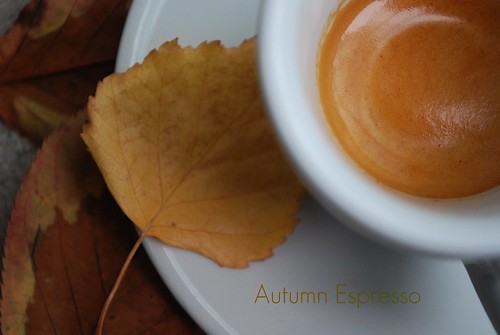
Yes ! It is a bit strange to talk about autumn, as it’s mid-winter in the northern hemisphere and mid-summer in the southern hemisphere – it’s like 25C outside as I write. So, I guess to compromise for my readers in both hemispheres so that no one gets left out, it is apt that I should talk about a coffee that was roasted and blended to typify the season in between, Autumn of course. OK ! I got this bag of Autumn Espresso during the northern hemisphere season, back in late October/early November but didn’t get the chance to share my experience.

It’s roasted by Square Mile Coffee in London and reminds you of the Autumn mainly because of the roasted hazlenut and caramel and toffee tastes that dominate. There is a hint of chocolate of course, but this comes out more when you make it as an espresso milk based drink like a Cappuccino or Caffe Latte.
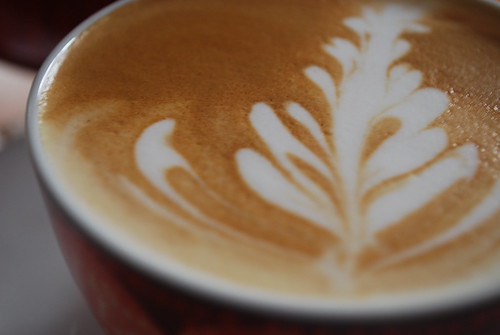
Just love the pics of these coffees as I was really getting into studying my digital SLR and playing around with different concepts like Aperture, so that I could use the camera to bring out the best of the coffee, especially as these were taken on wet, windy and cloudy Autumn days. I must confess I cannot remember where the coffees were sourced from, but being a fan of Square Mile since they started in 2008 I can almost say for certain that there was some Central American arabica thrown in, probably from Guatemala and/or Ecuador. You’ll have to wait another 9 months for this to be available again on the market and if you can get your hands on some, go for it.
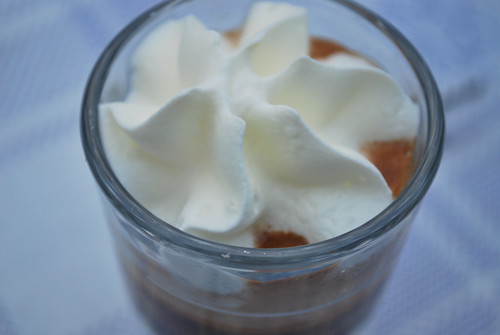
Espresso Tazza D’Oro

Doesn’t it look lovely ? Yes ! It’s another simple espresso recipe, for which you need to extract a good espresso, following all the rules of course and just top it with freshly whipped cream. I’ve got one of those flashy ISI Whippers, which basically makes fresh cream in an instant by placing single cream into a siphon and adding some gas through a specially made canister for the ISI Siphon (made famous by World renowned chefs like Ferren Adria – you’ll only know of him if you are a mad foodie). In any case, most cafes now have ISI Siphons, even Starbucks, as it is so easy to use when making coffee that requires whipped cream. You may also wish to know that ISI is actually an Austrian company and that the first place to serve coffee with cream was in….. Vienna, capital of Austria.

You can also top it with chocolate sprinkles. Espresso Tazza D’Oro of course is a very Italian name, which has something to do with gold (oro), but this drink has another more famous name, Espresso Con Panna. It’s just that I like the way its not so famous name sounds, very flashy and Italian indeed, so one more time ESPRESSO TAZZA D ORO, Ciao bellissima caffe.

A Complex Espresso & A Refreshing Coffee

That’s the way I’d like to describe the coffees I got from Espresso Lab, Cape Town, when I visited a few weeks ago. Of course I drank them a while back, but these are just my notes on my experience. Actually, Espresso Lab describe their espresso blend as “a complex blend bringing out blackcurrant licorice and chocolate flavours with a snappy finish”, so I’m just agreeing with them. There’s no doubt it had a complex taste and I really got to taste the chocolate flavours with a snappy finish, but I can’t vouch for the blackcurrant one.

In any case, the espresso blend consists of arabic beans from Brazil, Costa Rica and Ethiopia, so it really is a blend, mixing three different regions. Yes ! Costa Rica is not in South America, but in Central America. For me, it still confirms that I really enjoy an espresso blend when it has Brazilian arabica beans added, so I was pleased with the espresso, when I got it right. And on that last note, I want to go back to the word “complex”. Using all the techniques of making espresso including timing the pour, this coffee rarely followed the rules. Yes ! out of a 250g bag, which equates to about 16 cups of coffee for me (I only drink double espressos and that happens twice a day and I am assuming 15g of coffee per double cup – complex isn’t it ?), and after adjusting for the 30ml of espresso in 25-28 seconds, I only got about 7 good espressos. Of course everytime the pour wasn’t consistent with the rules, I adjusted the settings, then it will work in the morning and not in the afternoon and vice versa, hmmmm ! I guess better luck next time and perhaps a bigger bag of 500g to do lots of tweaking until I get a pour right every other time. So enough of the rambling and on to the other coffee.

Sometimes it is said “after struggle comes ease” and so it was with their Rwandan blend. Initially, I bought this to satisfy my daily thirst for “real” coffee when I was in Cape Town, extracting it for French Press in the mornings and evenings, however, without proper scales to measure the exact dosage, I just thought “OK ! not bad”, however, on return to Vienna, I got the scales out and made it in my lovely Bodum Colombia and Wow ! what a difference. Who said tools don’t work ? It definitely did on this occasion because it was such a lovely brew and the one word that instantly came to mind was… “REFRESHING”. On tastes, I got the red berries and fruity flavours, which I think really make French press coffee wonderful for the palate.

Au revoir.

Espresso Cream

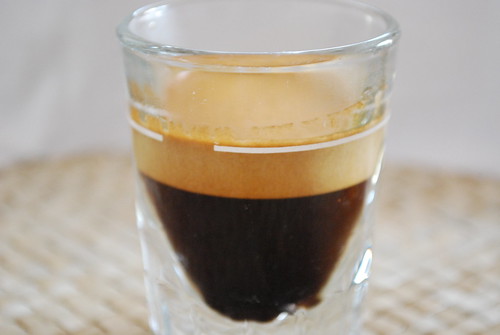
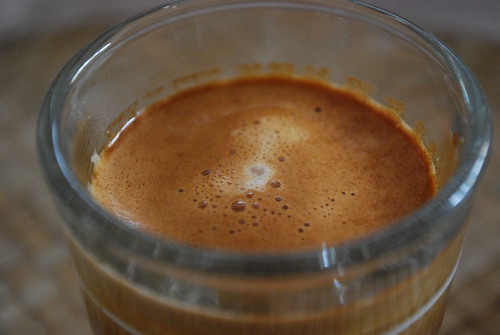
No ! that isn’t spelt wrong… it is cream this time and not crema, but you need crema first. Confusing ! I thought so, so let me explain. I was drinking Square Mile Coffee Roasters latest addition “Progresso” I love the way it sounds. It’s like a new espresso drink should be created with that name. In any case, Progresso is advertised as a cremay cup, with lingering sweetness, if brewed properly of course. So, looking into my fridge, I noticed a carton of full cream inside and thought “I’ve never tried espresso with cream before, well there’s always a first time”. The main reason for this of course, is that I thought “how can someone destroy an espresso by putting cream inside” and the very thought cold easily make me scream, BUT on this occasion, my culinary curiosity got the better of me, because I thought cream added to sweet things usually enhances it. So first up, extract a beautiful espresso with a good dose of crema visible on top like below;

Then of course, just pour a little bit of cream on top, but it should be enough to make the drink rise just a little bit – say about 2 teaspoons worth.

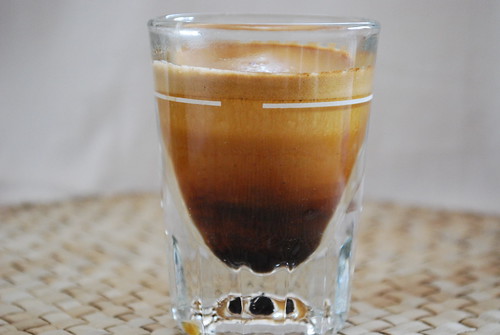
In the picture below, this is more evident, as I used an espresso shot glass, which when extracting a single espresso should rise to the line, but there was enough cream to just push it above the line.

This adventure just wasn’t about the taste, but about the art of coffee, because I really wanted to see how the colours would display with a shot of cream poured inside an espresso crema – would the crema disappear, or would it rise to the top like real cream is supposed to, and so there was a bit of the scientific too. Just look at all those colours.

On taste, I was correct, the sweetness in the espresso was enhanced, making it a truly tasty experience. So next time, break with the conventional and try something different. Is this progress with drinking espresso ? I don’t know but just one more time, say PROGRESSO like an Italian would.

Ciao, Espresso Cream Crema……

I’m Drinking …. Summer Espresso

Hmmm ! Courtesy of Square Mile Coffee Roasters (London), who produce a blend for each season. The summer version is made using 80% Finca Las Nubes from Guatemala and 20% La Carol from Colombia. Incidentally, as far as I can remember, the Finca Las Nubes arabica bean was roasted by Square Mile Coffee and used by Gwilm Davies to win the World Barista Championship this year. So this is really a special bean and if I was a crass advertising agent for Square Mile Coffee, I would say “buy your special championship bean from us, used only by champions, so be a champion and buy this bean…now !” But, I’m not, so just buy it anyway, but oops, too late, summer is over. Until next year then, God willing, but honestly visit their website (link on my blogroll to the left) and they may have some more left. In any case, what I like about Square Mile Coffee Roasters (SMCR) is that they actually tell you what their blend consists off – this is unusual trust me, as I’ve asked many a roaster what their special in-store blend consists off and they give me that, like I’m going to tell you my secret smirk. Even more props to SMCR, they give you an indication of what the coffee should taste like if you’ve got the right tools of course and know what you’re doing. So, for the Summer Espresso, it should be…

An amalgamation (i.e. lots of) of taste, however the prominent ones I detected were caramel and the berry juice finish. The berry juice finish is really freaky, because what happens is that you’re drinking the coffee, tasting the nutty and caramel taste and then as you finish each gulp, a berry tastes whirls through to the back of your throat…BERRY FINISH. almost scary, but fun for the taste buds. With milk based espresso drinks, I found the toffee more prominent with “honey sweet”

Anyway, I was so impressed with this blend that not only did I tell SMCR about it, I’ve just ordered 2 more bags before summer runs out and if you know me, you’ll know that I hardly order the same thing twice, especially in one pack. Watch this space for the Autumn blend

I’m Drinking a Berry Nice Coffee

No! this isn’t spelt wrong. This really is a berry, berry nice coffee. The origin, from Kenya, with the name Ngunguru – don’t get your tongue twisted. If you’re a fan of my blog, then you’ll know that I actually first encountered this coffee back in April, when I got a free bag from Stumptown Coffee Roasters. However, when I saw this coffee for sale on Square Mile Coffee Roasters website, I thought “why not, let me try this again” and promptly ordered it again. However, the second time around and hats off (well done) to the roasters at Square Mile Coffee Roasters because when I extracted this coffee using a French Press, I got to smell as well as taste different tones that I didn’t experience the first time. At first, I thought, this is strange – am I really smelling a fruity coffee with berry tones and rosehip…. ??? Yes ! I think I am and to verify this, I invited colleagues into my room, which was filled with a very unusual aroma – fruity coffee ad they almost started smiling, whilst I was just laughing – I mean how can coffee be so overwhelmed with fruit that it overtakes the strong coffee aroma that we know coffee has.

So, here it is a truly fruity cup of coffee. Wonderful fruity aroma, light in taste, slightly tart/citrus in taste – a really good coffee in the afternoon and to share with friends. Trust me, you’ve got to try this coffee out and well done Square Mile Coffee Roasters for roasting this coffee so well that it brought out these wonderful tastes. What would you expect from a world renowned coffee roaster and a former WBC Champion duo.

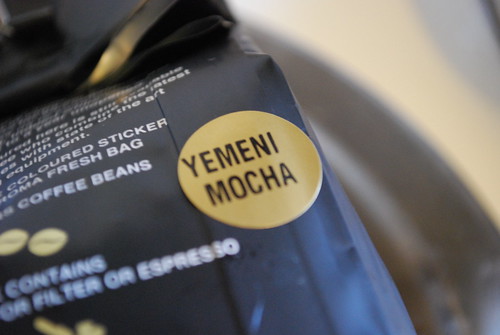
Yemeni Mocha Espresso

Sometimes you think you know about coffee and then you try something and it just surprises you and you think “Let’s through that theory out”. If you are a keen follower of my blog, you’ll have read my ranting and raving about Yemeni Mocha in my post of 3rd June 2009.

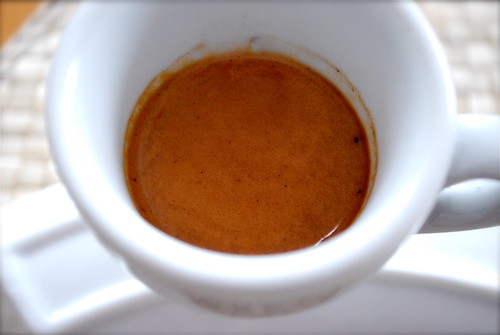
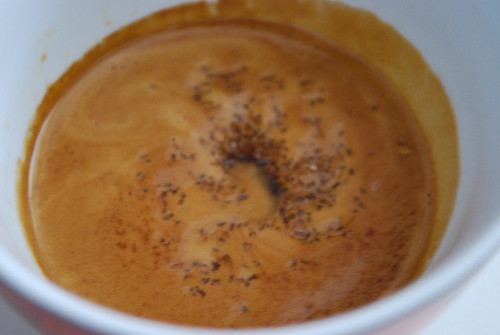
Now usually when a coffee has what I call a really special taste that wraps around your mouth and has solid tones like Yemeni Mocha, Costa Rica El Portillo and many East African arabicas, extracting this coffee as an espresso I find makes you miss out on some of the really fine tones and tastes of the coffee. However, when extracted using a French Press, you really get to experience different tastes in your mouth and it really goes down well (your stomach). Now, just last week, I had run out of “espresso” coffee – Yes ! that’s right, there are some coffees that are better extracted as espresso than in using anything else (French Press, Filter, Moka, etc). I was now in a dilemma. Should I just drink French Press coffee all weekend using my Yemeni Mocha, or should I try it as an espresso. With nothing to loose, I used my precious Yemeni Mocha for espresso and….. Wow ! What an experience. Just look at that colour and yes it does tastes like it looks, dark, mysterious, smooth and delicious.

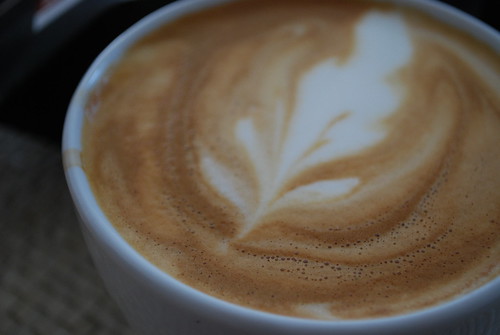
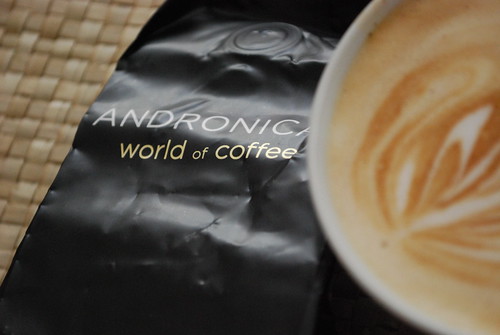
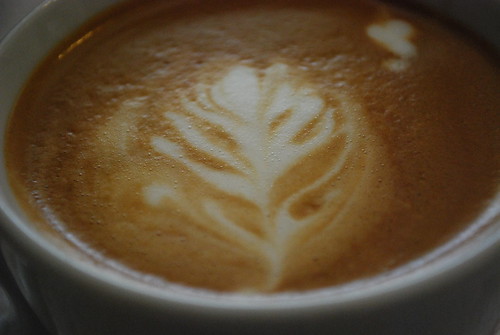
The common characteristic of this bean is definitely chocolate – and it isn’t lost when drinking it as an espresso. It’s like dark chocolate and the colour is amazing. Perfect for latte art as you can see below, as it displays different tones of brown as the coffee blends in with the milk.

As a milk based espresso it tasted like…. come on, you can guess right ? Yep ! Milk chocolate. You don’t really need to add sugar to this drink and you can rest be assured that you won’t regret it. However, before you rush out and serve this in your cafe, there might be one reason you won’t find many places offering Yemeni Mocha as espresso based drinks – it’s relatively more expensive than other single estate or blends. Sure, roasters like Andronicas (where I ordered this coffee from) who have a cafe in Harrods – one of the most prestigious and expensive stores in London, can get clientele to pay about the equivalent of $5-$7 an espresso, but some people especially during these trying economic times might scream daylight robbery at you. So, my advice, spoil yourself and use your precious Yemeni Mocha for both types of coffee, espresso and filter, not forgetting that the same amount of coffee used to extract a double espresso will make two good cups of coffee if using a French Press.

I’m Still Drinking Andronicas Coffees

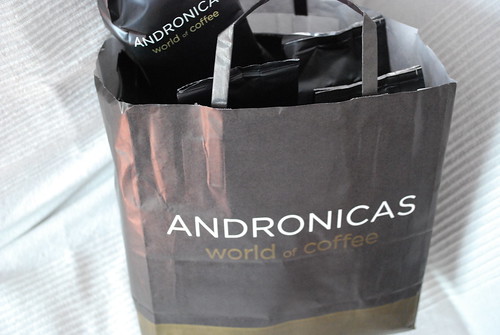
I’m pleased to report that when it comes to customer service, america does not have the monopoly, judging by my second experience of buying coffee from Andronicas. My first experience was when I visited their coffee shop in the World famous department store, Harrods in London. I ordered a double espresso macchiato, which I wasn’t charged for and then they even gave my son a free mini hot chocolate. OK ! now for my second experience. Not to be defeated in my quest to try more of their coffees, I decided to persevere when reading through their website they state that coffees will be delivered anywhere, but of course on trying to order, it was not recognizing my Vienna address, so I wrote once and then again and again until they said “sure we can send coffee to you in Austria”. I think due to the financial crisis, where the exchange rate has moved in favour of buying stuff from England, lots of companies are more than willing to sell stuff to continental Europe and I for one, am doing that with a passion – I’ve been ordering my coffee from abroad since January this year. So, enough of the economics (my main subject at University I hasten to add) and marketing, how about the customer service and the coffee.

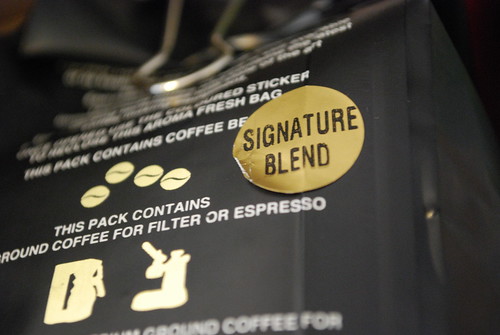
Well, I ordered about 750 grammes of coffee, comprising of their 1849 Espresso Blend, Brazilian Bourbon and of course Yemeni Mocha (which I loved, see previous post). I didn’t know that Andronicas only sell coffee in batches of 500g a time, but when I ordered it so happened that one of the main guys, James was visiting Vienna and decided to bring my order with him, saving me postage expenses. On top of what I ordered, he added an extra 1 kilo of coffee, notably their Signature Blend and doubles of what I ordered for FREE. Wow ! I even felt guilty and wanted to pay for the extra bags, but my request was turned down. Now ! that’s what I call customer service. Well, it paid off, because as soon as this first batch finished, I of course ordered more, with one colleague even placing an order, so during these hard items, never forget the customer even more – my one lesson for getting through the financial crisis for retail outfits.  

Gee ! I almost forgot about the coffee itself. So, first up was the 1849 Espresso blend, which I thought had a chocolate and nutty taste. Again, I find these type of coffees are best served as espresso milk based drink, so the type of coffee that you need to start your day off with.

Second up, it just got better, the Brazilian Yellow Bourbon, which apparently is a Cup of Excellence coffee. I’ve always thought that espresso with some sort of Brazilian arabica thrown in does it for me. I recall that my best espresso to date was from Intelligentsia’s Black Cat Espresso blend, which constituted some Brazilian arabica. So for this coffee, roasted darkish, whereby the oils begin to seep out of the bean and cover the bean, I detected a sweetish espresso – ideal for after dinner and Yes ! I do drink espresso after dinner and it doesn’t keep me awake – yipee !

And finally, the Signature Blend. Very versatile as both an espresso, full of crema and an espresso based milk drink, with dark chocolate tones, vanilla and hazelnut aroma and hazelnut/intense milk chocolate taste – the kind of cappuccino that brings a smile to your face before jumping into the rat race in the morning.


I also liked it after dinner with it’s full crema qualiities. For one shot, the crema was so inviting that I had to take it through the sugar test, in which it socred very highly, taking 12 seconds for white sugar to drop below the crema cloud and about 6 seconds for dark brown sugar to drop through.

I already told you about the Yemeni Mocha, which I had to blog about separately because it tasted so good. For my next order, I ordered 1 kg of Signature blend for espresso drinks and 1kg of Yemeni Mocha for French Press, so I’ll still be drinking Andronicas coffees for a while yet and guess what, the customer service was still great.

I’m Drinking A Special Coffee…. Yemeni Mocha

Before I delve into the details of my current coffee experience, I thought that I’d give a very brief background on the coffee called Mocha. In short, the name Mocha comes from the old Yemeni port called al-Muka and was given to one of the first types of arabica coffees because it had…. mocca qualities. OK this isn’t a typo – by “mocca” I mean, chocolate like qualities. Tasting and drinking this type of coffee, provided that of course, it is made properly, should remind you of chocolate and it is no surprise that in most cafes, a mocca is typically a chocolate infused milk-based espresso drink made with additional cocoa powder or in more fancy places with chocolate syrup like Monin or Torani. Anyway back to history – mocca coffee originated from the Sidamo region in Ethiopia but it has come to represent the type of coffee grown in Yemen – the first place to grow coffee outside coffee’s home in Ethiopia. Most experts still reckon that the best mocca type coffee still comes from Yemen but similar tasting coffee can naturally be found in Ethiopia. Sadly for lovers of Yemeni coffee, coffee is being grown at a lesser scale in Yemen, meaning that what comes from Yemen is not only getting smaller in quantity but of course higher in price. The main reason for this concerns money of course and politics and so I will not proceed as this is not a blog for politics but from a coffee point of view it is very sad.

Anyway back to that scarcity thing. So, as you can imagine, when I was scanning Andronica’s World of Coffee website to buy some coffee to try, I was delightedly excited to see Yemeni Mocha on the list. I thought, if Andronicas have been supplying top quality coffee for the World famous Harrods of London then they ought to have this very special coffee. So, being a bit cautious and mindful of my pocket, I ordered 500g, to be roasted between medium (in order to bring out both a rich taste) and dark (bringing out the mocha or should I say chocolate tones). I also knew that for this special coffee, the brew of choice would have to be filter as I find this method tends to favour really rich coffees, witness El Portillo and Costa Rica Don Mayo (see previous posts this year). A further step, to make sure that I absolutely got the measurements spot on I wanted to follow the experts; so first up, I recall an e-mail I received from Anette of Square Mile Coffee (London) in which she advised me to use about 12 grammes of freshly ground coffee per 250ml/grammes of just of the boil hot water  and secondly, wait for it, weigh the water as opposed to measuring it. You may not know this, unless you are a top chef, but weighing your liquids is more accurate, so I did that at home on my electronic scales. However, I was even more lucky, because I didn’t have to through the agony of memorizing where and when to stop pouring water nor weighing freshly ground coffee, during the absence of scales at the office because my Solis Maestro Coffee grinder grinds exactly 12 grammes of coffee if you put it on setting “2” and my treasured Bodum Columbia French Press, takes exactly 250ml of hot water if you fill it almost to the top with the massive crema/foam sitting on top. Luck me eh ?  

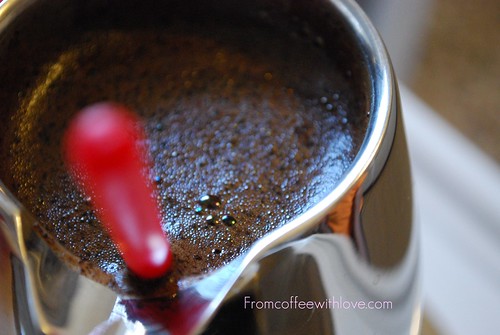
Oh ! look at that filter coffee crema – dark, mysterious and bubbly, waiting to be drunk by moi.

Well ! I’m more than glad to report that it was more than worth it. Wow ! what a taste. Even before the bag was opened you are already promised what would be a great taste because the aroma is just wonderful – what every coffee should smell like – chocolate and nutty with a smell that goes up through your nostrils and begins to wet your appetite. The taste is like bitter sweet chocolate rolling over your tongue with “real” coffee and the taste lasts in your mouth for at least an hour undisturbed. My colleagues at work got so used it, that they would come rushing to my room as soon as it began to brew. One colleague called it the best coffee she had tasted and even after she had shared it with half a cup of hot milk – the taste was so powerful, piercing through the milk. Another colleague was so impressed that she got me to order 500g for her, which she plans to hide in her house away from her kids as she doesn’t think they’ll appreciate it, mistaking it for shelf stuff. When I gave her the bill, I said “it’s a bit expensive”, but she said “it’s worth it”. 

OK ! how do I end this ? Well ! I can tell you that I’ve ordered another 500g from Andronicas – check out their web shop on my blog roll and if you visit London, go to Harrods, 4th floor and buy some bags. My main contact at Andronicas is so kind to me that he has given me a discount on both occasions when I bought this online to be delivered in Vienna, making this coffee experience one of my best buying experiences of the year. As you know, I love variety and I’m always in the hunt for new coffees, rarely drinking the same coffee for more than 2/3 weeks in a row, but for this I’ve made an exception and will be drinking Yemeni Mocha for what will be almost 2 months in a row, at least in the afternoon after lunch, but due to the scarcity and the good guys at Andronicas, it’s worth it…. a very special coffee indeed.

I’m Drinking Origin Coffee Roasting coffees….

Well ! I couldn’t walk into my favourite cafe on the African continent, Origins Coffee Roasting in Cape Town and not buy some freshly roasted coffee. I was already enticed when I visited the new cafe upstairs and walked into order my coffee, where I noticed that at the back of the shop, was like a coffee roasting plant. Bags and bags of green coffees waiting to be roasted, placed in bags and either served to lucky customers as espresso, cappuccino, etc or sold to customers like me, who want to take the experience home.

So, feeling a bit adventurous, I decided to try two different coffees. I remember that last time I tried a Rwandan coffee, was actually from Origins Coffee Roasting and I had a pleasant experience, so when I was offered a Rwandan Mugombwa, I more or less seized the opportunity. For the next one, I was looking for something to satisfy my afternoon thirst for French Press coffee only and I was offered an El Salvador El Borbollon. However, I did have to quiz the barista that was advising me on coffees about when the coffees were roasted, because of late, I’ve just had too many “too fresh coffee” experiences whereby I buy this fresh bag of coffee that I have been promised has been de-gassing for a few days, only to get home and realise that the coffee still needs some resting time – have I lost you ? Well ! check out my post of 8 August 2008 for more details. 

In any case, I was promised that the coffee had been resting for 2-3 days and so should be ready for the grind, BUT I was nevertheless suspicious. As soon as I got home, I have to confess, that the coffee was in deed a bit too fresh, meaning that when extracted, even neatly packed into my bottomless filter, bubbles appear, resulting in splashes as evident by what I call this “dirty espresso” shot.

The taste was of course not as good as it could have been, but when the coffee had calmed down a bit, about 3 days later, it came out beautifully, as witnessed by this shot

Just look at those lovely dark coffee streaks blending in with the crema, hmmmm ! OK! so what did it taste like – I detected a vanilla, nutty and earthy taste and when blended with milk, a milk chocolate taste could be detected.


Ironically, although I bought the El Salvador El Borbollon for French Press, I found it much nicer as a milk based espresso, with hints of vanilla and milk chocolate – smooth and creamy too. I didn’t have that many challenges with getting the right grind as I opened this bag about a week to 10 days after it would have been roasted.

If you live in South Africa, try and get your coffees from Origins.