New Theme, New Dream..

I’m in the middle of trying to change the look of my blog and luckily the guy who sits a floor above me at work was really helpful and assisted me in trying to load up this new more coffee-like theme – I hope you like it ? But as I get used to this, I’d like to leave my latest favourite pic with you, called Espresso Dream, so until my soon to be posted next blog, dream of espresso……


Coffee News….

Coffee News 

I’ve decided to add another category to my blog, aptly called “Coffee News”.

OK, so what is new from my travels and observations that may be of interest to you. Starting from closer to home, Vienna – you will be sad to know that the favourite coffee shop, Mocca Club, is sort of no more. Well ! they still exist but the previous owner, Jo, has left, along with her SCAE expertise and tender coffee touch that the quality of coffee production has, let’s say, not kept up with my expectations.

Now for some good news and for this, we are off to London. For those of us in London, there are two exciting things. Flat White have opened another coffee shop in Soho called Milk Bar – Cameron, the owner, preferred to avoid the coffee chain thing and decided to give it another name, which still sounds cool. Anyway, you can find Milk Bar, equipped with a black customized La Marzocco FB-70 espresso machine, on 3 Bateman Street. I haven’t been there yet and I must confess, I walked past it when I was looking for it and just went right back to the original Flat White, but God willing, I hope to check it out next time I’m in London.

You will also be glad to know that 2008 and 2007 World Barista Champions, Stephen Morrissey and James Hoffmann respectively, have finally opened their coffee company, Square Mile Coffee Roasters. At the moment they are focusing on selling coffee on line and there are no plans for a coffee shop yet. You can visit them in the heart of London but you will have to make an appointment first – a bit serious, but these guys are really serious about coffee. Just visit their website on http://shop.squaremilecoffee.com/  and you will see what I mean. I wish I could order coffee, but this is restricted to the boundaries of the UK for the moment. In any case, during my last visit to Flat White, they were testing out one of the square miles special blends.

My final piece is just to update you on the coffee scene in Dubai. There’s now a Dean & DeLuca coffee shop. for those of us who do not know about Dean & DeLuca, they are a famous New York coffee shop, which I have been informed featured in a popular US sitcom for many years. Anyway, click on http://www.deandeluca.com/ for more info. They are located at Old Town Commercial market in Burj Dubai, near the tallest building in the World.

Also new in Dubai is the famous Canadian coffee franchise, Cafe Supreme, located in the same area as Dean&DeLuca in Dubai – how’s that for a bit of competition. I haven’t been to either of these but they seem to offer a different perspective to the coffee scene in Dubai.

I’m Drinking El Salvador Pacamara

About a month ago, on my way back from holiday, I stopped over in London and naturally went over to my favourite bean bazaar or specialist coffee roaster – HR Higgins, Duke Street, London and stocked up on more coffee.

I was lucky enough to be offered one of their new beans, El Salvador Pacamara. Trusting the salesman on this occasion, I took two 250g bags, as they do two types of roasts, medium dark, which I usually find goes well with milk-based espresso drinks and very dark roasted, which is lovely for espresso (shhh ! don’t share the secret).

Pacamara Bags 

On return to Vienna, I was pleasantly surprised by the versatility of the 2 roasts. Sure enough, my predictions matched my expectation in that the medium-to-dark version was lovely as a cappuccino and the very dark version was nice as an espresso, but more importantly for my coffee grinder, I didn’t really have to fiddle about with the grind switch for both types of coffee. Am I making sense ? If not, I’m going to have to get a little bit tekky (technical) here. In short, I’ve discovered that you cannot use the same grind setting for a medium dark roast and a very dark roast coffee to get the ideal espresso shot (i.e 23-27 seconds depending on what book you read). The secret is…… well ! perhaps not a secret for pros, is that you need a finer setting for very dark roasts. So for example, if you usually grind your coffee on say dial 7 for a medium dark coffee, with dial 1 being the finest (like powder and usually for Turkish style coffee) and dial 10 or above being like clumps (usually for French Press), then when you come to grind a dark roast coffee, you need to use a shorter dial, like 6 or 5 to get the same grind. For me, on my previous coffee grinder, it was easy, but my new coffee grinder is a bit of a pain as there are no dial settings – you just turn the knob, after wasting about 30 grammes of coffee until you get the right grind, but I’ll save more of that headache for another post God willing.

Extracting Pacamara

Anyway back to El Salvador Pacamara. For espresso, I found it light and sweetish. I could taste the sweetness at the tip of my tongue – perhaps my palate is getting more sophisticated to all the speciality roasted Arabica coffee I keep throwing down my mouth 3 times a day. Excuse the pic below – I was still playing with my new digital SLR camera and the flash was a bit too bright. The richness of the colour can be seen in the pic above during extraction.

Pacamara Doppio 

Naturally, I kept the medium-to-dark roasted coffee for my morning fixes of cappuccinos and the sweetish taste contrasted well with the smooth silky sweetish frothed milk that accompanied it. Excuse my latte art, still trying to get there….

Pacamara Latte 

In summary, I thought that the bean was well rounded and very versatile, easily adaptable for both types of espresso drinks (with and without milk). The taste is not over powering and “bold” and reminds me of the typical Central American coffee (just in case you were wondering where El Salvador is, it is in Central America). It is not as acidic as the champions of Central America – Costa Rica and Guatemala, but still worth a buy and I’m sure your non-coffee mad friends will find it pleasant to drink too. So get out there and try some coffee from El Salvador.

Looking for Crema in Dubai

Wow ! it’s already been a month since my last post, which is way over my target of a weekly post but my excuse, if I can get away with one, is that it was family holiday season and we went again to Dubai – the kids and wife insisted.

Burj al Arab coffee 

Last year I wrote a summary on drinking coffee in Dubai, which was really like a summary of drinking coffee in one mall. This time, I tried to broaden my horizons by visiting a few more malls but still failed to visit some cafes outside the mall perimeter – next time God willing. Following on from some advise given by a coffee pro – “don’t bother tasting espresso style coffee from coffee chains because it is always going to be badly prepared”, I initially only ordered what could be called Americanos and just “normal” filter coffee. For a while it satisfied my caffeine thirst, but then I thought, it’s been over one week without espresso and decided to risk it.

A few pointers before telling you about my experience. Firstly, I only visited cafes with semi-automatic machines and not pure automatic ones (witness Starbucks), where the barista just pushes a button and hopes for the best. Secondly, and I was called a snub for this by my wife – insist that the barista cleans the machine before making your coffee. Usually, old coffee is left in the portafilter, emptied and without cleaning the old dried stale coffee, what is supposed to be fresh coffee is ground and placed into the portafilter before placing into the group head without cleaning the machine – Yuk! On this occasion, I insisted every time that the barista empty the old coffee, flush it out with hot water and also clean the group head with hot water. Finally, I insisted that they tamp the ground beans. You would think that with these key pointers, some sort of espresso will come out, but sadly this was not the case – why ? I think it falls under the best known two classical mistakes – serving non-fresh coffee with an inaccurate grind setting. From the taste of the majority of the coffee I had, freshness was compromised by far, because, even if the coffee is fresh and the grind setting is inaccurate, you will smell the aroma and the coffee, although bitter in taste, will still have some sort of fresh taste. I didn’t even go there with milk based drinks because badly frothed milk is usually burnt and gives me indigestion – Snubbish ? No ! I’m just trying to get what I paid for and not mess up my stomach.

Anyway to the shops. One thing I noticed now is that some more of the cafes have now started trying to tamp. At the Tea Merchants, Burjuman Mall, I noticed a La Marzocco machine and an expensive Mahl Konig Grind-on-Demand coffee grinder, but sadly, as you can see from the picture, after insisting on cleaning the machine, etc the crema was still very thing and lasted about a minute but the taste told me more – not very fresh.

Tea Merchants Espresso 

The baristas, however, were very amused by my tips on cleaning the machine and tamping the coffee.

Having looked down on coffee chains and there are everywhere, I decided to try a popular one in Dubai, who boasted about the “Italian taste”, so I went to the aptly named Barista – which is actually an Indian coffee chain. At their shop in the Dubai Festival City (nice shops and water way) I was impressed by their preparation techniques and most of all by the taste – it did have an “Italian taste” after all, as they proudly displayed that their coffee is roasted in Milan.

Barista Espresso 

In all, I told them that their espresso was the best I had tasted in Dubai. I also caught, surprisingly of all, one of the baristi having a go at latte art… hmmmm !

One more success story was the espresso I had on my last day at the Dubai International Financial Centre in the Testa Rossa Caffe. I decided not to fuss about how the coffee would be made – I was too hungry to run over to the bar. However, perhaps my reputation had preceded me as I watched the barista, clean the machine, flush out the group head, grind the coffee and tamp. I was impressed and although the coffee had some crema, the taste was not as sharp as the one I had at Barista.

Testa Rossa Espresso 

I’m still looking for real crema and that authentic espresso taste in Dubai – land of the malls, flashy cars, famous hotels and indoor ski slope, but that will have to be on another occasion God willing if I return. I’ve just got to leave you with one incident – On another occasion on this trip, I decided to try an espresso at a Dubai based coffee chain and after warning the barista that I write on coffee, he boasted that his colleague could make really good espresso, so I thought why not. In chatting to him, I went a step further, “so ! what sort of coffee do you use in your blend and where is your coffee from ?” “Canada” was the reply and I thought “Oh no it doesn’t, they don’t grow coffee in Canada” but I decided to keep that embarrassing revelation to myself and just smiled – I then knew I was in for a surprise. Needless to say my suspicions were confirmed and that is why I have a story and not a picture of what was advertised as an espresso. I think they need really good coffee in Dubai to match their plans to become one of the top destinations in the World…. still looking.
How Can You Tell if Your Beans are too Fresh ?

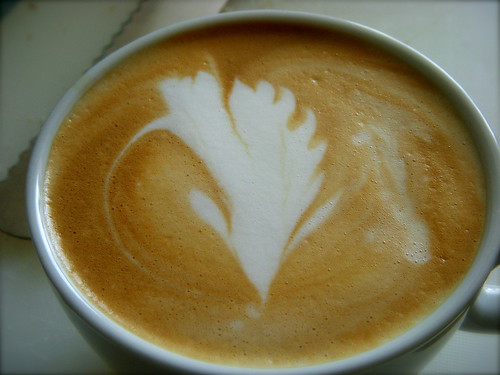
This is like a follow up to my blog post of 7 March 2008 called “how can you tell if your beans are fresh“. In summary to that previous post, I gave some pointers on what coffee looks like when it is fresh and extracted. Now, it probably seems like a contradiction when I say”how can you tell if your coffee is too fresh ?” Very Fresh  Again, the short answer is that you cannot just tell by looking at it – see above.  You will have to wait until you get home and try and pull an espresso or use another brewing method. In any case, I recently fell victim to this scenario and really the warning bells should have been ringing when I asked the roaster at Alt Wien when the beans were roasted – his answer “a few hours ago” OK! I thought, I should really be happy about this but I recently read that very fresh beans need to “de-gas” before they are ready for drinking. In short, when you roast green beans you are changing the chemical and physical attributes of the coffee bean but the coffee bean needs time to adjust to its changed attribute after being exposed to very high temperatures. What happens is that gases that have attached themselves to the bean need to “come off” so that the bean can return to some sort of natural state – have I lost you ? Perhaps, because I think I have lost myself too. Really, I’m just trying to summarize the chemical stuff that happens to coffee beans after they have been roasted in as simple a way that I can. There’s also some problems with dark roasted coffee beans, where the oil on the bean can be “too oily” leaving oil sediments on your machine.  In short, the coffee beans basically need to “de-gas” or let off some steam literally. I hinted at this to the Alt Wien Roaster and he replied “it’s OK in a domestic machine but for a commercial machine, the beans need to de-gas for at least one week” so I’m thinking, a domestic machine -Yes ! I have one of those, but my machine has some commercial parts (E61 Group head and lots of real brass, etc). I trust him and I pay the price. Sure, the beans smelt really fresh but my first problem was in trying to get the right grind for pulling a shot of espresso in 23-25 seconds.  Then I was wondering as the coffee was coming out, why it was bubbly and making lots of hissing noise. So, the first sign is that the espresso shot will have many bubbles – some sort of chemical reaction (see below). Too Fresh Espresso   I also noticed that once extracted, the coffee was lightish in colour despite the right time for extraction;  Too Fresh  The final straw was of course the taste test – the coffee was sour around the middle part of your tongue. Now, as you know, really fresh coffee that has been taken care of should not taste bitter or sour, so that got nme thinking – what’s wrong ? I tried stuff like leaving the beans out all night in a big metallic bowl so that they could let off steam, but that didn’t work. I tried another brewing method, French Press, but still the taste was sour. Then I thought, based on stuff that I had read, to leave the beans in their bag for about a week. I was bordering on being mad, because to compensate for my ever increasing coffee appetite, I decided to buy a 500g bag for the first time. In trying to apply my general culinary skills to the situation, I thought, if the bean could talk, perhaps it would say “hey ! I’ve just been exposed to 450 F, let me cool down a bit before you get the best out of me”. It’s almost like trying to toast freshly baked bread – it’s going to burn a lot quicker. In any case, not being a chemist, I thought there’s some sort of proper chemical explanation for this. Anyway, I’m glad to report that after leaving the beans for a week in their original bag, well sealed, with no exposure to air, there was a big difference. Firstly, although the coffee may not have smelt as nice as earlier, it was now easier to find the right grind setting for a 23-25 second pull for an espresso and the colour was back to dark reddish crema – see below;    Fresh Espresso  Also, good for latte art and impressing your friends (OK ! I’m joking about the last).    Fresh Latte  So next time your coffee roaster tells you the coffee is really fresh, ask them how fresh. A few days can be good, say 3 days, but I have learnt that the mistake made by the roaster was putting the fresh beans into a sealed vacuum bag immediately after roasting as opposed to letting them de-gas by their own. If it is freshly roasted, it should be left alone and not bagged up.  I can even say now, as I am drinking this coffee (Organic Bolivian)that after about 10 days the coffee is even better, especially for espresso – the sweetish taste is back. Ciao
I’m Drinking…..

I guess I’ve missed my self-imposed target of writing a post (or blogging) at least once a week to keep this blog as fresh as possible but, it’s been quite a bit hectic at work. Anyway, back to work on coffee.

I’m DRINKING….. Organic Bolivian beans, recently bought from my current favourite place to buy fresh coffee, Alt Wien, off the Naschmarkt in central Vienna (Austria). It’s quite aromatic and once extracted is lightish in colour compared to what I’m used to for espresso. Although it smells sweetish, it has a light sour taste that kind of hits you after a few sips.Bolivian Espresso 

Nevertheless, I find that it compliments milk based drinks well, provided of course that the milk has been properly frothed to bring out the sweetish milk elements and not the burn your mouth bubbly stuff we still suffer from in most cafes. I recently served this coffee to some friends that came over for dinner and although one thought it strong after dinner, the other was very complimentary with a puzzled expression, wondering how he would be able to drink coffee again in a cafe in Vienna after the double espresso I served him. Well I guess it was worth spending hundreds of Euros then if I get that kind of compliment. I also tested the coffee using the French Press method, which was nice for the afternoon – pleasant and light, which held its taste in my new Bodum Columbia pot for a few hours. As you should know me by now, I love variety in food and drink, so my weekly trips to Alt Wien naturally involve me buying more than one type of coffee. I think I’m going to have to change that routine to twice a week but with a larger purchase of coffee, perhaps 500g bags, because I’ve recently noticed that I am finishing 250g all by myself in under one week.

Anyway I digress, Alt Wien have recently introduced a new Malawian Arabica, with a very African name, Malawian Mzuzu. I just finished my Bolivian coffee last night and was able to try the Malawian this morning as a cappuccino, so my thoughts should be fresh. I find this coffee good for holding its taste with milk based drinks. It has a bit of a bold taste that holds its own so to speak and can be characterised with a chocolate tone and an intense taste.Malawian Mzuzu 

So, as you can see above, I prefer it with milk as a cappuccino or as an espresso macchiato. In using the French Press method, it is quite bold and good as a digestive after a heavy lunch or to boost you up in the morning.

However, I’ve saved the best for last. I must admit and perhaps I will loose credibility for this, but I’ve never been impressed with Kenyan coffee. That was until about a few weeks ago when Reinhold of Espresso Solutions (see blog on La Marzocco GB5) returned from the WBC in Copenhagen and gave me a 200g bag of freshly roasted Kenyan AA beans, roasted by none other than the famous American coffee roasters and cafe, Stumptown (see http://stumptowncoffee.com/) – they started in Portland, Oregon and are now famous amongst coffee connoisseurs. Investigating their website, I see that this Kenyan AA is properly called Kenya Gatina Peaberry. OK ! Time for some coffee facts – a typical Kenyan peaberry is a type of coffee that unusually has one beans inside the cherry fruit as opposed to the normal two. OK ! Back to the coffee – the first thing I noticed was the “Wow” factor in the aroma – even my 6 year old son was like “that smells really nice Daddy..” You can imagine – I just couldn’t wait to try it out and I was not disappointed – If I was to give an award of best coffee that I have prepared this year, it would be for this – I drank this coffee almost one month ago and I can still remember the feeling, that’s how good it was.  Anyway, it had a fruity and smooth mouthfeel and was wonderful as an espresso. You’ve got to have two cups, because one is not enough…Kenyan Espressos

I also loved the colour – it just seemed “just right”. Needless to say I was sad when it was finished. If I could order from Stumptown, I would, but naturally they only ship in the US, so all those lucky American reading this blog who have not heard of Stumptown, check their website out and spoil yourself by ordering some coffee from them (I’m adding them to my blogroll)  They are not paying me to do this, but when you come across some good stuff, it’s good to share the knowledge.

Delicious !

A New Way to Measure Coffee

Actually ! this happened by mistake but nevertheless it was an intriguing find. I came up with an image of photographying coffee beans inside a portafilter holder and thought wow ! that looks lovely – the hard steel metal look contrasting nicely with lovely dark brown freshly roasted Indian Malabar Monsooned coffee beans, belowWaiting for the Grind 

However, as I was just about to make coffee, surprise ! surprise ! I thought let me throw the beans from my photo shoot into the grinder and voila ! or should I link Italian to my double espresso offering and say Prego (as in ready to be served) the coffee beans were exactly the same quantity I needed to make my afternoon dose of Doppio (double espresso in English).Beans in filter  

Take caution ! make sure that your portafilter holder, which should always sit inside the machine nice and hot for the next shot is dry, if not you will wet the beans and extract some precious locked up flavour – and also make sure you put the beans quickly into the coffee grinder as you don’t want any unnecessary heat on your coffee beans. I’m not sure if I am the first to discover this and I am probably not, but I thought wow ! what a great find, especially as if you don’t have a doser on your coffee machine that tells you how much to grind for a single or double espresso. BW bean filter 

This “new” method can be helpful if you are always having to guess how much to pour from bag into grinder and usually fall short or grind too much, which if you are a purist like me, will go to waste as I don’t save already ground coffee for another espresso, unless I am pulling another shot within a few seconds. Some experts say that the taste of the coffee begins to go after 12 seconds of grinding – so hurry up and try this out. 

La Marzocco GB5

I’ve decided to add another category to my blog, aptly named “Coffee tools” in anticipation that there are some readers of my blog that just want to know about the stuff needed to make coffee. Anyway, what better tool to start with than a La Marzocco coffee machine. I’m not really going to go too technical here because I only feel comfortable sharing stuff that I really understand and as I didn’t major/study in-depth any sciences especially engineering, I’m not going to bore you with stuff that  you will need a dictionary to understand. OK ! La Marzocco espresso machines are generally what top baristas believe to be the best machines for making espresso and espresso based drinks. Their machines are used at the World Barista Championships to determine who is the best barista in the World. Of course, there are many good espresso machines like the Synesso Cyncra, which coincidentally is designed by a former La Marzocco engineer. There are other machines and of course many opinions but, the consensus is on La Marzocco.

In any case, I had the opportunity to meet with La Marzocco’s main rep in Austria, based in Vienna. It is run by Mr Reinhold Fliedl who supplies coffee machines and other stuff under the name Espresso Solutions. I had already met Reinhold when I bought a La Marzocco bottomless filter-holder and so this was our second meeting. His company was on the other side of Vienna and I took the opportunity to get a half day off from work on a Monday morning – more sleep for me. Anyway Reinhold is a really nice guy and he really knows his stuff when it comes to espresso, coffee, coffee machines and coffee grinders – he owns a La Marzocco GS3 – the only espresso machine suitable for the home made by La Marzocco and costing about 4,000 Euros ($6,000). I learned a lot from him as I was also looking to buy a new coffee grinder too and he talked to me about his two-group head La Marzocco GB5 (one of the best machines made by La Marzocco), which looks really nice.

 LM GB5

I snapped away and also got a really great shot of him pouring some latte art in his Alessi milk jug, after he had showed me briefly how to froth milk on the GB5. Actually, this is one of my best shots yet, judged by the number of the views on my flickr account

 Great Shot Pour

He did a few practice runs on different types of coffee for espresso.

 GB5 Espressos

A couple of cappuccinos later and an espresso, I was coffeed-up for a few hours and we got talking about beans, roasting and grinders, as well as the poor state of affairs in Vienna with regards to getting really good espresso and espresso based drinks. Reinhold was so serious about this that when we met in mid-June, he was planning a trip to the World Barista Championships in Copenhagen to register through examinations to become an Speciality Coffee Association of Europe (SCAE) trainer. I can gladly report that he passed and he is now one of only three in Austria. A coffee school is planned, which I hope to attend God willing if it is set up very soon.

Despite my intro about technical stuff, I cannot end this post just with pictures – I’ve got to delve into some of the tekky stuff and so here goes. I was shown the inside of the GB5, which displays La Marzocco’s unique dual boiler mechanism, which means, and I quote from La Marzocco ” the GB/5 ensures maximum temperature stability for coffee brewing, with electronic monitoring of all the machine functions” –  in simple language, this means that the temperature for preparing coffee is always maintained at the ideal levels of between 90-93 C for extracting espresso. This is what I understand the now famous Proportional Integrative Derivative (PID) system is, which monitors temperature to all group heads. So for example, as we know, temperature is key in coffee preparation and a 1-2 C variation in temperature can affect the taste of an espresso, where you can loose out on high citrus tones for example in a type of coffee. Also, in lesser technology machines, the more you extract coffee, the less the temperature gets, whereby you begin extracting espresso at 87C, which could mean that the coffee will be a bit bitter on all group heads. However, with the technology on the GB5, the temperature is automatically adjusted for each group head and maintained at the desired level – now isn’t that cool. There’s also one other bonus – there’s a light under the main control unit, which means that if you have one of those dark looking interior cafes, the machine lights up to show where all the action is, just above the brewing heads. Of course, this type of machine is for those serious about their coffee and serving the best, but I believe it’s worth it whatever the price. Of course, all the other variables have to be right too, like the right grind, the type of grinder, the quality of the bean, in summary the 5 Ms – (Mescla (coffee type or blend), Machina (the type of coffee machine), Machinadosatore (the grinder that grinds the coffee), Mesura (the grammes of coffee used per espresso shot) and Mano (the hand of the barista) – now make sure you learn these as I might test you on it next time…. hmmmm !. In any case it was a pleasant trip and I learned so much. Perhaps next time I can try the machine out. If you live in Austria or Germany check out Reinhold’s website/e-shop on www.espressolutions.at

World Barista Championships 2008

I thought that I’d let all those of you who want to know that the 2008 World Barista Championships (WBC), held in Copenhagen (Denmark) from 19-22 June 2008, was won by Stephen Morrissey of Ireland, who incidentally gave me my first latte art class at the Caffe Culture 2008 event in London, show off ! I know, but just to let you know too that the 2007 WBC Champ, James Hoffmann, also gave me some espresso lessons at the Caffe Culture event in 2007.  This does not mean that I am now an espresso expert but it’s good to try and learn from the best.

In any case, you may wish to know that Stephen and James have now joined together to form a company, Square Mile Roasters, see, http://www.squaremilecoffee.com/ website still to be completely developed I should add, but in any case, it promises to be a fruitful relationship when it is launched and should increase London’s coffee standing – can’t wait to visit their shop when it is up and running God willing.

For more about the WBC, sponsored by La Marzocco and Compak Coffee Grinders amongst many other, see http://www.worldbaristachampionship.com/